


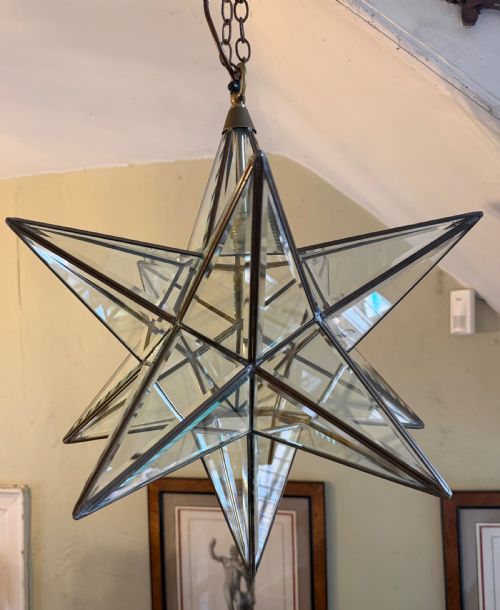
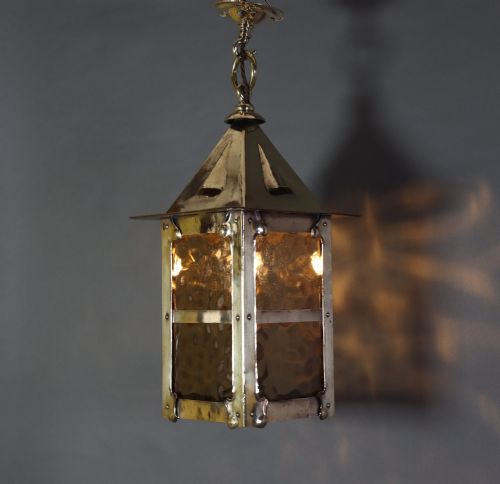
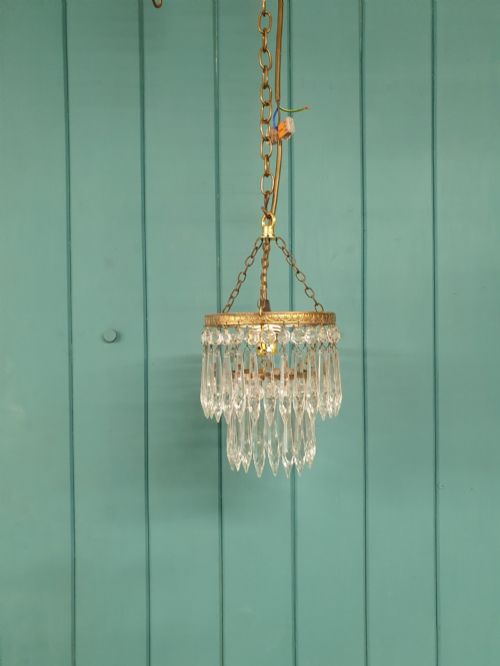
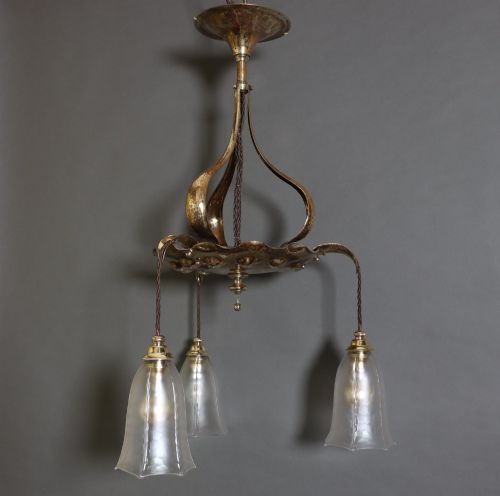
Edwardian Brass Pendant Light
An edwardian brass pendant light brings period character and warm illumination to high-ceilinged rooms through craftsmanship in metal and glass.
Edwardian Brass Pendant Light
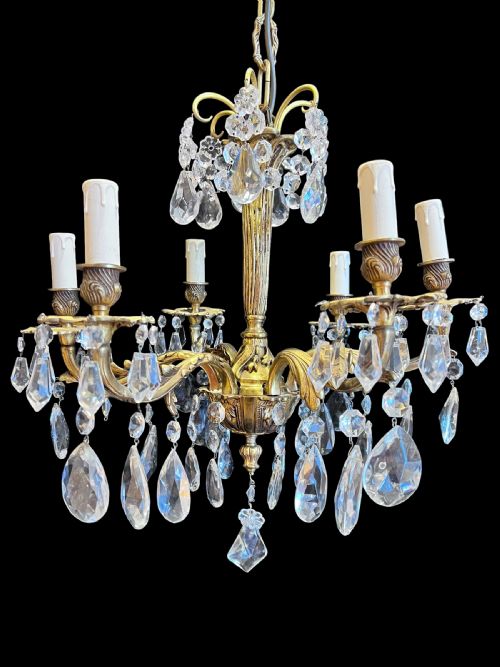
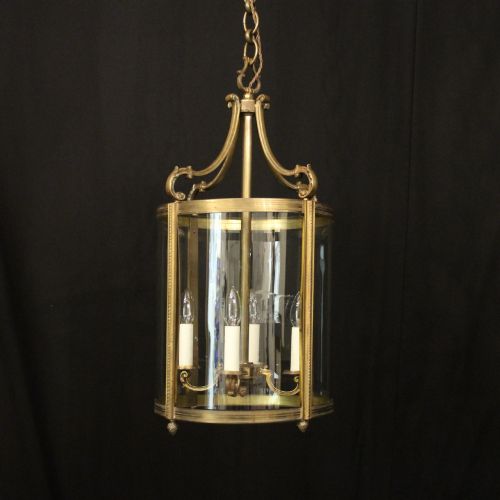
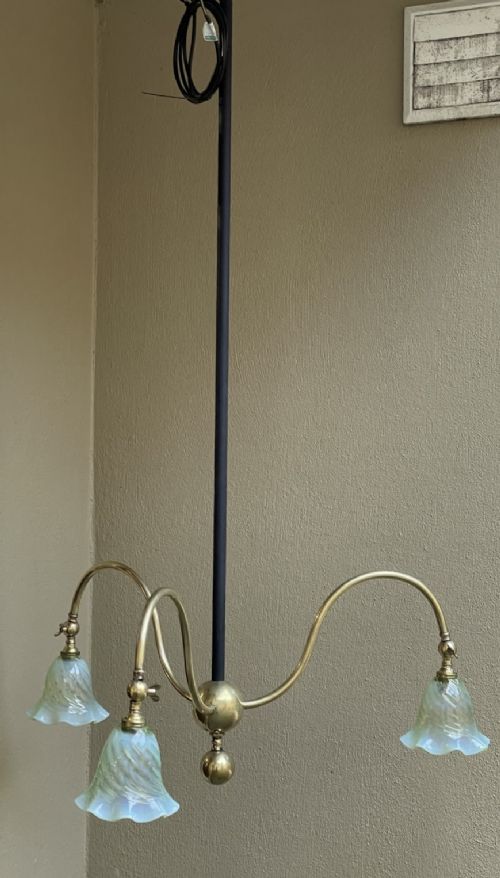
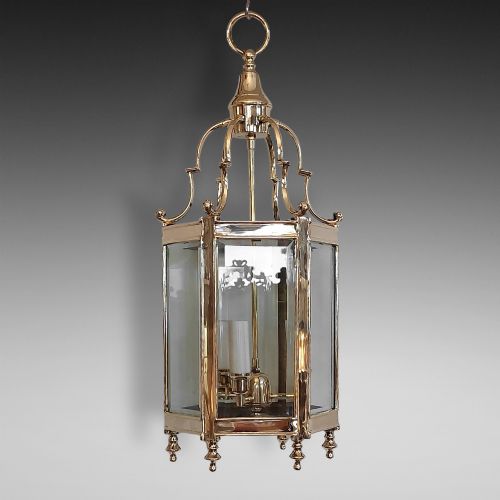
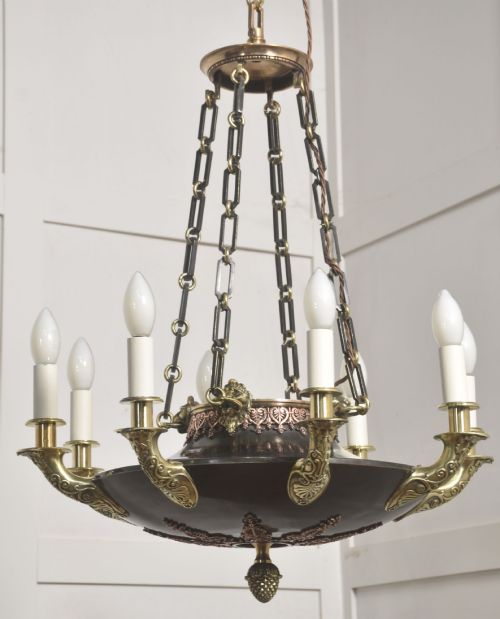
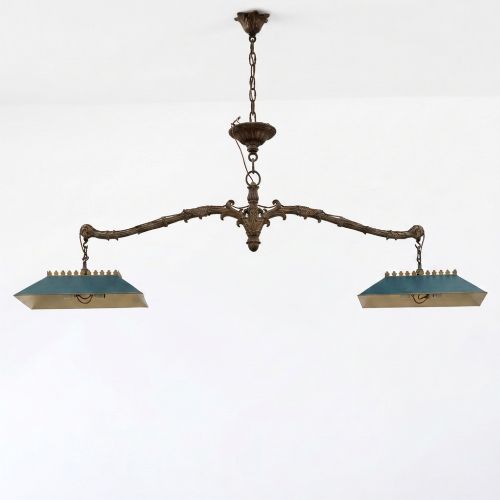
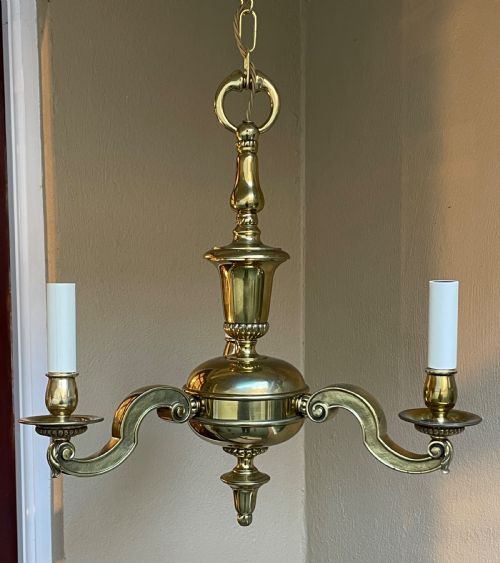
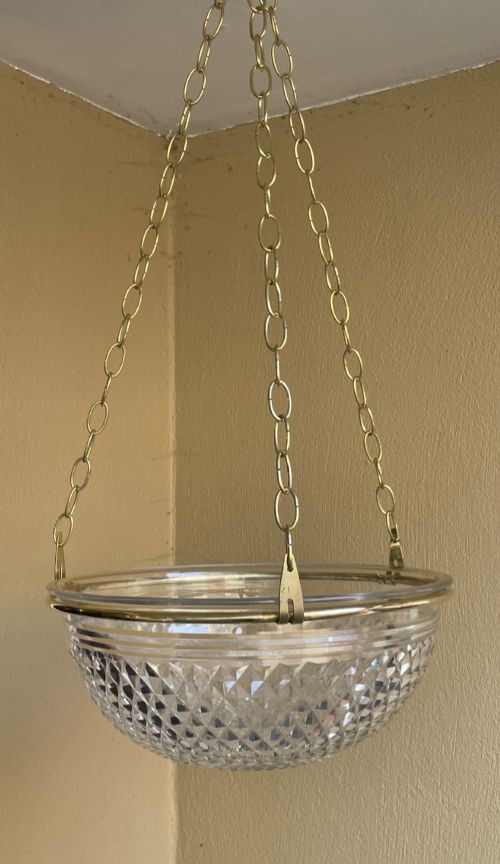
An edwardian brass pendant light comprises hanging ceiling fixtures formed from brass frames paired with glass shades, lanterns, or crystal prisms. These fixtures originate primarily from the Edwardian period alongside late Victorian and early twentieth-century eras.
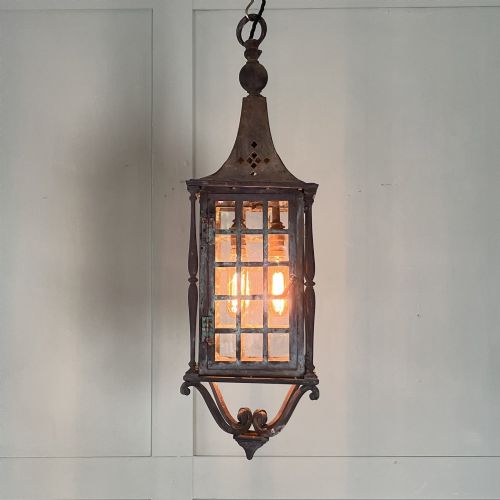
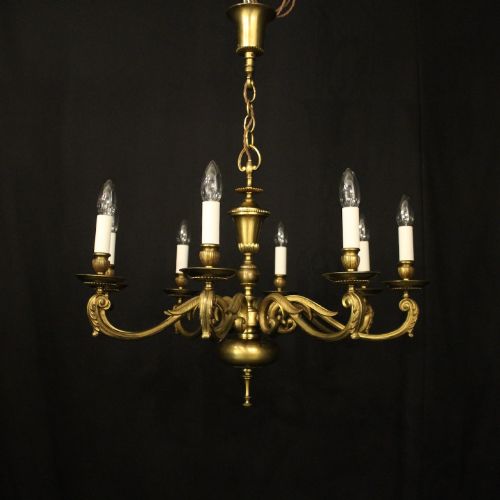
Buyers meet variations spanning simple brass galleries holding moonstone glass shades, hexagonal hall lanterns, and multi-arm chandeliers decorated with cut glass and crystal drops. Many examples incorporate Arts and Crafts or Art Nouveau design influences.
Formats range from compact single-bulb plafonniers suitable for smaller hallways to grand multi-light chandeliers and heavy bronze lanterns designed for larger spaces.
How they were made
Makers constructed the structural framework using cast, stamped, or spun brass, occasionally gilding or bronzing the metal surface. Frames were designed to secure various glass components including leaded panels, opaline shades, and bevelled crystals.
Glass elements were mouth-blown, moulded, or cut by hand, resulting in specialised forms such as moonstone shades, coffin prisms, and acorn plafonniers. Metal components joined via screws, solder, and chains to support the weight of the glass safely.
Materials across these listings include brass, bronze, gilt bronze, iron, and various forms of cut glass, crystal, opaline, and moonstone glass.
What varies in quality
Distinctions in quality rest upon the weight and thickness of the brass casting, the depth of hand-chased detail on frames, and the clarity or cut of the glass components. Superior fixtures display crisp junction work and substantial metal gauges.
Originality of components heavily influences worth, distinguishing matched period shade-and-gallery combinations from later marriages of parts. The complexity of the glasswork, such as intricate crystal prisms or hand-formed leaded panels, separates standard production from elevated examples.
Osler·G.E.C
The Edwardian Brass Pendant Light Glossary
- Plafonnier
- A ceiling-mounted or close-hanging bowl light directing illumination downwards. These typically feature opaline or cut glass bowls held by a metal gallery.
- Gallery
- The metal collar or ring supporting a glass shade. It usually contains thumb screws to secure the glass in position.
- Moonstone glass
- An opaque, milky white glass variant that diffuses bulb glare softly. It appeared frequently on early twentieth-century lighting.
- Prism
- A cut glass or crystal pendant hung from a chandelier to refract light. Common historic cuts include coffin and spear shapes.
- Rise and fall
- A mechanical pulley system allowing the pendant height to be adjusted up and down via a counterweight or spring drum.
Edwardian Brass Pendant Light: Frequently Asked Questions
How do I hang a heavy brass pendant?
Heavy fixtures require direct anchoring into ceiling joists using a suitable steel hook or mounting bracket capable of supporting the combined weight of brass and glass. Wiring must be routed through the suspension chain to relieve tension on the electrical flex.
Professional installation is recommended for antique multi-arm chandeliers and large lanterns to ensure structural safety and proper load-bearing capacity.
Are these lights suitable for low ceilings?
Compact plafonnier styles and flush-fitting hall lanterns work well in rooms with restricted vertical clearance. These designs keep the glass elements close to the ceiling plane while maintaining period character.
Multi-arm chandeliers and long chain-hung pendants require higher clearance to avoid obstructing movement underneath.
How do I clean brass and cut glass?
Brass components benefit from dusting with a soft cloth, avoiding aggressive chemical polishes that strip historic patina. Glass shades and crystal prisms can be removed and washed in warm soapy water before being dried thoroughly.
Care must be taken around old wiring and soldered joints during any maintenance work.
How do I date an antique pendant light?
Dating relies on stylistic clues such as Arts and Crafts hand-hammering, Art Nouveau organic curves, or Edwardian neo-classical motifs. Manufacturing techniques like sand casting and the specific formulation of glass shades also provide clear chronological markers.
Comparing structural hardware against documented period catalogues helps confirm the era of manufacture.