


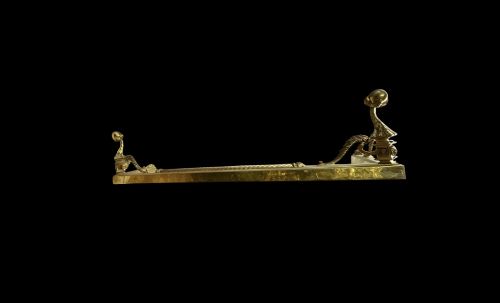


Edwardian Brass Fender
An edwardian brass fender brings warmth and architectural structure to a hearth, framing the fireplace with period character.
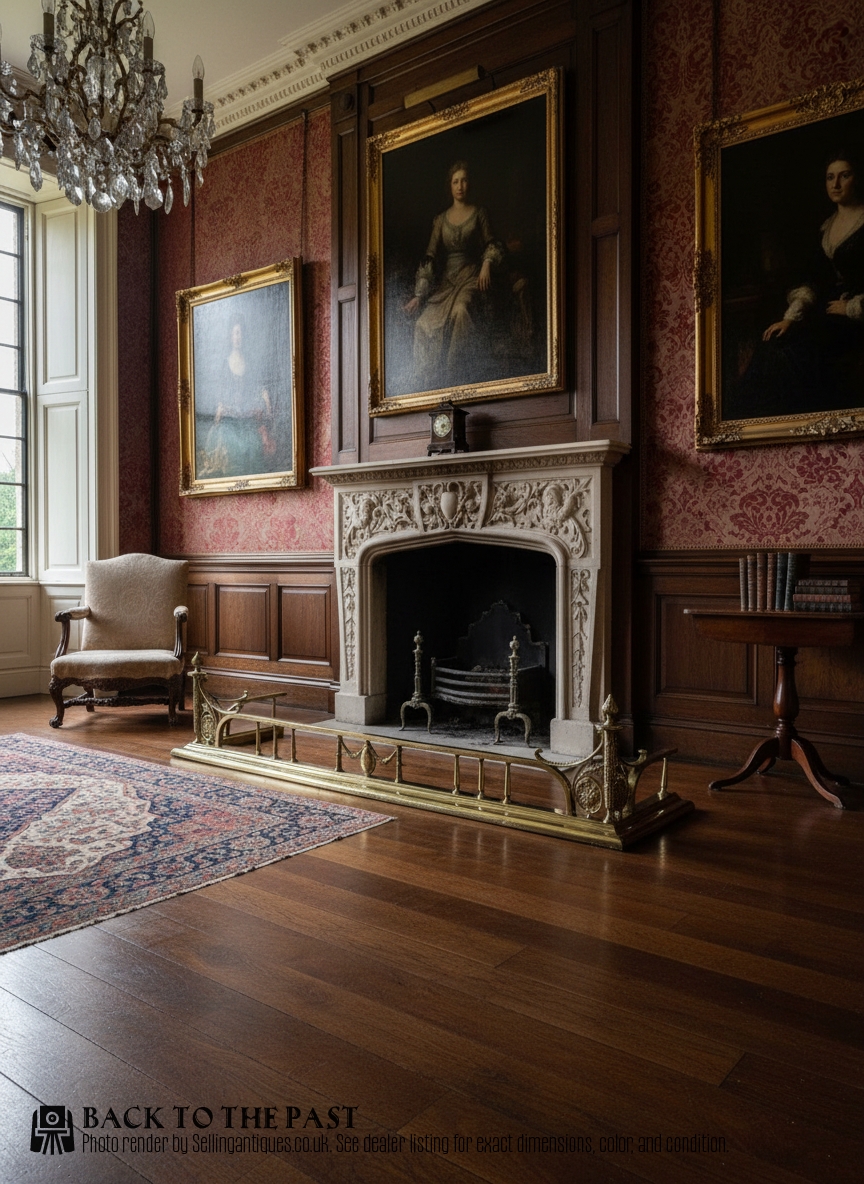
Edwardian Brass Fender
An edwardian brass fender sits on the hearth around an open fire, protecting the floor from stray embers while defining the fireplace enclosure. The pieces found here span the Victorian, Edwardian, and nineteenth-century periods, with many featuring adjustable frames or specialised club designs.
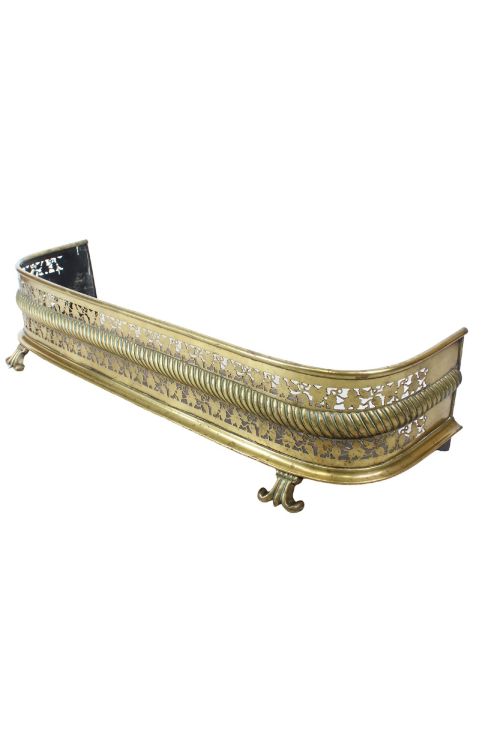
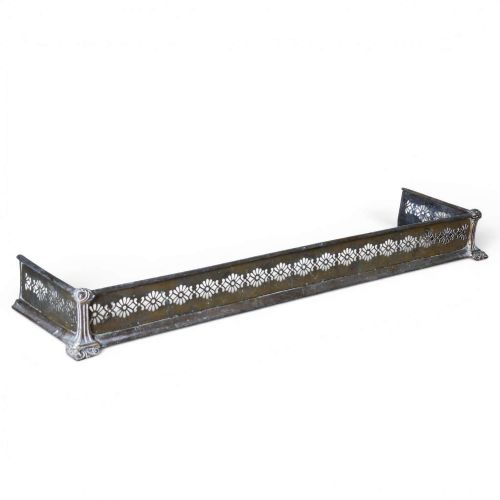
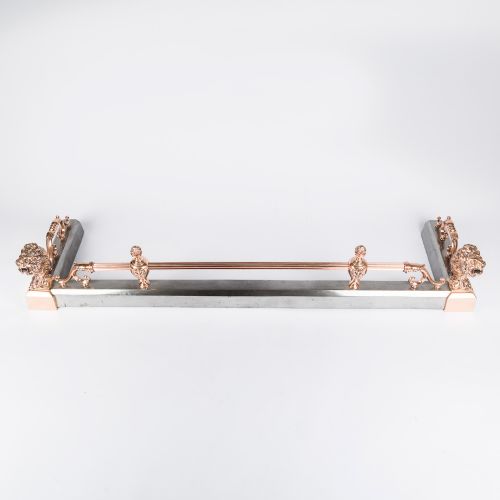
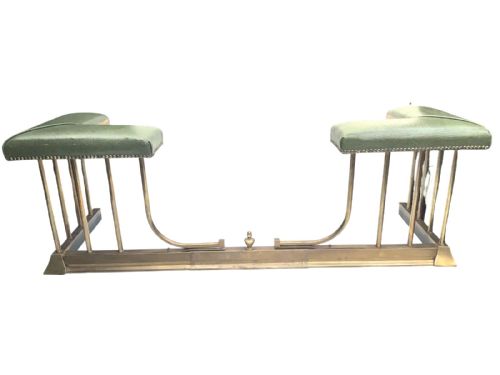
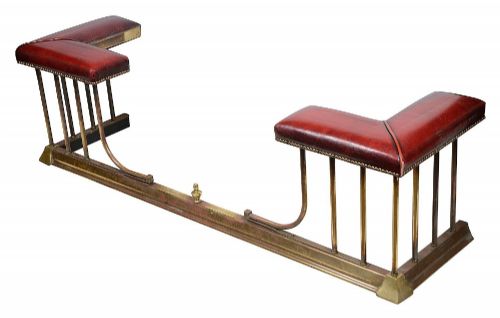
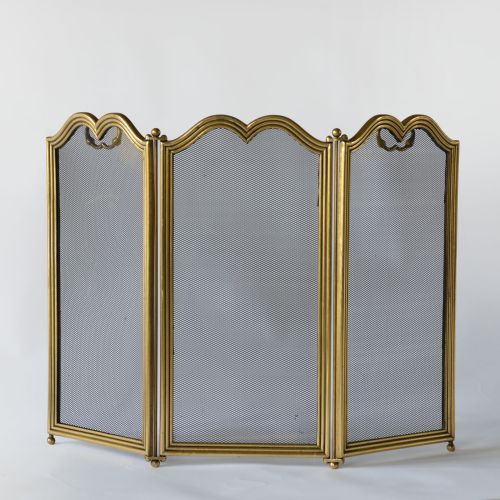
Buyers frequently encounter variants that incorporate upholstered leather or velvet seats, transforming the hearth surround into low fireside seating. Simpler forms rely on pierced brass galleries, tubular rails, or combinations of copper, steel, and cast iron.
Origins trace back to English country houses and domestic interiors of the late nineteenth and early twentieth centuries. These hearth accessories range from restrained linear profiles to ornate styles influenced by the Arts and Crafts and Art Nouveau movements.
How they were made
Maker construction combined heavy gauge brass tubing and sheet metal with internal iron or steel supports to provide structural rigidity against hearth heat. Pierced patterns were hand-punched or die-cut, while corners often displayed decorative cast brass brackets or scrolled mounts.
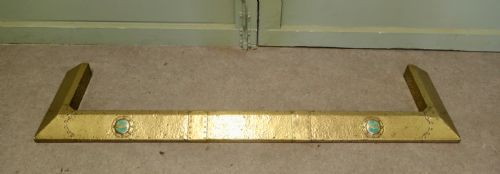
Upholstered club variants integrated wooden or iron frames fitted with leather, velvet cord, or fabric seats, secured with traditional studding. Surfaces were polished, left with natural patination, or accented with inset elements such as green enamel cabochons.
Edwardian Brass Fender Retail Price Guide 2026
Typical asking prices for edwardian brass fender among the pieces listed under this phrase on Sellingantiques today, from the lower quarter to the upper quarter. They describe what is for sale here now, not the wider market.
Listings include materials such as brass, leather, iron, copper, steel, fabric, enamel, and bronze across Victorian and Edwardian periods.
What varies in quality
Quality rests on the weight of the metal gauge, the crispness of pierced or cast ornamentation, and the structural integrity of extending mechanisms. Fenders constructed from heavy brass plate and solid iron cores maintain their alignment and stability under daily domestic use.
Upholstered seating versions differ in the depth of padding, the grade of leather or textile used, and the joinery of the internal frame. Fenders bearing maker attribution or integrated fire iron sets demonstrate higher workshop ambition.
Maple and Co
The Edwardian Brass Fender Glossary
- Club fender
- A low fireside fender featuring corner posts and an upholstered seat running along the top rails. These pieces originated in gentlemen's clubs to provide seating close to the hearth.
- Pierced brass
- Metal sheet perforated with decorative cut-out patterns such as lattices, scrolls, or geometric motifs. This technique lightens the visual weight of the heavy metal surround.
- Hearth kerb
- The low boundary frame that sits directly on the floor to contain ash and coals within the fireplace opening. Many adjustable examples use this layout.
- Cabochon
- A convex, polished gemstone or enamel inset used as a decorative accent on metalwork. They frequently appear on Arts and Crafts brass designs.
- Serpentine
- A gentle undulating curve shaped into the front outline of the fender. This contour softens the rectangular geometry of the fireplace.
Edwardian Brass Fender: Frequently Asked Questions
What is a club fender?
A club fender is a low hearth guard fitted with padded seats on top. It allows people to sit directly beside the fire.
These pieces were popular in large reception rooms and country houses for warming up close to the hearth.
How do adjustable fenders work?
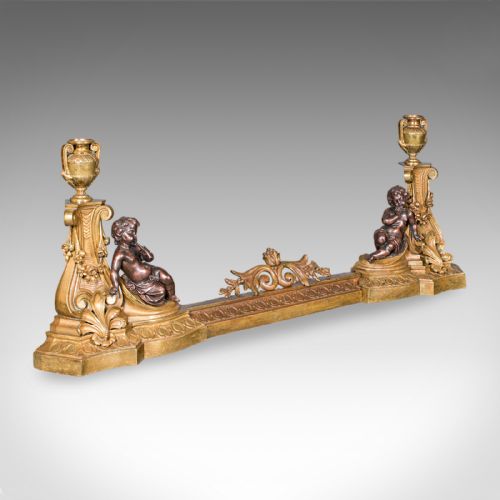
Adjustable fenders feature sliding metal sections that expand or contract to fit different fireplace widths. They allow the frame to be reconfigured for various hearth dimensions.
This mechanism is typically secured with hidden bolts or interlocking channels along the side rails.
What materials are used besides brass?
Makers frequently combined brass with copper, steel, cast iron, and wrought iron frameworks. Upholstered versions added leather, velvet, or fabric seats over internal padding.
Enamel cabochons and silvered finishes also appear as decorative accents on specific artistic styles.
How do I style a fender at home?
Place the fender directly on the hearth floor around your fireplace opening to anchor the room's seating area. Club versions can double as extra fireside seating when entertaining.
Keep the metal polished to a bright finish or let the natural patination age gracefully with the room.