





Edwardian Brass Dinner Chime
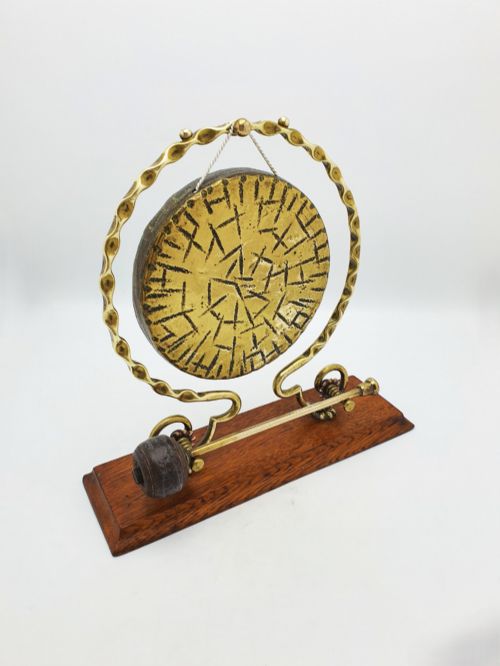
An edwardian brass dinner chime brings a sharp, resonant summons to the dining table, combining sturdy metalwork with polished timber.
Edwardian Brass Dinner Chime
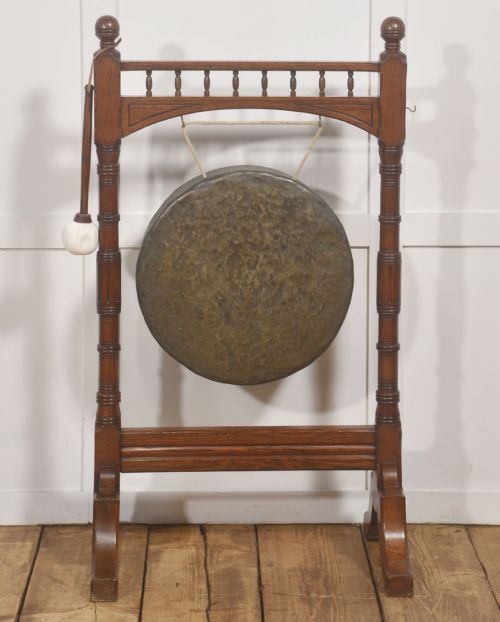
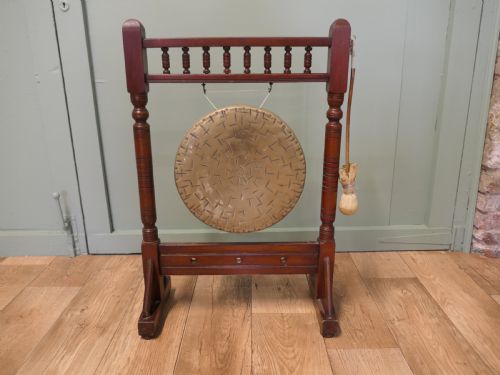
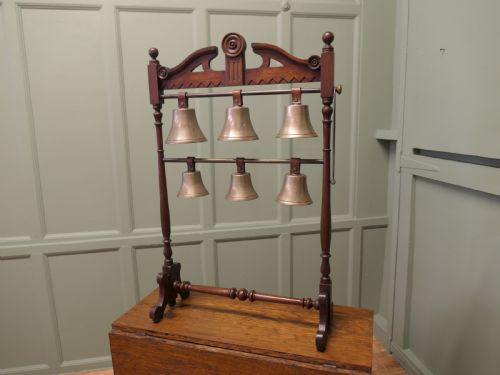
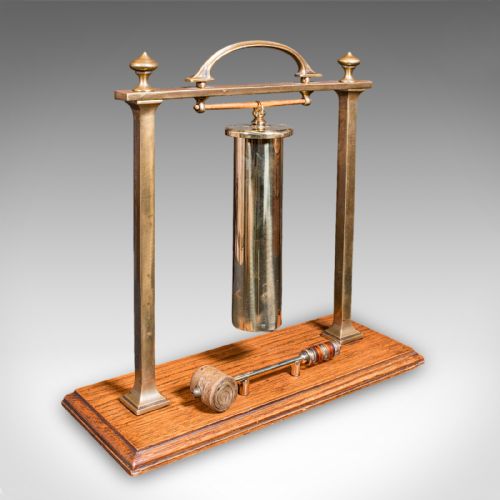
The search for an edwardian brass dinner chime uncovers a distinct category of domestic summoning pieces, most frequently encountered as table gongs mounted on solid timber frames with accompanying handheld strikers. These items range from simple tabletop brass bells to elaborate wall-hanging arrangements and multi-strike chimes designed to gather household members.
Alongside pieces strictly from the Edwardian era, the selection includes related dining gongs and chimes spanning the nineteenth century up to the nineteen-twenties, incorporating styles such as Arts and Crafts, Gothic Revival, and Art Nouveau alongside Oriental and Japonisme motifs.
Materials and Construction
Makers utilised resonant metals, principally brass and bronze alongside silver plate and cast iron, paired with dense timbers such as oak and walnut for the supporting frames and bases. Cord suspends the gongs to allow free vibration when struck, while structural elements occasionally integrate alternative natural materials like cattle horn.
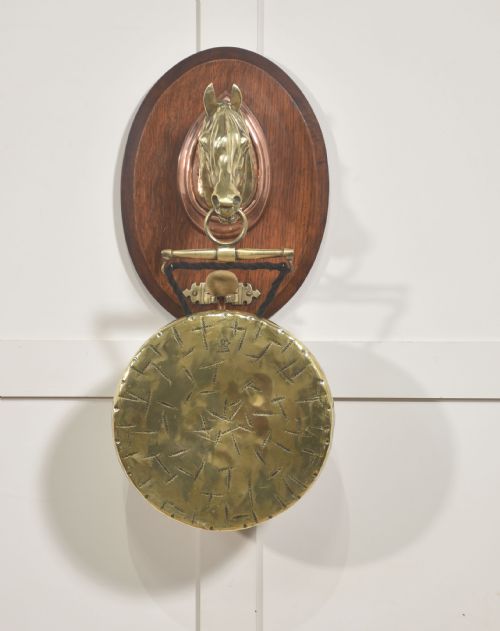
Joinery and metal casting techniques define the construction, from carved wooden stands and wall-mounted brackets to elaborate cast metal mounts shaped as horse heads or stylised organic forms.
Edwardian Brass Dinner Chime Retail Price Guide 2026
Typical asking prices for edwardian brass dinner chime among the pieces listed under this phrase on Sellingantiques today, from the lower quarter to the upper quarter. They describe what is for sale here now, not the wider market.
Among the striking apparatuses available, one notable piece includes a brass horse head mount keeping watch over the proceedings.
Factors of Quality
Quality rests in the acoustic resonance of the metal and the integrity of the frame construction, where thicker brass castings produce a cleaner, longer-sustaining tone than thinner stamped alternatives. The integration of the timber stand, from plain oak bases to intricately carved walnut frames, dictates the overall solidity and visual harmony of the piece.
The refinement of decorative details, including hand-carving on the woodwork, specialised mountings, and the survival of the original handheld striker, separates standard utility items from more ambitious decorative examples.
The Edwardian Brass Dinner Chime Glossary
- Dinner gong
- A suspended metal disc, bowl, or bell struck with a mallet to summon people to a meal. They replaced traditional hand bells in many large households during the Victorian and Edwardian periods.
- Striker
- The handheld mallet or hammer used to hit the dinner chime or gong. These often feature matching wooden handles and padded or bare striking heads.
- Gothic Revival
- An architectural and decorative style drawing inspiration from medieval forms. Pieces in this idiom display pointed arches, trefoils, and heavy structural timberwork.
- Arts and Crafts
- A design movement prioritising traditional craftsmanship and visible construction methods. Furniture and metalwork from this sphere display honest materials and minimal surface ornamentation.
Edwardian Brass Dinner Chime: Frequently Asked Questions
How do you play a dinner chime?
You hold the wooden striker in one hand and firmly tap the centre of the brass bell, gong, or chime suspended within its frame. A single confident strike produces the clearest resonant tone.
Allow the vibration to fade naturally rather than dampening the metal, as this lets the full acoustic quality of the brass or bronze resonate across the room.
Where were dinner gongs placed?
Dinner gongs stood on dining room sideboards, entrance hall tables, or were mounted directly to walls near the main living spaces. This placement ensured the sound carried efficiently through the house.
Tabletop versions remained portable so staff could relocate them closer to the dining area when necessary.
How do I care for the brass?
Dust the metal and wooden frame regularly with a dry, soft cloth to prevent particulate buildup. Avoid harsh chemical cleaners that strip the aged patina from the brass.
If polishing is necessary, use a mild metal cream applied sparingly, taking care not to stain the surrounding oak or walnut mounting.
Are original strikers usually included?
Many surviving gongs retain their original wooden or metal handheld strikers, often designed to slot neatly into loops or clips on the frame. Finding a matching striker completes the functional integrity of the piece.
When a striker is absent, collectors source period-appropriate replacements matching the timber and metal style of the main stand.