




Edwardian Bow Jewellery
Edwardian bow jewellery captures the delicate ribbon motifs of the early twentieth century, offering feminine elegance for daily wear.
Edwardian Bow Jewellery
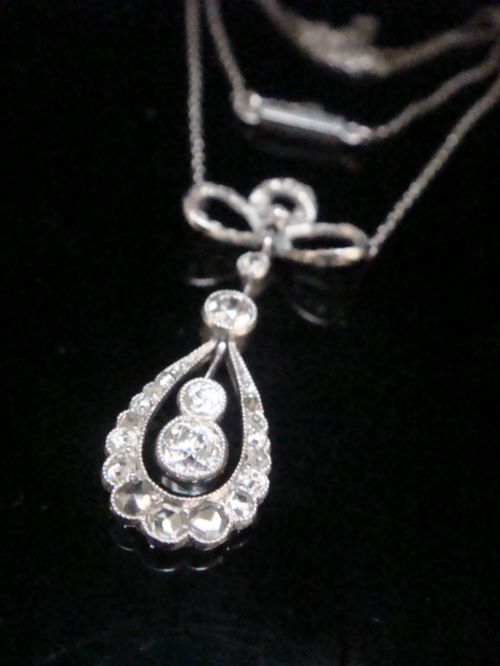
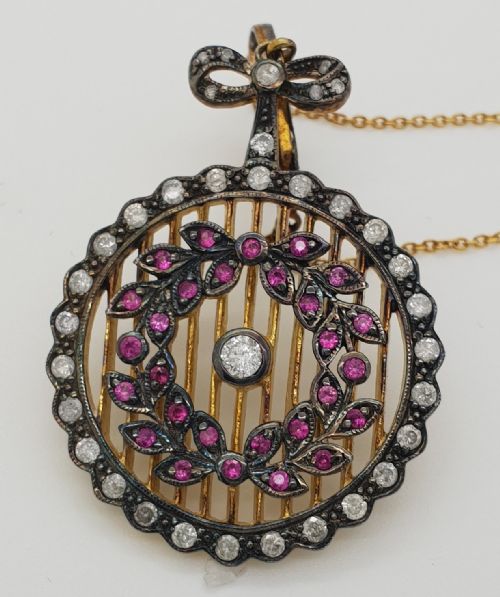
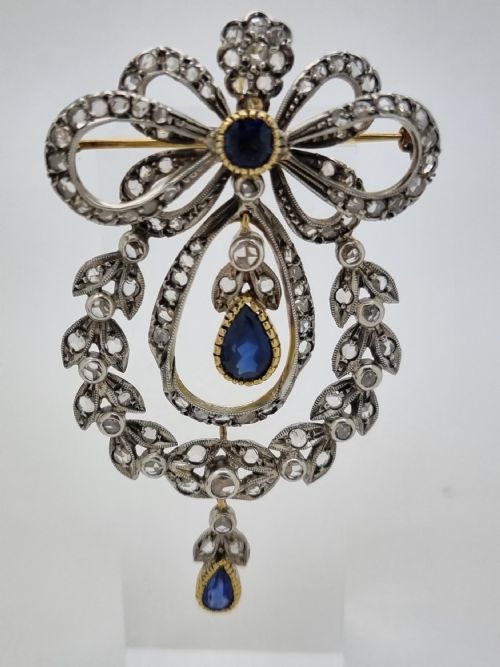
Edwardian bow jewellery encompasses brooches, pendants, necklaces, and earrings fashioned into stylized ribbon knots. These pieces typically emerge from the Edwardian period, alongside occasional Victorian and Art Deco examples.
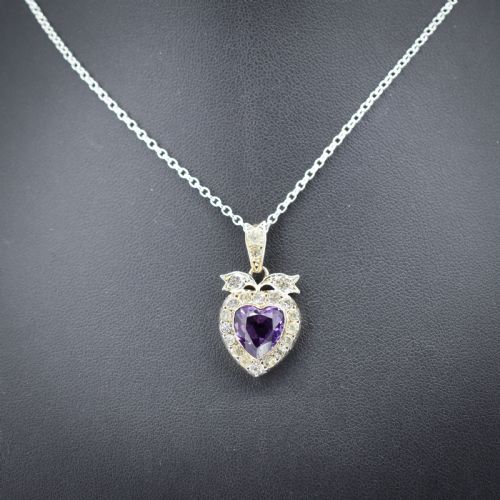
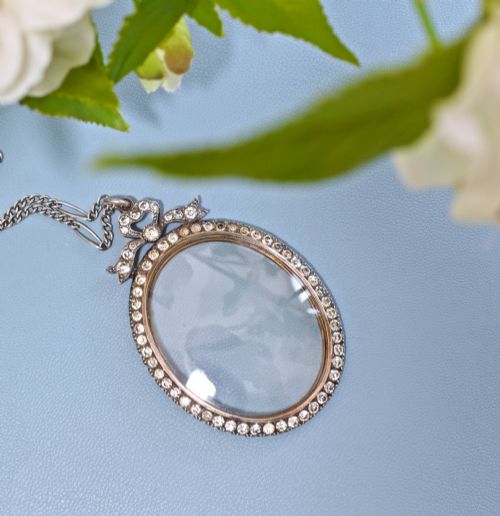
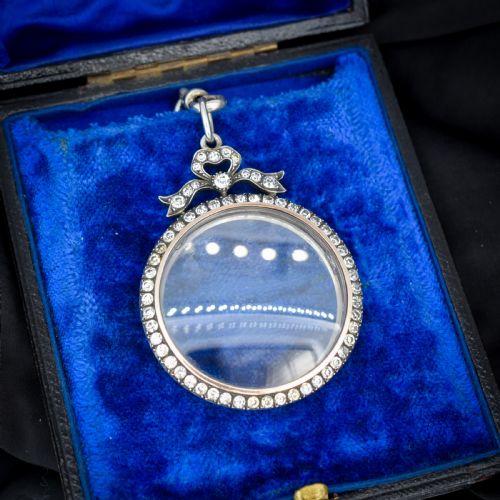
The most common forms on this page include diamond and paste bow pendants, gold and silver brooches, and convertible pendant-brooches. Many incorporate heart drops, turquoise, pearls, or lockets suspended beneath the central bow.
Makers utilised lighter metals and intricate piercing to achieve an airy, lace-like effect that distinguishes these ribbon motifs from earlier, heavier Victorian designs.
Materials and construction
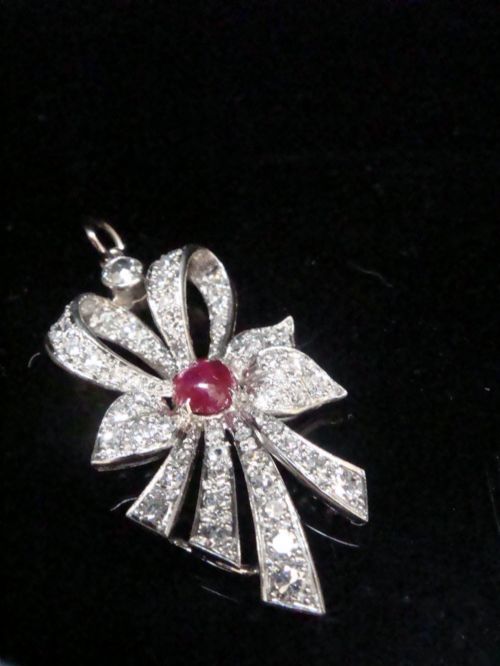
Goldsmiths combined platinum and silver over gold to create durable, bright white settings that maximised the brilliance of old-cut diamonds and paste glass. These mixed metals allowed jewellers to form razor-thin wirework and delicate pavé settings.
Pieces frequently integrate natural pearls, turquoise cabochons, rubies, and sapphires set securely within yellow gold, 18ct white gold, or platinum structures. Enamel and pink tourmalines also appear, adding distinct colour accents to the ribbon designs.
Quality and craftsmanship
The refinement of the metalwork separates finer examples from standard production, particularly where millegrain edges and pierced platinum ribbons show crisp, deliberate execution. Superior stones, such as well-matched natural pearls and bright old-cut diamonds, elevate a piece above those set with paste glass.
Original fitted boxes and the retention of convertible fittings, allowing a pendant to function as a brooch, indicate higher original status and careful preservation by past owners.
Eduard Foehr
The Edwardian Bow Jewellery Glossary
- Millegrain
- A decorative technique featuring a row of tiny raised metal beads along the edge of a setting, commonly seen in Edwardian platinum work.
- Paste
- Faceted glass hand-cut and polished to imitate gemstones, frequently utilised in period jewellery for brilliance and colour.
- Old-cut diamond
- A hand-faceted diamond shape typical of the late nineteenth and early twentieth centuries, characterised by a small table and high crown.
- Lavalier
- A pendant featuring a suspended gemstone or drop hanging below the main decorative element, popular during the Edwardian era.
- Cabochon
- A gemstone shaped and polished with a smooth, rounded surface rather than faceted facets.
Edwardian Bow Jewellery: Frequently Asked Questions
How do I wear an antique bow brooch?
Pin these versatile pieces centrally on jacket lapels, coat collars, or at the neckline of a blouse. Many versions feature integrated loops allowing them to double as pendants on a gold or platinum chain.
Ensure the pin mechanism fastens securely before wearing, and consider using a modern safety clutch for valuable diamond pieces.
Are these pieces made of solid platinum?
Many Edwardian jewels utilise a platinum top plate fused to an 18ct yellow or white gold backing. This technique exploited platinum's strength for secure stone setting while keeping the overall weight manageable.
Pure platinum mountings also appear alongside silver-topped gold constructions in the listings.
How can I tell Edwardian jewellery from Victorian pieces?
Edwardian items favour platinum and white metals with airy, lace-like openwork and diamond or pearl embellishments. Victorian designs often employ heavier yellow gold settings, pinchbeck, or darker gemstone arrangements.
Stylistic crossover occurs around transition years, but the presence of platinum strongly points toward the Edwardian era.
How should I clean my antique diamond bow necklace?
Clean delicate ribbon settings using warm water, mild soap, and a very soft brush to remove dust from behind the stones. Avoid harsh chemical dips, particularly if the piece contains pearls or turquoise.
Store each item individually in a lined box to prevent scratching between the diamonds and softer gems.