
Edwardian Book Rack Stand
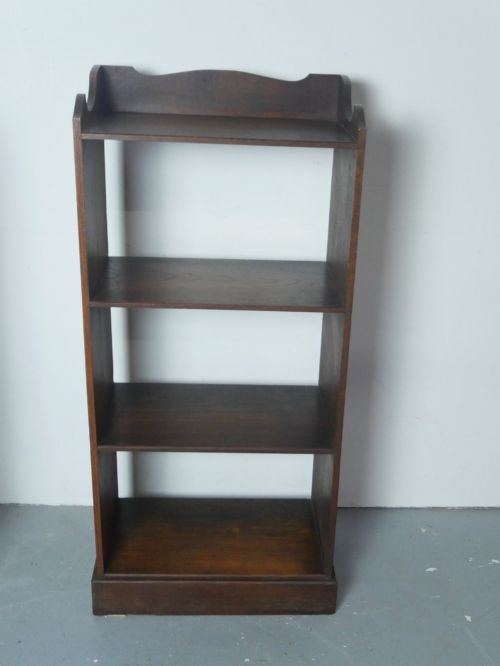
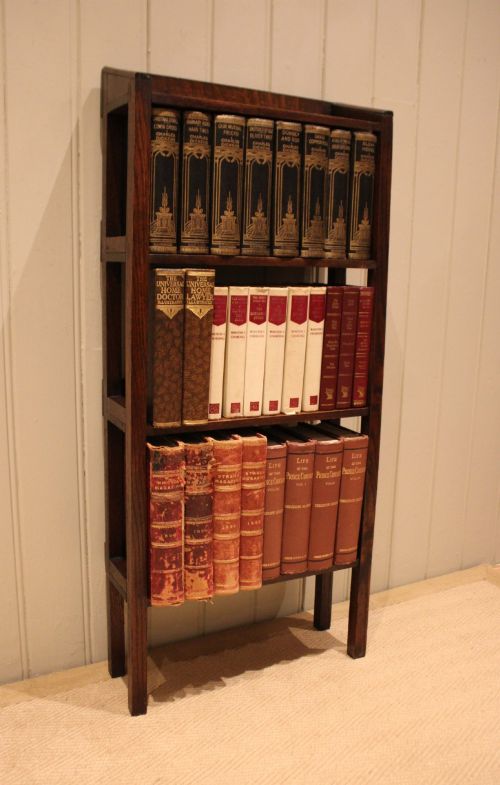
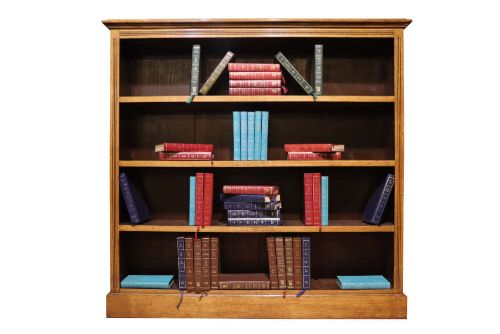
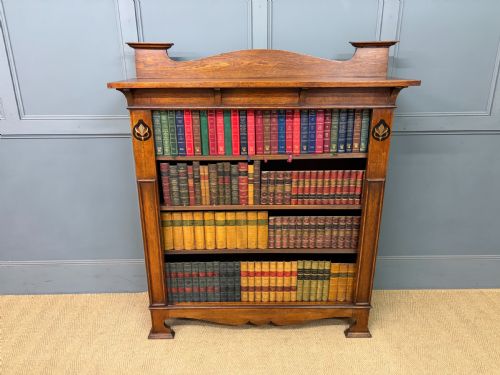
An edwardian book rack stand keeps volumes organised on a desk or floor with straightforward grace.
Edwardian Book Rack Stand
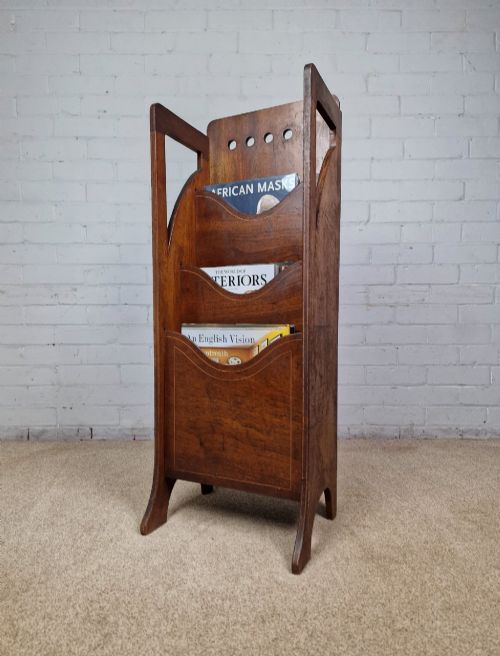
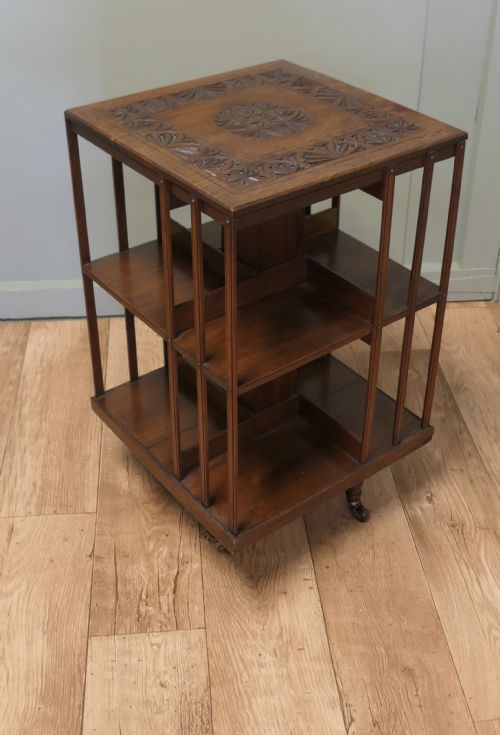
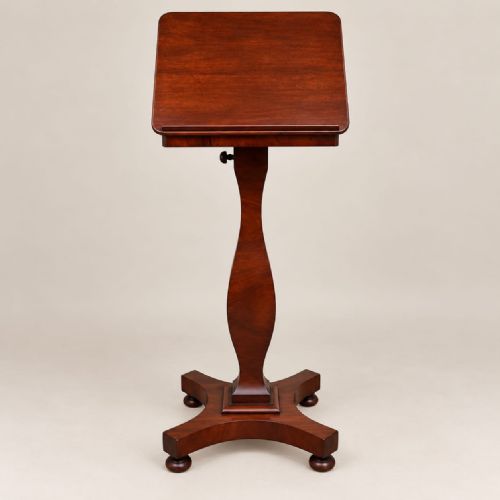
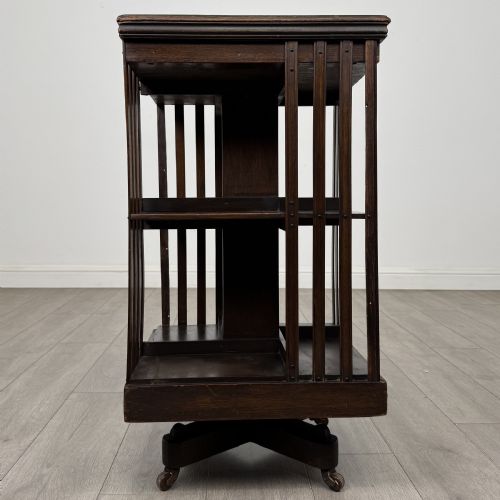
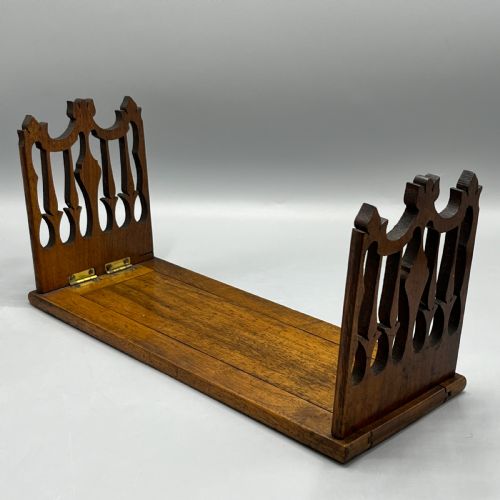
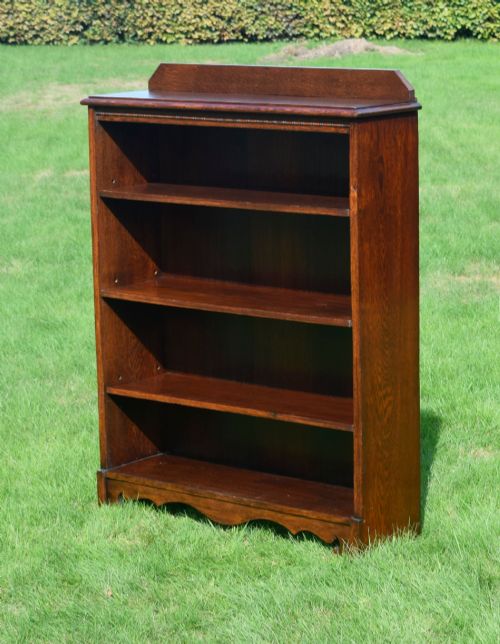
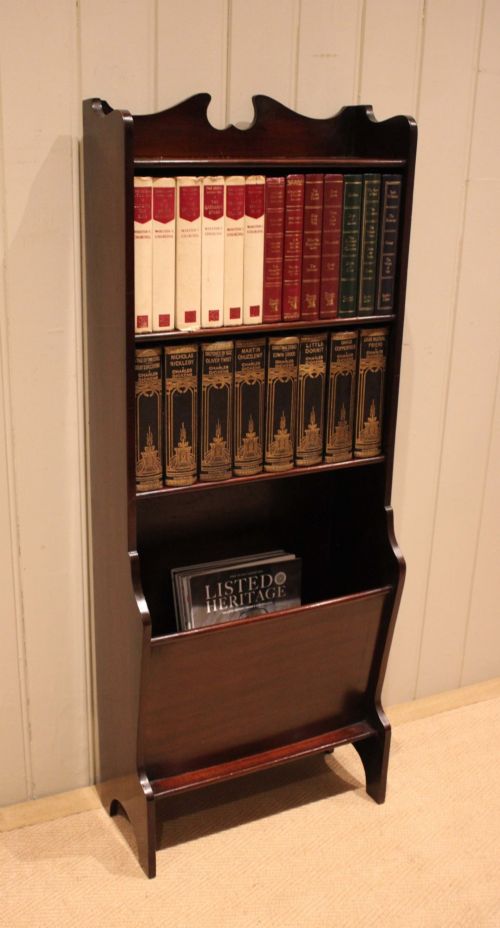
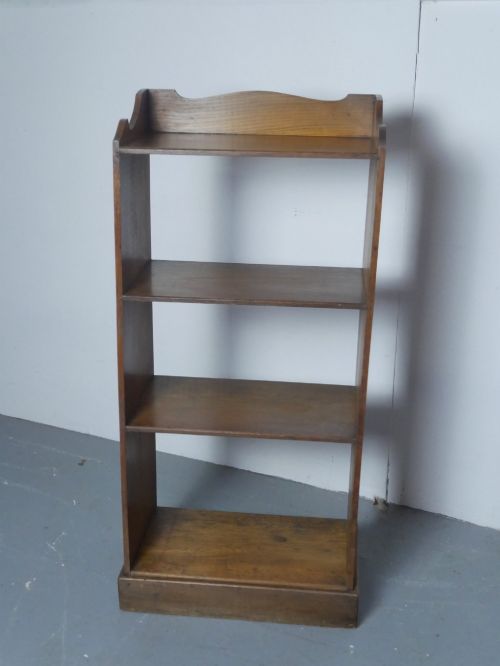
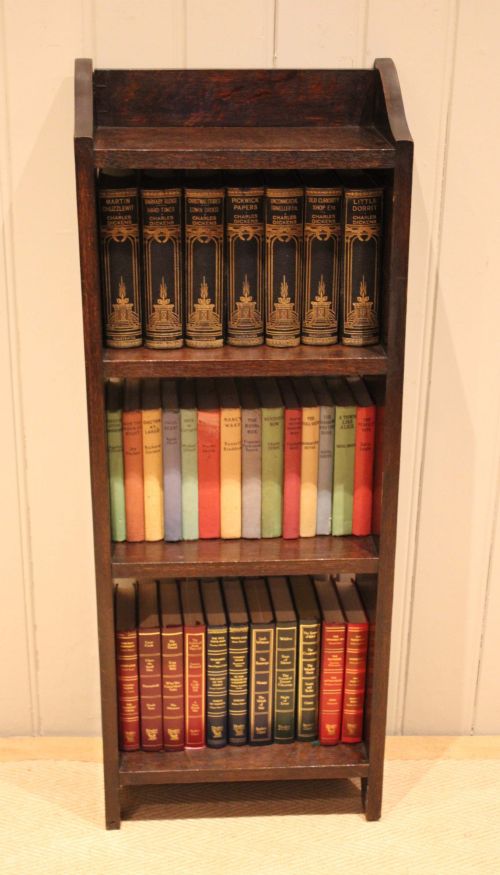
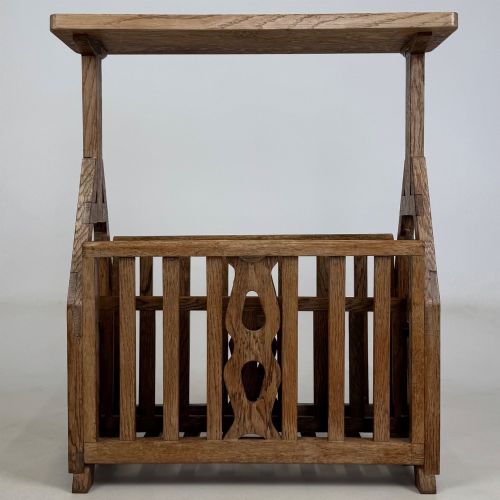
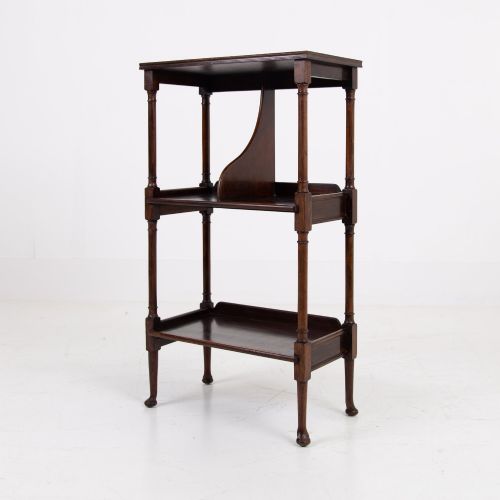
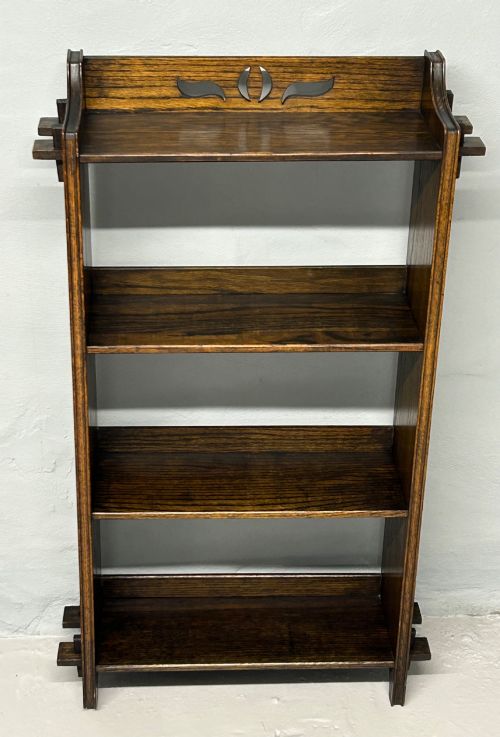
An edwardian book rack stand encompasses portable table stands, extending slides, floor troughs, and revolving bookcases. The selection seen here leans heavily towards compact oak and mahogany pieces designed for domestic libraries and studies.
Makers of the period produced both simple utilitarian items and elaborate inlaid specimens. Pieces range from straightforward open shelves to inventive revolving stands and sliding troughs intended for regular daily use.
Materials and Construction
Timber selection defines these pieces, with solid oak and figured mahogany forming the primary structural elements. Workshops utilised brass mounts for extending actions and decorative hinges, while boxwood and satinwood provided contrast through inlay.
Joinery techniques prioritised durability to support heavy volumes of text. Marquetry, carved details, and decorative cut-outs appeared on finer examples, alongside ebonised finishes and painted surfaces.
Oak and mahogany appear as the predominant materials across these book stands and troughs.
Build and Material Selection
Quality rests upon the choice of timber and the crispness of any decorative carving or inlay. Solid mahogany and quarter-sawn oak with strong grain figures elevate a piece above standard utility items.
Mechanical elements such as extending actions and revolving mechanisms distinguish superior examples. Smooth movement in brass-mounted slides or rotating tiers indicates superior initial manufacture and careful assembly.
Arthur Simpson·Waring and Gillows·Betjemanns
The Edwardian Book Rack Stand Glossary
- Book trough
- A V-shaped receptacle designed to hold books upright or at a slight slant on a table or floor. They often feature carrying handles or partitioned sections.
- Extending book slide
- A portable desktop stand with sliding ends that adjust to accommodate a varying number of volumes. Brass mounts and hinged actions frequently support the expanding mechanism.
- Revolving bookcase
- A rotating tiered stand that allows easy access to volumes from any seating position. These sit upon a concealed or visible base mechanism.
- Marquetry
- Decorative veneer work arranged in geometric or floral patterns across the surface. Artisans cut contrasting timbers to form intricate pictures.
- Arts and Crafts
- A design movement valuing honest construction and visible craftsmanship over mass production. Pieces from this tradition often display exposed joinery and hand-carved motifs.
Edwardian Book Rack Stand: Frequently Asked Questions
Where should I place a book trough?
A book trough sits comfortably upon a large desk, a side table, or directly on the floor depending on its scale. They work well within reach of an armchair or beside a main reading seat.
Floor-standing troughs keep heavier volumes accessible without taking up the footprint of a full bookcase. Tabletop versions gather current reading material together in one tidy footprint.
How do extending book slides work?
Extending book slides utilise a wooden base channel where the outer ends pull outward to lengthen the holding space. Brass tracks or wooden tongue-and-groove joints guide the movement smoothly.
Spring-loaded or hinged novelty rests sometimes support the volumes at either end. The design allows the stand to expand as your collection on the desk grows.
Can a revolving stand hold heavy books?
Solid mahogany and oak revolving stands manage standard octavo volumes and reference books with ease. The central pivot mechanism distributes weight evenly across the supporting base.
Overloading the top tier with massive folios can destabilise the rotation. Distributing heavy volumes across the lower shelves maintains balance and ease of turning.
How do I distinguish Edwardian from Victorian pieces?
Edwardian pieces tend to display lighter golden oak or satinwood inlay with a less austere aesthetic than high Victorian design. Proportions often feel airier and more refined.
Victorian items frequently employ darker finishes, heavier coromandel or rosewood veneers, and more robust Gothic or classical revival detailing. The transition around nineteen hundred brought brighter domestic interiors and simpler furniture lines.