
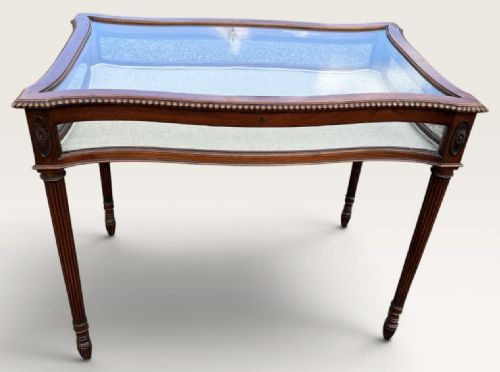
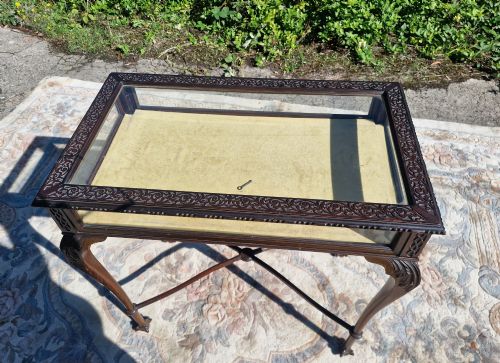
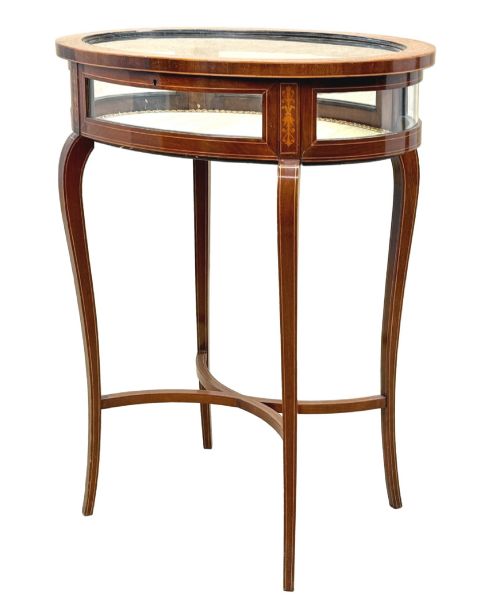
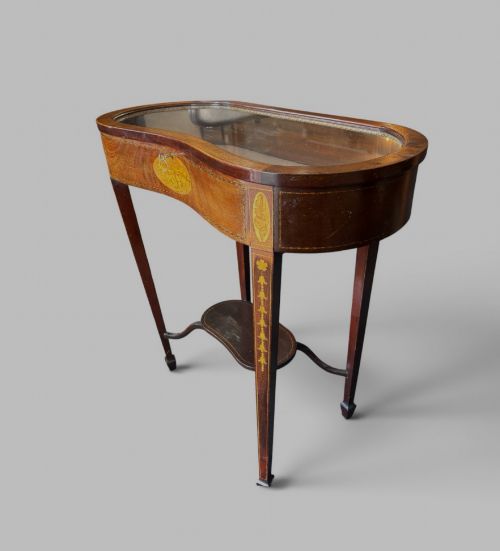


Edwardian Bijouterie Display Table
An edwardian bijouterie display table brings elevated glass-topped storage into a room, designed specifically for showcasing small personal treasures and collectibles.
Edwardian Bijouterie Display Table
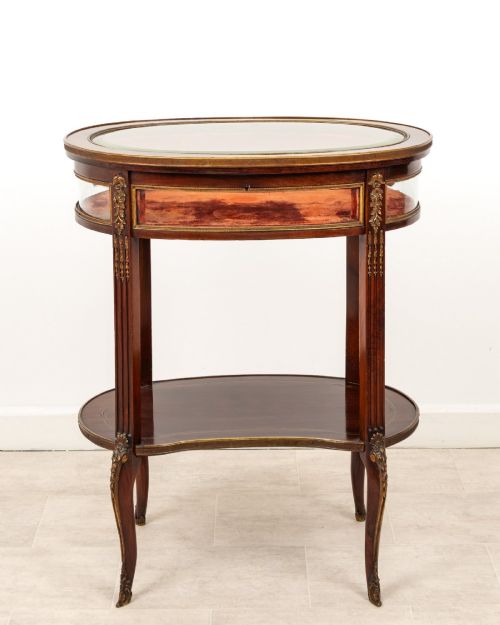
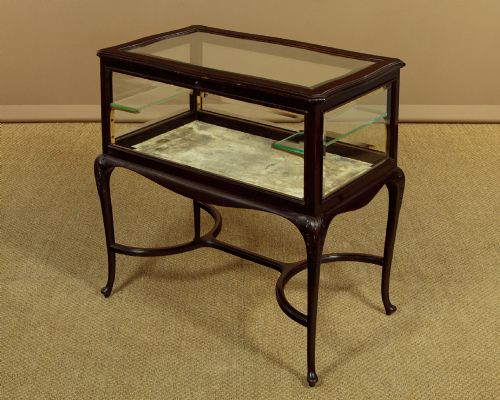
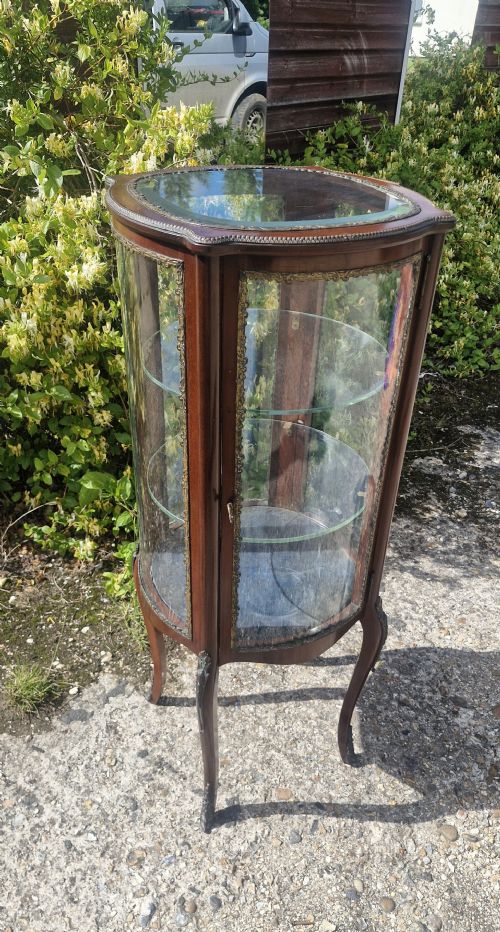
An edwardian bijouterie display table is a glazed vitrine mounted on slender legs, designed to show off medals, rings, and trinkets beneath a clear glass top. Most examples encountered belong to the Edwardian period or the late nineteenth century, though variations stretch from the late Victorian era into the 1930s.
These pieces function as miniature exhibition cases for the home, combining the utility of a small table with the protective enclosure of a cabinet. The form frequently appears in mahogany or satinwood, often featuring delicate inlay work, tapering legs, and hinged or lifting lids that provide interior access.
The layout ranges from simple rectangular and oval shapes to more complex serpentine, octagonal, and kidney-shaped silhouettes. Inside, the display surface is typically lined with velvet or fabric to cushion delicate objects against the glass and wood frame.
How they were made
Cabinetmakers constructed the frames primarily from dense hardwoods like mahogany, rosewood, and satinwood, frequently applying decorative veneers or intricate marquetry and stringing. Structural support relied on tight joinery, while brass, ormolu, or gilt metal mounts added ornamental accents to the corners, legs, and glass frames.
Glazing required fitted glass panels secured within hinged or fixed tops to protect the contents from dust while maintaining maximum visibility. Interiors were finished with padded velvet or textile linings, glued over a wooden base to create a soft, tactile presentation bed for small valuables.
Periods represented span from Victorian and 1880 through the Edwardian era up to the 1930s.
What varies in quality
The refinement of the timber and the intricacy of the inlay set finer examples apart from simpler utility pieces. Dense mahogany or figured satinwood with precise marquetry indicates a higher standard of workshop production than plain, unadorned frames.
Metalwork and glazing execution further distinguish the range, as cast ormolu mounts and heavy cast brass hinges reflect greater expenditure than stamped brass or plain iron fittings. The symmetry of complex shapes, such as kidney or serpentine outlines, demands advanced carpentry skill.
The Edwardian Bijouterie Display Table Glossary
- Bijouterie
- Small decorative items, trinkets, and personal valuables such as rings, medals, and small silver objects. These items formed the primary collection housed within glazed display tables.
- Vitrine
- A glass-fronted or glass-topped cabinet used for displaying objects of curiosity and fine possessions. The term highlights the prominent use of glazing panels in the construction.
- Marquetry
- Decorative woodwork where thin pieces of veneer are fitted together to form pictorial or geometric patterns on a surface. This technique frequently decorates the tops and borders of tables.
- Ormolu
- Gilded bronze or brass applied as a decorative mount to furniture frames. It provides metallic contrast against the dark polished timber.
- Serpentine
- A curved shape featuring a convex centre flanked by concave ends, creating a flowing wave-like outline. This contour appears on the edges of higher-end display tables.
Edwardian Bijouterie Display Table: Frequently Asked Questions
What is an edwardian bijouterie display table?
An edwardian bijouterie display table is a specialised piece of furniture featuring a glazed compartment on legs, intended for exhibiting small personal valuables and ornaments.
These tables combine the surface utility of a standard occasional table with the protective enclosure of a glass showcase, allowing owners to view their collections without handling them constantly.
How were these tables used?
They served as drawing-room display pieces where hosts could exhibit pocket watches, medals, ribbons, and decorative trinkets to visiting guests. The glass top kept dust away while keeping the contents fully visible in the domestic interior.
In period homes, they functioned much like modern museum cases, turning private collections of small treasures into visible conversation items within the formal reception rooms.
What woods were commonly used?
Makers relied heavily on mahogany, satinwood, and rosewood for the primary frame construction and veneer faces. Lighter woods like satinwood often featured contrasting stringing and marquetry inlay.
Some variations incorporate walnut or bamboo alongside lacquer work, depending on the specific stylistic revival trend influencing the workshop at the time of manufacture.
How do I care for the interior lining?
The velvet and fabric linings require gentle dusting with a soft brush to prevent accumulation without damaging the delicate textile fibres. Avoiding direct sunlight is essential to prevent the lining fabric and wood veneers from fading.
Because the interior textiles are often original to the piece, heavy cleaning agents must be avoided to preserve the historic integrity of the fabric bed.
How do I distinguish Edwardian from Victorian examples?
Victorian examples tend to display heavier proportions, darker rosewood or mahogany timbers, and occasionally more robust carving styles. Pieces from this earlier era often lean towards French Rococo Revival or solid Victorian aesthetics.
Edwardian versions frequently utilise lighter satinwood, delicate inlay work, and slender tapered legs, reflecting a shift towards lighter, airier furniture designs around the turn of the twentieth century.