

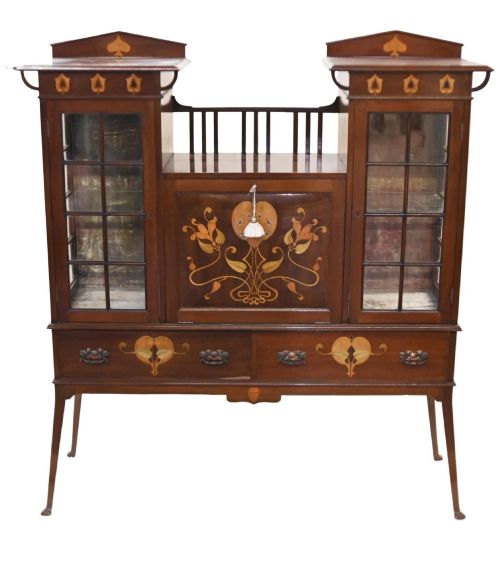
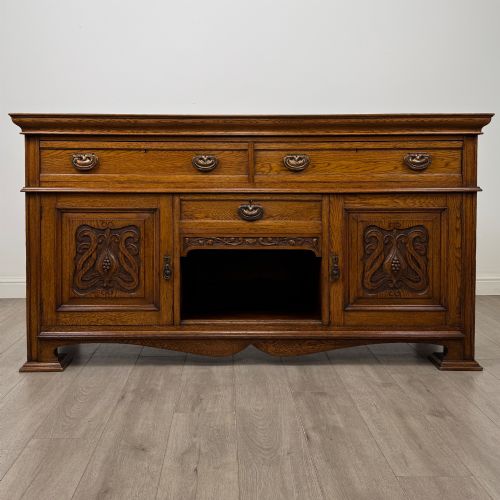


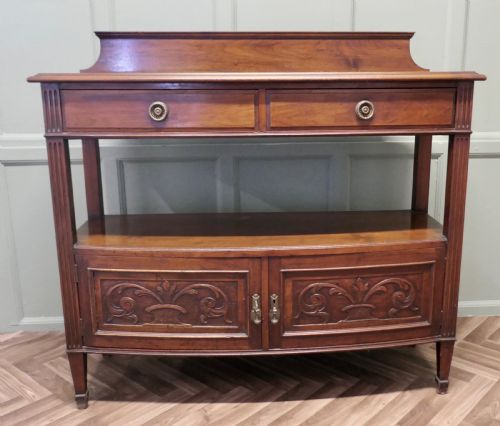


Edwardian Art Nouveau Sideboard
These edwardian art nouveau sideboard pieces combine fluid linear decoration with practical dining room storage, offering a striking focal point for the home.
Edwardian Art Nouveau Sideboard
An edwardian art nouveau sideboard brings together the organic, flowing lines of the turn of the century with the substantial timber construction required for dining room storage. Buyers searching for this phrase encounter substantial furniture pieces designed to hold tableware, serving dishes, and glassware whilst displaying decorative objects.
The versions most frequently met on this page span the Victorian, Edwardian, and early twentieth century periods. They cross over comfortably with Arts and Crafts sensibilities, often appearing in forms such as mirror back sideboards, dressers, and buffet cabinets.
Makers and designers of these cabinets utilised rich timbers like oak, walnut, and mahogany, frequently enhanced by fruitwood marquetry inlay, brass handles, and copper detailing. The resulting forms range from simple open-centre oak servers to tall display chests and glazed drinks cabinets.
How they were made
Cabinet makers of the period constructed these sideboards using solid hardwoods including oak, walnut, and mahogany, often pairing them with decorative fruitwood marquetry inlay. Panels and drawer linings frequently incorporate secondary timbers, showcasing traditional joinery methods suited to heavy daily domestic use.
Decorative metalwork forms a central part of the construction, featuring hammered brass and copper hinges, backplates, and drop handles. Glass panels are also utilised in display sections and cabinet doors, sometimes paired with mirrored backs to reflect light within the room.
Edwardian Art Nouveau Sideboard Retail Price Guide 2026
Typical asking prices for edwardian art nouveau sideboard among the pieces listed under this phrase on Sellingantiques today, from the lower quarter to the upper quarter. They describe what is for sale here now, not the wider market.
Listings feature timbers including mahogany, oak, walnut, and fruitwood marquetry, spanning the Victorian and Edwardian periods up to nineteen ten.
What varies in quality
The division between standard production and finer examples rests upon the ambition of the design and the precision of the cabinetwork. Superior pieces display intricate fruitwood marquetry inlay, well-figured timber grains, and carefully considered proportions rather than simple applied ornamentation.
Hardware and metal components also dictate the standard of a piece, with hand-hammered copper and chased brass mounts marking out superior workshops from routine commercial production. The integration of structural elements like mirror backs and leaded or bevelled glass further elevates the status of an individual sideboard.
Shapland and Petter
The Edwardian Art Nouveau Sideboard Glossary
- Marquetry inlay
- A decorative technique where small pieces of contrasting veneer are fitted into a timber ground to form pictorial or geometric patterns. This work requires immense precision and elevates the visual appeal of cabinet doors and drawer fronts.
- Mirror back
- An upright wooden frame fitted with a mirror plate, attached to the rear upper surface of a sideboard. It serves to bounce light around a dining space and visually display glassware placed on the surface below.
- Open centre
- A sideboard configuration featuring a recessed shelf or space between lower cupboards and upper superstructure. This layout lightens the heavy appearance typical of large dining room furniture.
- Fruitwood
- Timber sourced from fruit-bearing trees such as pear, apple, or cherry, prized for its fine grain and pale colour. It is frequently utilised in contrasting marquetry details on darker walnut and mahogany carcases.
Edwardian Art Nouveau Sideboard: Frequently Asked Questions
How were these sideboards used?
Dining rooms relied on these cabinets to store heavy porcelain, silver cutlery, table linen, and bottles of wine. The flat top surface acted as a staging area during meals for serving dishes.
Mirror backs and display shelves also allowed households to exhibit decorative ceramics and glassware to visiting guests.
How do I style one at home?
These substantial wooden cabinets anchor a dining room or large hallway, working well against neutral walls that allow the timber grain and marquetry to stand out. Keep the surface uncluttered with just a few considered ceramics or glass pieces.
Ensure the room has adequate lighting to highlight the brass or copper hardware and the reflective quality of any integrated mirror back.
How do I tell periods apart?
Victorian examples tend to display heavier, darker timber frames with more conservative revival details, whereas Edwardian pieces often embrace lighter woods and more exuberant stylistic flourishes. Arts and Crafts influences show through exposed joinery and honest construction.
Looking at the choice of metalwork, handles, and inlay techniques helps narrow down the decade of manufacture.