

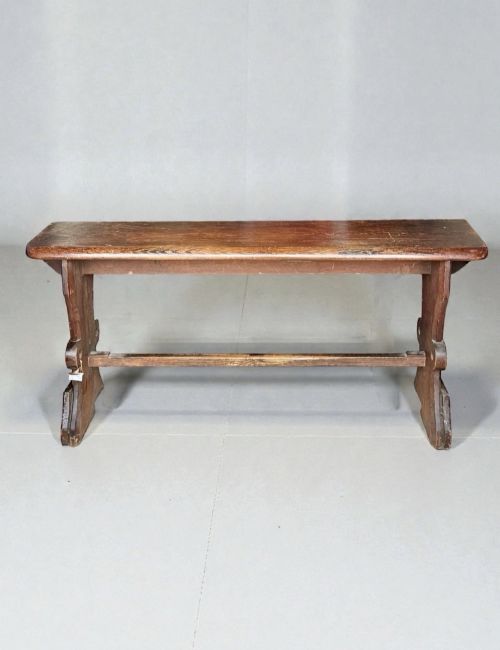

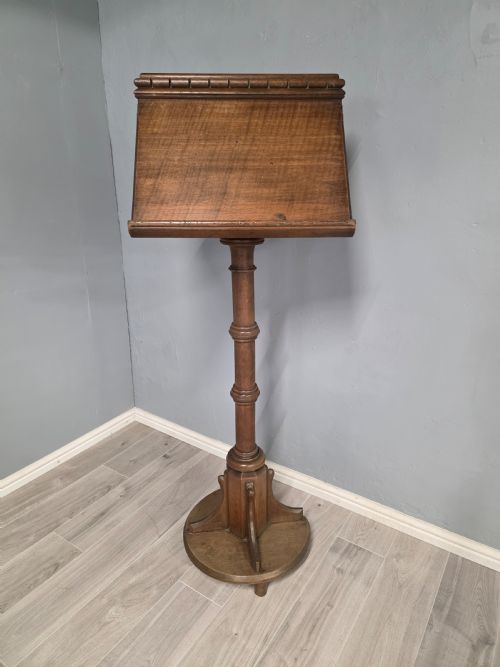
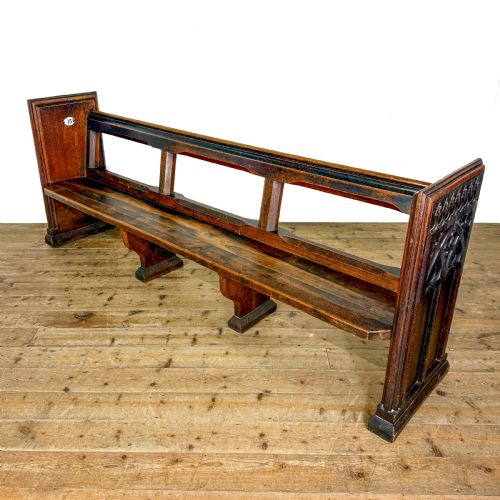
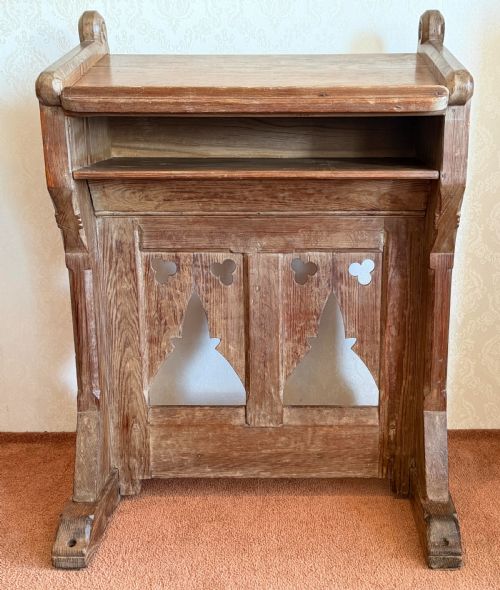


Ecclesiastical Wooden Furniture
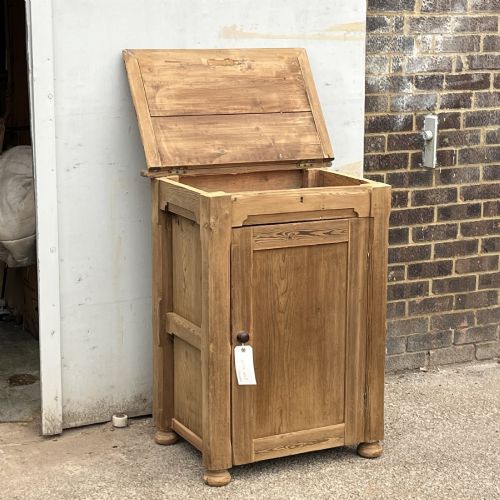
Ecclesiastical wooden furniture brings heavy oak pews, carved lecterns and benches into domestic spaces.
Ecclesiastical Wooden Furniture
Ecclesiastical wooden furniture comprises church furnishings repurposed for secular settings, spanning periods from the sixteenth century to the twentieth century. Pieces on this page include oak pews, pine organist benches, carved pulpits and Glastonbury chairs rooted in Gothic Revival and Renaissance styles.
Buyers will frequently encounter nineteenth century items, particularly oak lecterns and pine church pews reflecting Victorian Gothic taste. Older examples such as sixteenth century benches or seventeenth century panels appear alongside Edwardian chairs and hymn boards.
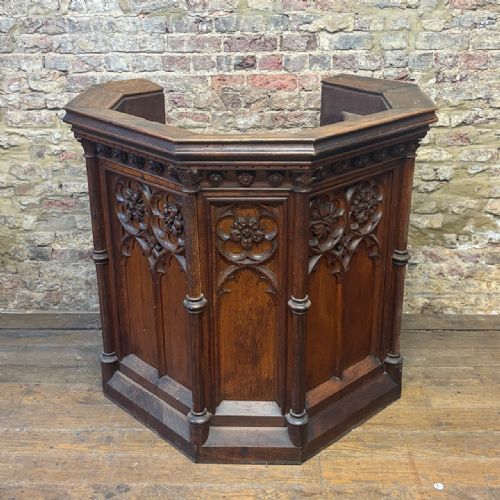
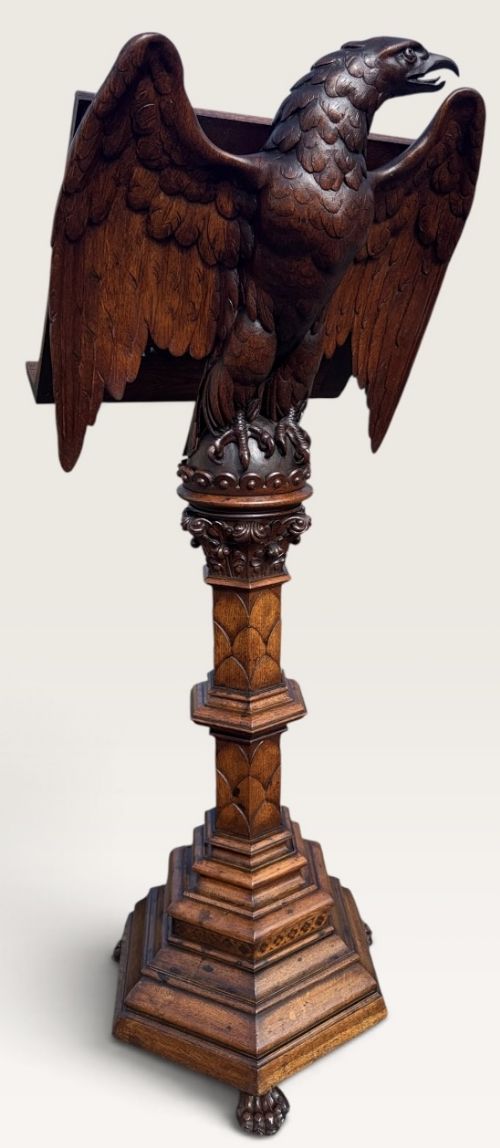
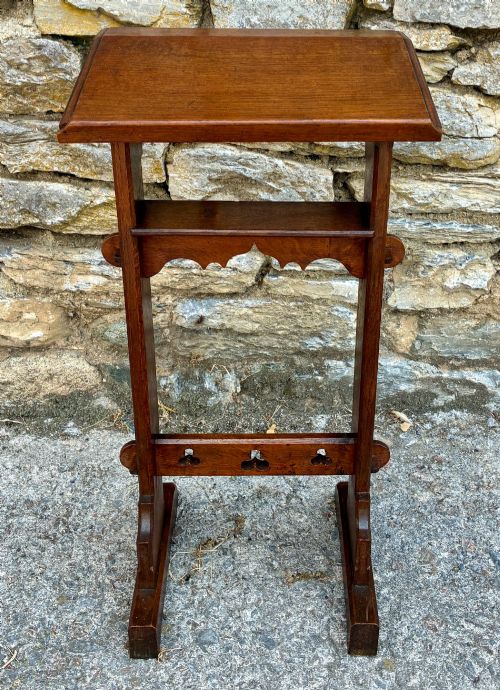
Forms range from large carved lecterns with eagles to solid pitch pine throne chairs and Cotswold oak pews originating from specific places like St. Paul's Church in Tiverton. The selection also includes unusual Oxford Movement oak mirrors and reading desks.
Materials and construction
Makers utilised solid timbers, predominantly oak and pitch pine, alongside pine and wrought iron for structural integrity and longevity. These woods were chosen for their durability within liturgical environments.
Construction relied heavily on traditional joinery techniques, paired with detailed carving seen on eagles, panels and Gothic Revival motifs. Brass fittings and glass elements appear selectively on specific forms like hymn boards and mirrors.
Ecclesiastical Wooden Furniture Retail Price Guide 2026
Typical asking prices for ecclesiastical wooden furniture among the pieces listed under this phrase on Sellingantiques today, from the lower quarter to the upper quarter. They describe what is for sale here now, not the wider market.
Several lecterns feature carved wooden eagles peering intently downwards, ready to support heavy prayer books.
Evaluating quality and provenance
Quality rests in the depth and precision of the hand carving, especially on complex pieces like eagle lecterns and pulpit panels. Crisp detailing distinguishes skilled workshop output from simpler utilitarian church seating.
Provenance and timber selection drive distinction, with sixteenth and seventeenth century panels or documented church origins holding greater historical weight than later nineteenth century pine pews. The choice between dense English oak and pitch pine alters the visual and physical weight of the item.
The Ecclesiastical Wooden Furniture Glossary
- Gothic Revival
- A nineteenth century architectural and decorative style drawing on medieval forms, pointed arches and rich tracery.
- Glastonbury Chair
- A type of low wooden armchair with a sloping back and intersecting X-form legs, popularised during the Gothic Revival.
- Pitch Pine
- A durable resinous softwood utilised for heavy church furniture and pews during the nineteenth century.
- Oxford Movement
- A nineteenth century religious movement within the Church of England that influenced ecclesiastical design and the Gothic Revival aesthetic.
- Settle
- A wooden bench with high back, solid arms and often an enclosed base intended to block drafts.
Ecclesiastical Wooden Furniture: Frequently Asked Questions
How do I identify Gothic Revival pieces?
Gothic Revival items typically display medieval architectural motifs such as pointed arches, quatrefoils and heavy carved tracery. They draw on fourteenth and fifteenth century church design.
These characteristics appear frequently on nineteenth century oak chairs, pulpits and lecterns.
Where were church pews used?
Church pews were built to seat congregations in parish churches and chapels, often fixed in rows for long services. They were constructed from solid oak or pitch pine to withstand heavy daily use.
Today, surviving examples are removed from churches and adapted for hallways or dining spaces.
How do I care for antique oak furniture?
Antique oak furniture benefits from a stable environment away from direct heat sources and sudden humidity changes. Regular dusting with a dry cloth keeps the surface clean without stripping the wood.
Applying a traditional beeswax occasionally helps nourish dry timber and preserves the patina.