




Ecclesiastical Architectural Salvage
Ecclesiastical architectural salvage comprises items rescued from religious buildings, offering buyers historic woodwork and metalwork with profound craft character.
Ecclesiastical Architectural Salvage
When you search for ecclesiastical architectural salvage, you encounter items removed from historic churches, chapels and religious foundations. The pieces span several centuries, reaching back through the Victorian era and the Gothic Revival movement into the seventeenth, sixteenth and medieval periods.
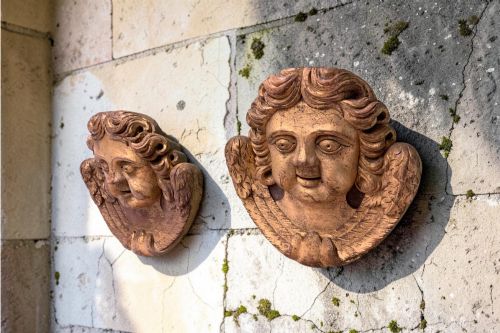
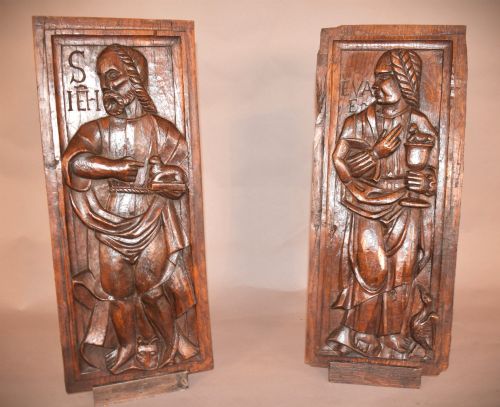
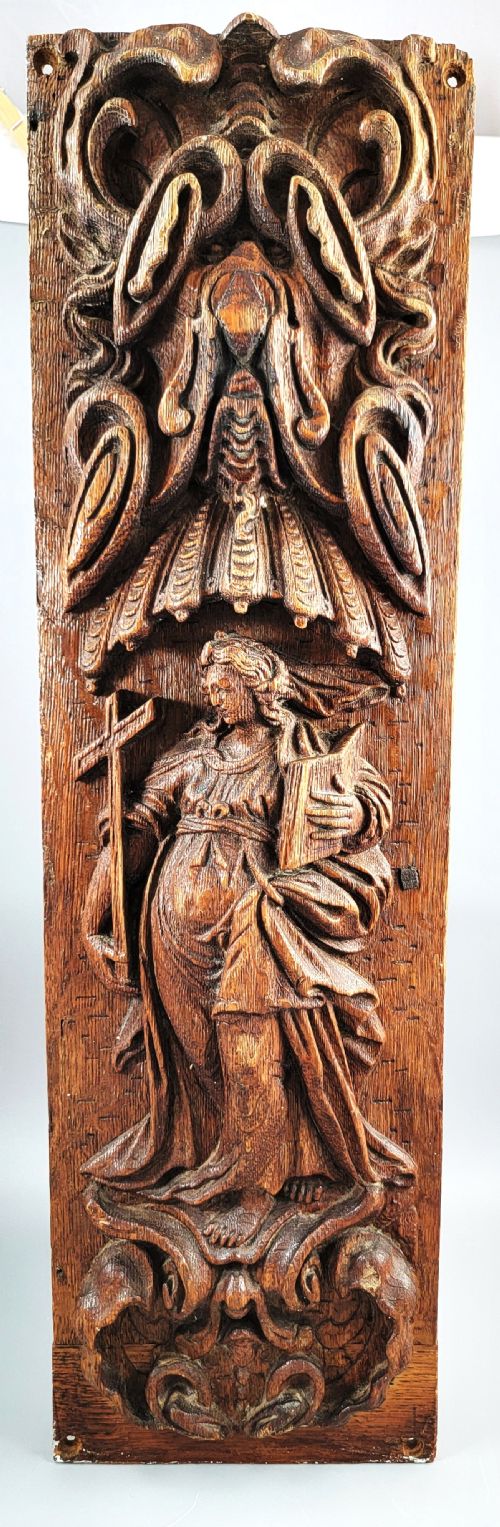
You are most likely to meet carved oak panels, architectural fragments and wooden tracery on this page. Other recurrent forms include church windows featuring glass and lead, pew end rails in brass, and figural carvings depicting angels and cherubs.
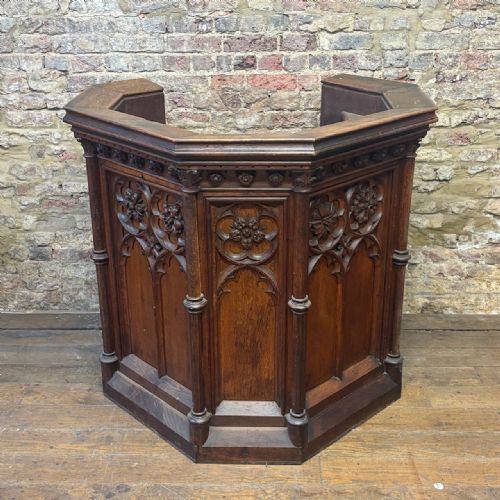
The origins of these items stretch across English, French, Flemish, German and Italian workshops. They range from small wall reliefs and fireplace accessories to entire pulpit sections and large memorial slabs in marble.
Materials and methods of construction
The primary material across the selection is solid timber, with oak and pine predominating for structural elements, panels and figural sculptures. Carvers shaped these woods using hand chisels and gouges, producing deep relief work and intricate tracery patterns.
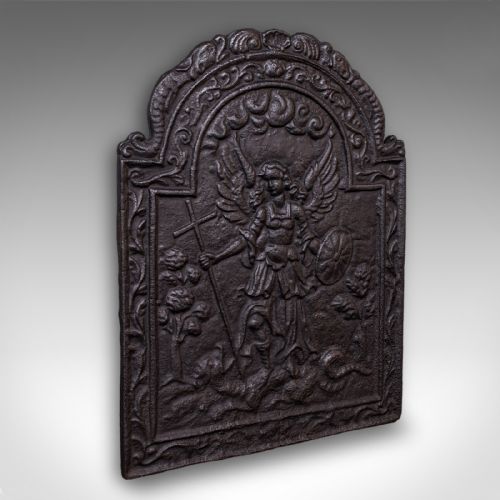
Metalwork appears in cast iron and iron for functional and decorative elements, alongside brass utilised in pairs of pew end rails. Stained glass windows combine coloured glass sections held within lead cames, while select wooden carvings display remnants of gold leaf gilding.
Listings feature items spanning from the medieval period and sixteenth century through the seventeenth, eighteenth and nineteenth centuries, including Victorian Gothic Revival works.
Distinctions in quality and execution
The integrity of the material also defines the tier of the object. Pieces retaining their original surface patination, unpainted grain and early fixings hold greater architectural and historical coherence than those altered heavily by later restorations.
The Ecclesiastical Architectural Salvage Glossary
- Tracery
- Openwork stonework or woodwork forming a pattern in the upper part of a Gothic window or panel. It supports the glass and defines the stylistic period.
- Poppy head
- An ornament used as a terminal on the top of a bench end or pew in a church. It often takes a carved leaf, floral or figural form.
- Fire back
- A heavy cast iron plate placed at the back of an open hearth to reflect heat and protect the masonry. Ecclesiastical examples incorporate religious motifs or armorial bearings.
- Cames
- Slender rods of cast lead with an H-section used to join pieces of glass in a stained glass window. They provide flexibility and structural support.
- Allegory
- The representation of a spiritual or abstract idea through concrete figures or narratives. Baroque and Renaissance panels frequently depict virtues such as faith in this manner.
Ecclesiastical Architectural Salvage: Frequently Asked Questions
How were church fragments used originally?
These elements served structural and devotional functions within religious interiors. Panels, tracery and figures decorated rood screens, pulpits, pew ends and altar surrounds.
Over time, changes in ecclesiastical architecture or building closures led to the removal of these components. Salvage specialists preserved them for reuse in domestic or institutional settings.
How do I date a carved wooden panel?
Dating relies on the style of the carving, the choice of timber and the tool marks left on the reverse. Gothic Revival pieces from the Victorian era imitate earlier medieval designs but reveal nineteenth-century manufacturing methods.
Earlier seventeenth and sixteenth-century panels display hand-split boards, pegged joints and tool signatures consistent with period joinery. Comparing motifs with dated examples helps confirm the century of origin.
Can antique church windows be installed today?
Historic windows require careful assessment by specialist glaziers before installation in modern walls. The lead cames and glass panels can be fragile after centuries in place.
Many buyers display them within interior spaces or mount them against backlighting to showcase the coloured glass and leadwork safely. Adequate structural support is essential for heavy leaded frames.
How do I care for antique architectural wood?
Historic timber thrives in stable indoor environments away from direct heat sources and rapid humidity shifts. Excessive dryness causes wood to split, while moisture damages old finishes.
Cleaning should be limited to gentle dusting with a soft brush. Avoid modern liquid polishes, which can penetrate porous historical surfaces and alter the natural patina.