

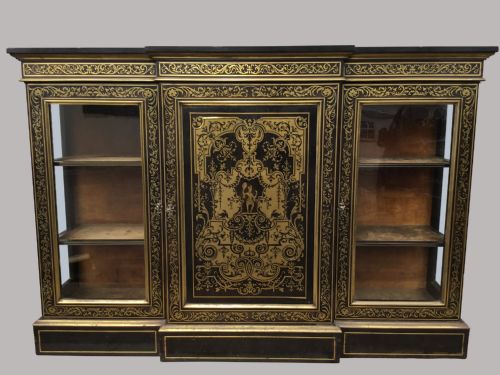


Ebony Side Cabinets
Ebony side cabinets bring dark elegance to a room, combining rich timber and fine mounts in pieces designed to display and store.
Ebony Side Cabinets
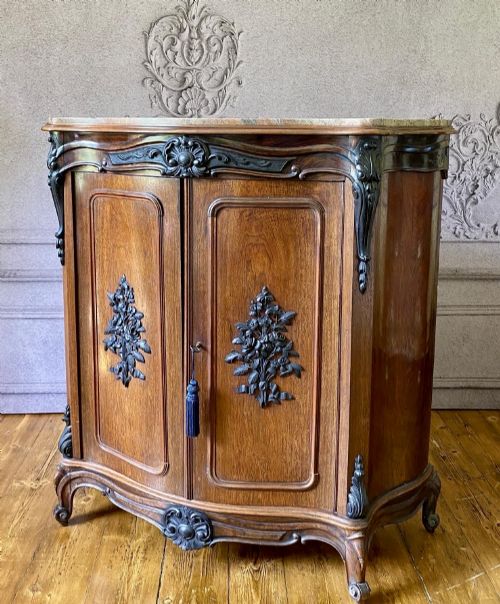
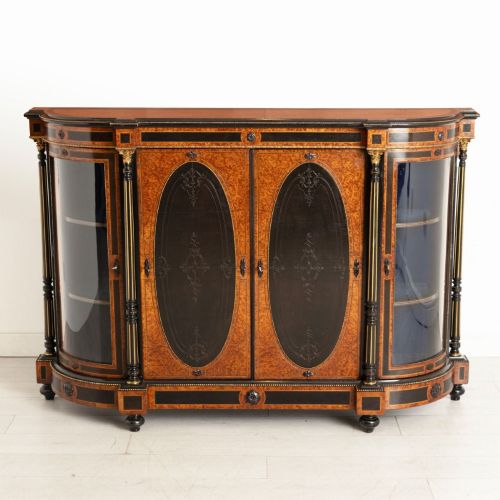
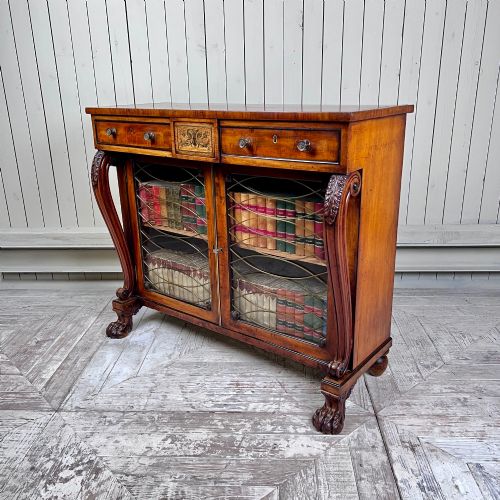
Ebony side cabinets span the Regency and Victorian eras, taking forms such as credenzas, chiffoniers, pier cabinets, and bookcases. These items range from solid or detailed amboyna and rosewood carcases with dark highlights to striking breakfront examples.
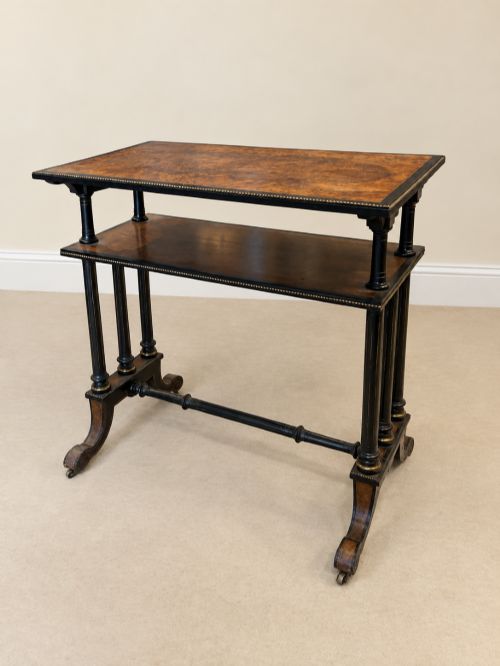
The pieces appearing on this page draw from nineteenth-century workshops, showcasing the heavy influence of French Rococo Revival, Renaissance Revival, and the Aesthetic Movement. Buyers meet both grand exhibition pieces and smaller pedestals or whatnots with ebony stringing and brass details.
The typical piece balances dark timber surfaces with glass doors or open shelving, serving practical storage needs while anchoring the visual weight of a formal interior. Regency and Victorian cabinetmakers favored these dark woods to create high-contrast silhouettes against lighter walls.
How they were made
Cabinetmakers constructed these carcases from foundational hardwoods like mahogany, walnut, and rosewood, applying dense ebony veneers or solid sections alongside contrasting amboyna. The dark timber provided a smooth canvas for intricate brass inlay and Boulle work.
Gilt bronze or ormolu mounts and brass stringing accented the dark surfaces, framing glass panel doors and structural edges with metallic warmth. Workshops also utilised ebonised wood, a technique where cheaper timber was stained and polished to imitate true ebony.
Ebony Side Cabinets Retail Price Guide 2026
Typical asking prices for ebony side cabinets among the pieces listed under this phrase on Sellingantiques today, from the lower quarter to the upper quarter. They describe what is for sale here now, not the wider market.
Object forms on this page include pier cabinets, credenzas, chiffoniers, bookcases, and whatnots, many incorporating glass panels and brass mounts.
What varies in quality
Quality rests upon the depth of the timber selection and the precision of the contrasting veneers, where amboyna, rosewood, and burr walnut are matched with clean ebony borders. Finer examples display meticulous grain alignment across curved doors and panel fronts.
The execution of brass inlay, ormolu mounts, and glass bevelling marks the division between standard production and exhibition grade work. Superior pieces exhibit crisp hand-chiselled mounts and tight joinery that withstands changes in environment.
The Ebony Side Cabinets Glossary
- Ebonised
- Wood treated with stain or paint to achieve the deep black appearance of true ebony. This method allowed makers to produce dark furniture using more accessible domestic timbers.
- Credenza
- A low dining room or parlour cabinet featuring central doors flanked by side cupboards or glass displays. These forms often incorporate elaborate marquetry and brass mounts.
- Chiffonier
- A compact sideboard equipped with enclosed shelving below and frequently a superstructure or mirror above. The form evolved during the Regency and early Victorian periods.
- Ormolu
- Gilt bronze mounts applied to furniture edges, feet, and friezes for decorative contrast. The technique involves coating bronze with a gold amalgam and firing.
- Boulle
- An elaborate form of marquetry using tortoiseshell and brass inlaid into a dark wood ground. It appears on French-influenced nineteenth-century cabinets.
Ebony Side Cabinets: Frequently Asked Questions
How do I date an ebony cabinet?
Dating relies on the prevailing style, construction methods, and secondary timbers used in the carcase. Regency pieces often feature brass inlay and mahogany frames, while Victorian examples lean toward amboyna, walnut, and revival motifs.
Examining the backboards, drawer linings, and screw types helps confirm the period of manufacture.
Where should I place a side cabinet?
These cabinets suit dining rooms, hallways, or drawing rooms where their dark timber and glass fronts can be appreciated. They work best against pale walls that highlight the contrast of the ebony details.
Avoid placing them in direct sunlight or near heat sources to protect the delicate veneers and polish.
What is the difference between ebony and ebonised wood?
True ebony is a dense, naturally black hardwood imported from tropical regions, valued for its weight and fine grain. Ebonised wood is typically a domestic timber like beech or fruitwood stained and polished to mimic that dark finish.
Both materials appear across nineteenth-century furniture depending on the cost and design of the piece.