



Ebony and Boxwood
Ebony and boxwood bring together dense dark timber and pale contrast, shaping tactile chess sets, draughts, games sets, cutlery boxes, and barometers.
Ebony and Boxwood
When you search for ebony and boxwood, you encounter finely turned games equipment, fitted cutlery boxes, and precision barometers that span the Georgian, Victorian, and Edwardian eras. These objects rely on the distinct tonal contrast between the very dark, heavy tropical hardwood and the pale, dense temperate wood, making them both decorative and functional.
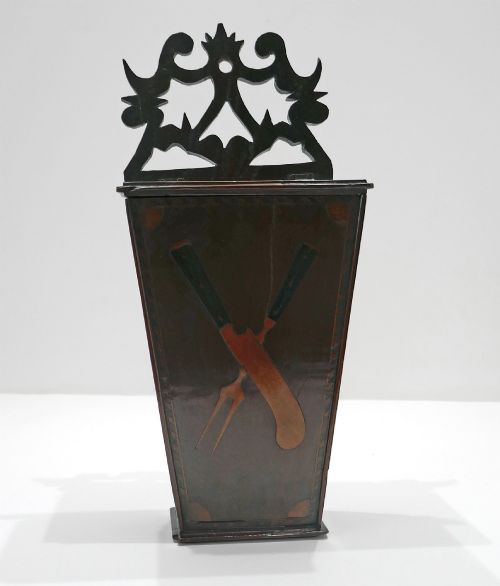
You are most likely to meet complete Staunton chess sets and draughts sets utilising these contrasting timbers, often housed in their original boxes or folding boards. Barometers and mahogany cutlery boxes inlaid with lines of ebony and boxwood also appear, showing how makers integrated these contrasting woods into larger domestic furnishings.
The periods represented stretch from the late 18th century through the 19th century and into the early 20th century. Earlier Georgian examples tend toward inlaid casework and scientific instruments, whereas the later Victorian and Edwardian periods focus heavily on standardised club and library chess sets.
Materials and construction
Makers paired natural boxwood and ebony with secondary structural timbers like mahogany, softwood, and stained hardwood. Felt linings, brass hardware, and lead weighting inside chess pieces provide stability and protection during regular play.
Woodturning and precise string inlay define the construction methods across these objects. Chess pieces and draughts turn on lathes to strict proportions, while cutlery boxes and barometer cases feature delicate banded inlays set into mahogany.
Ebony and Boxwood Retail Price Guide 2026
Typical asking prices for ebony and boxwood among the pieces listed under this phrase on Sellingantiques today, from the lower quarter to the upper quarter. They describe what is for sale here now, not the wider market.
Listings feature 19th-century and early 20th-century chess sets alongside Georgian mahogany cutlery boxes and stick barometers.
Judging quality in ebony and boxwood
Quality rests in the precision of the turning and the crispness of the detail on smaller carved elements such as knight chess pieces. Finer examples display symmetrical carving and well-proportioned forms that hold their balance during use.
The integrity of the contrasting inlays and the preservation of original surfaces separate standard items from superior pieces. Strong contrast between the pale boxwood and deep ebony, alongside original weighting and signed maker boxes, elevates the standing of an object.
Jaques·Whitty·British Chess Company·F. H. Ayres·Calvert·Pozzoby London
The Ebony and Boxwood Glossary
- Staunton pattern
- The standard design for tournament chess pieces introduced in the mid-19th century, featuring architectural forms for major pieces and a cross on the king. This style remains the benchmark for competitive play.
- Boxwood
- A dense, pale yellow wood traditionally used for the white pieces in a chess set or for fine inlay work. Its tight grain allows for sharp detail when turned on a lathe.
- Ebony
- A dense, dark heartwood used for the black pieces in games sets and for dark stringing in furniture. It adds considerable weight and a smooth finish.
- Stringing
- Thin lines of contrasting wood inlay used to decorate the edges of boxes, boards, and barometer cases. It creates a neat geometric border.
- Weighted
- Chess pieces containing lead weights in their bases to improve stability during play. This feature is common in tournament sets from the late 19th century onward.
Ebony and Boxwood: Frequently Asked Questions
What is a Staunton chess set?
A Staunton chess set is a standardised style of chessmen designed for clear recognition during play. The pieces feature distinct architectural crowns and coronets.
This pattern became the universal standard for competitive play in the 19th century and remains so today.
How do I date an ebony and boxwood chess set?
Dating relies on the style of the pieces, particularly the carving of the knight and the shape of the king's cross. Packaging, such as original slide-lid boxes or cartonierre labels, also helps determine the era.
Comparing the proportions and weighting to known makers from the Victorian and Edwardian periods narrows the timeframe further.
Were these pieces used for display or play?
Most chess and draughts sets were manufactured for active domestic or club use. Their durable hardwoods and weighted bases were specifically chosen to withstand regular handling.
Over time, many of these functional sets transitioned into collectible display items while retaining their original utility.
How should I care for boxwood and ebony?
Keep these items away from direct sunlight and rapid temperature fluctuations to prevent the wood from splitting or warping. Dust gently with a dry, soft cloth.
Avoid using harsh chemical polishes or excessive moisture, which can damage historic finishes and felt bases.