

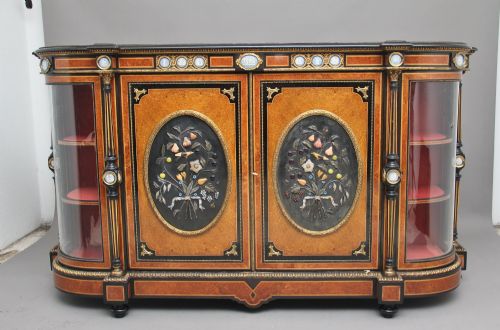
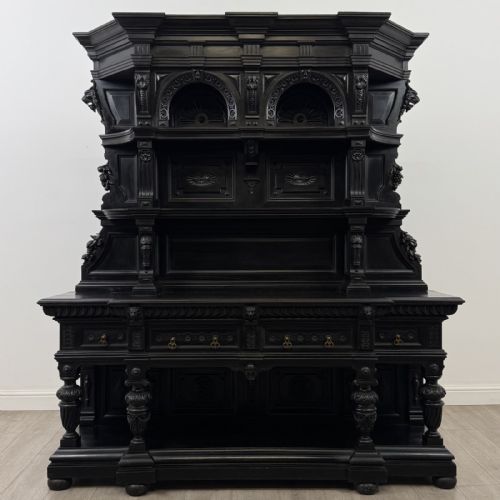
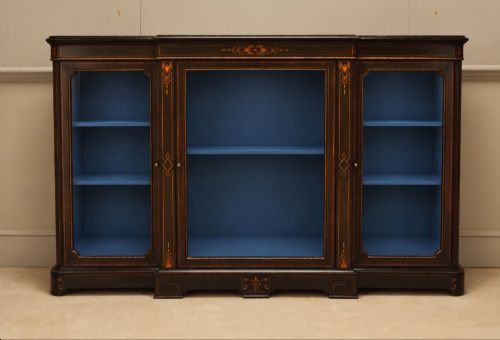
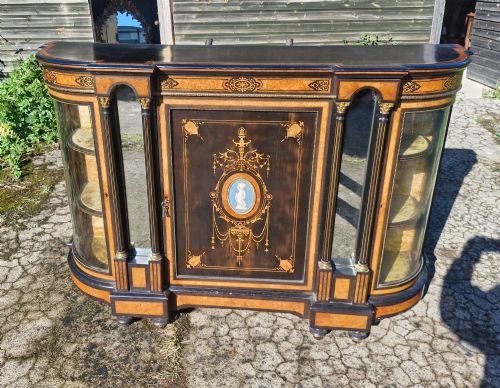
Ebonized Credenza
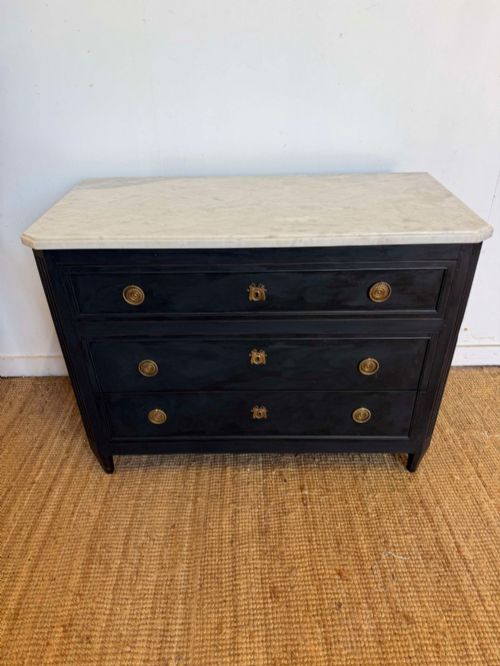
An ebonized credenza brings dramatic nineteenth-century presence to a room through dark polished surfaces and gilt or brass details.
Ebonized Credenza
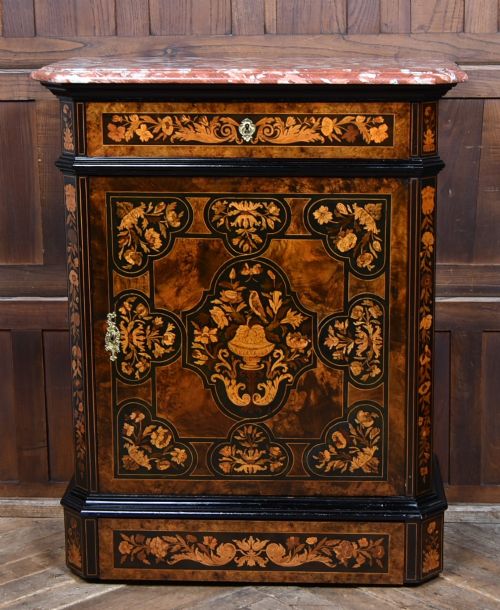
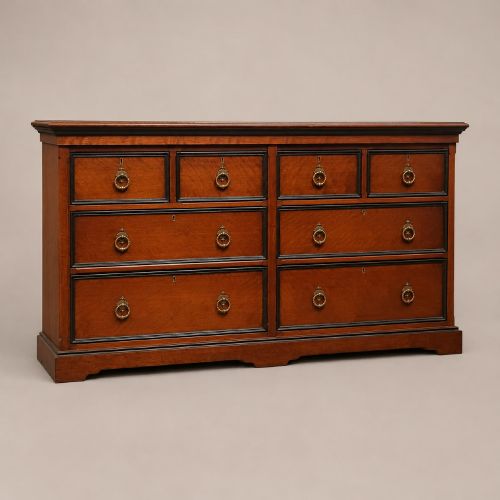
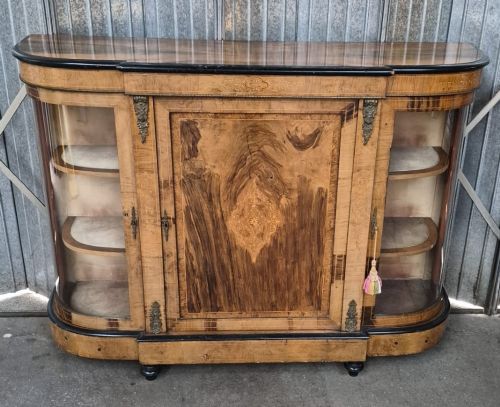
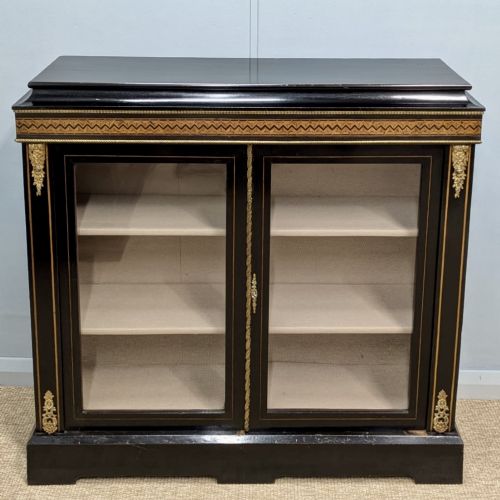
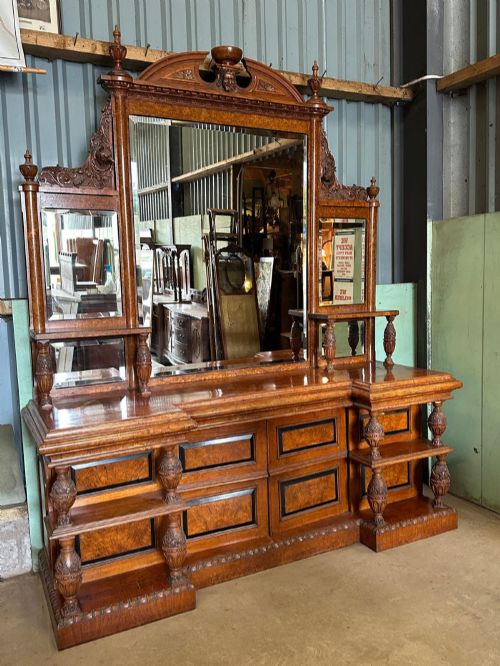
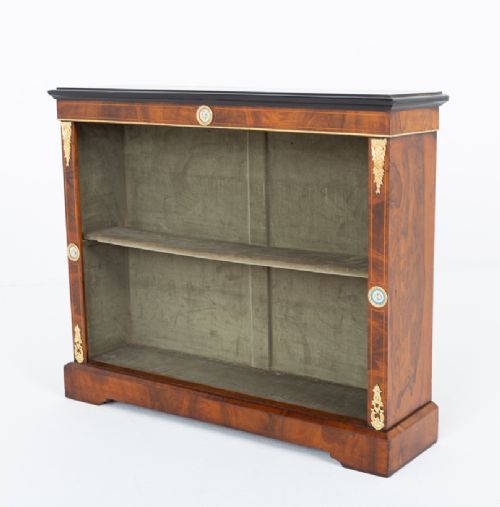
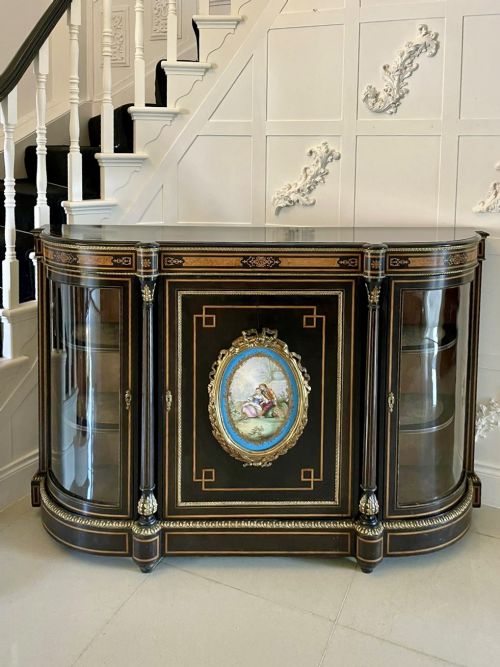
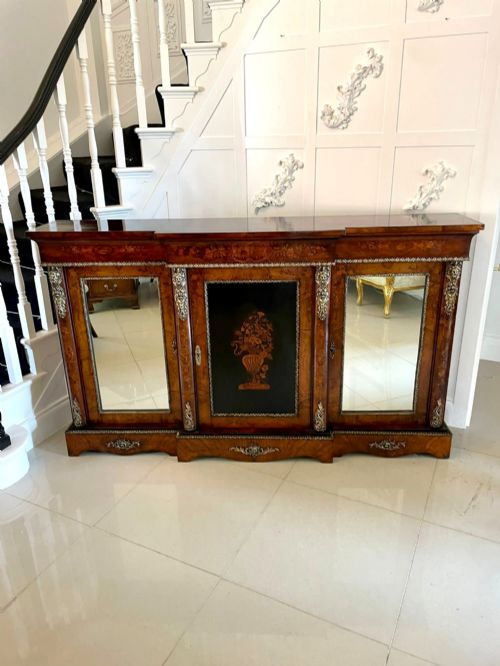
When searching for an ebonized credenza, collectors encounter low, long display cabinets and sideboards designed for formal entertaining and storage during the Victorian and Napoleon III periods. These pieces often incorporate glazed doors for displaying ceramics and books alongside enclosed cupboards.
The selections span nineteenth-century British workshops and French ateliers, occasionally reaching back to eighteenth-century Italian designs or forward into Arts and Crafts and Art Deco interpretations. The dominant form on this page remains the Victorian breakfront or serpentine cabinet combining dark wood with contrasting veneers.
How they were made
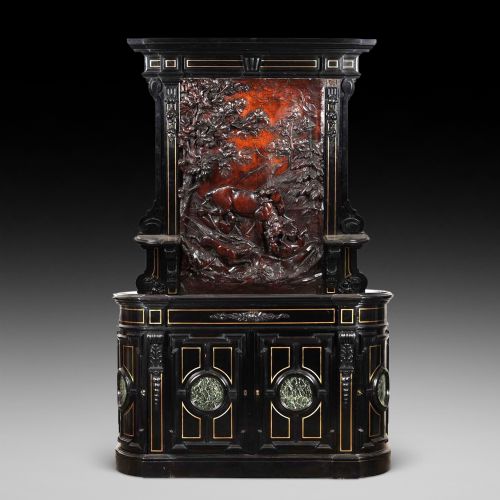
Cabinet makers utilised dense hardwoods such as walnut, oak, and amboyna as foundational structures, applying ebonised finishes to mimic expensive ebony. Surfaces frequently display intricate marquetry in lighter timbers, alongside tortoiseshell and brass boullework.
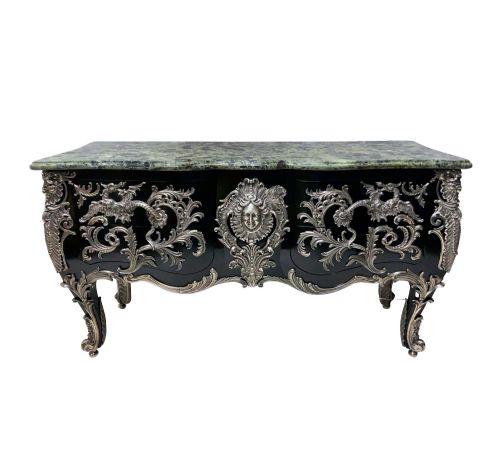
Mounts in ormolu and cast brass accent the corners, doors, and borders, while Sevres-style porcelain plaques and bevelled glass panels are set directly into the timber frames.
Ebonized Credenza Retail Price Guide 2026
Typical asking prices for ebonized credenza among the pieces listed under this phrase on Sellingantiques today, from the lower quarter to the upper quarter. They describe what is for sale here now, not the wider market.
Listings feature periods spanning from the eighteenth century through the Victorian era to Art Deco.
What varies in quality
The refinement of the marquetry and the crispness of the cast brass or ormolu mounts separate standard production from exceptional examples. Finer cabinets demonstrate seamless veneer matching across curved serpentine fronts and disciplined hand-carving on details like lion masks.
The integrity of the ebonised finish and the quality of internal cedar or mahogany linings further distinguish workshop standards, separating provincial output from metropolitan cabinet work.
Lamb of Manchester·Garnett & Sons
The Ebonized Credenza Glossary
- Ebonised
- Wood treated with a stain, dye, or paint process to imitate solid ebony, popular in nineteenth-century revival styles. This finish creates a deep, light-absorbing dark surface.
- Boulle
- Marquetry technique utilising tortoiseshell and brass inlaid in counter-changed patterns, originating in seventeenth-century France and revived during the Napoleon III period. It catches candlelight brilliantly.
- Ormolu
- Gilded bronze mounts cast and chased by hand to ornament furniture doors and corners. The technique involves applying a mercury-gold amalgam to bronze.
- Marquetry
- Pictorial patterns formed by fitting together thin veneers of various coloured woods. Craftsmen assemble these designs on paper before gluing them to the carcass.
- Pier cabinet
- A narrow display cabinet designed specifically to stand against the wall space between windows. These upright pieces often feature single glazed doors.
Ebonized Credenza: Frequently Asked Questions
Where did people place credenzas in Victorian homes?
These low cabinets typically stood against principal walls in dining rooms and drawing rooms to serve food and display porcelain.
Their substantial length provided a formal surface for ornaments while keeping tableware stored out of sight behind wooden or glazed doors.
How do I distinguish French boullework from Victorian marquetry?
French boullework relies on contrasting metallic brass against dark tortoiseshell to catch candlelight in formal salons. Victorian marquetry employs floral wood veneers across walnut or ebonised surfaces for a softer, organic pattern.
Both styles demand meticulous hand-cutting by specialist craftsmen.
Can these cabinets safely support modern television screens?
Historic credenzas were built to support heavy ceramic services, candelabra, and bronze ornaments rather than modern electronics. The generous width accommodates screens, but the antique timber tops require careful padding to prevent scratching.
Verify the internal depth before planning media storage.
What distinguishes an Aesthetic Movement cabinet from standard Victorian designs?
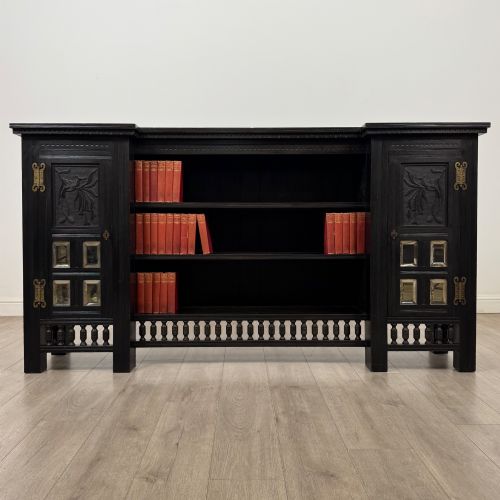
Aesthetic Movement pieces embrace simpler architectural lines, often combining ebonised surfaces with minimalist brass hardware and incised gilt detailing. They reject heavy ornamentation in favour of artistic balance and structural clarity.
These designs reflect late nineteenth-century reforms in decorative arts.