


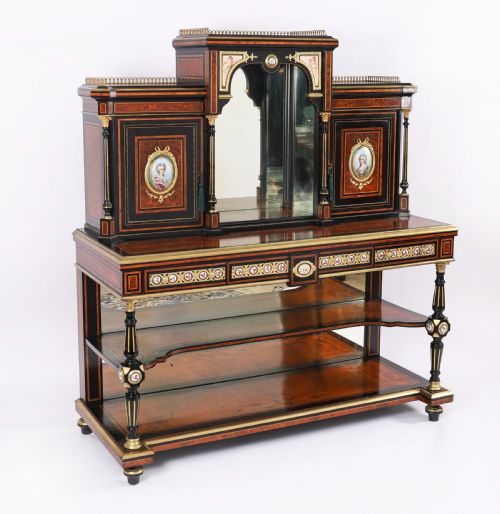


Ebonised Writing Cabinet
An ebonised writing cabinet brings dark elegance and compact utility to a room, offering a dedicated spot for correspondence wrapped in rich historical craft.
Ebonised Writing Cabinet
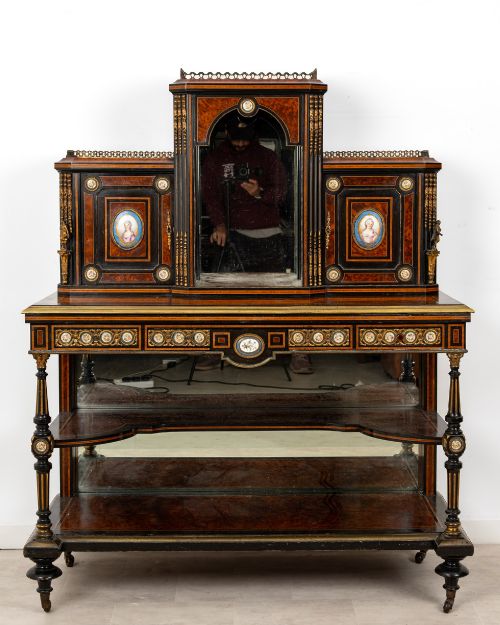
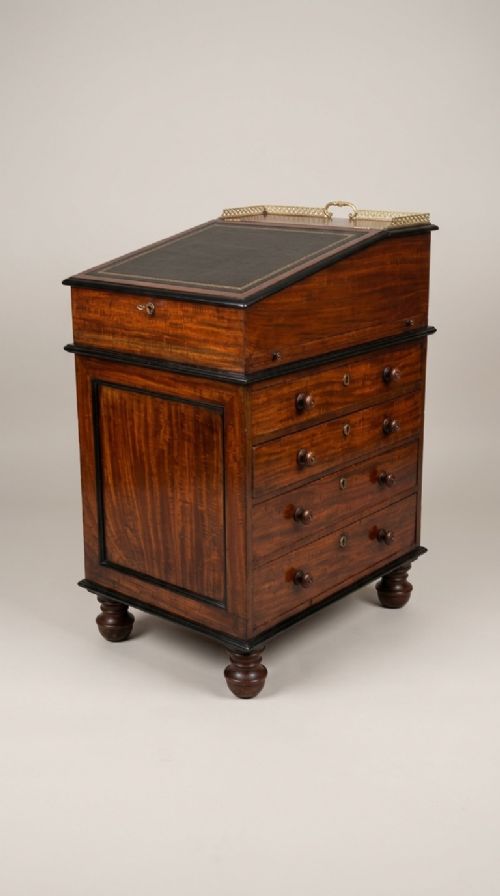
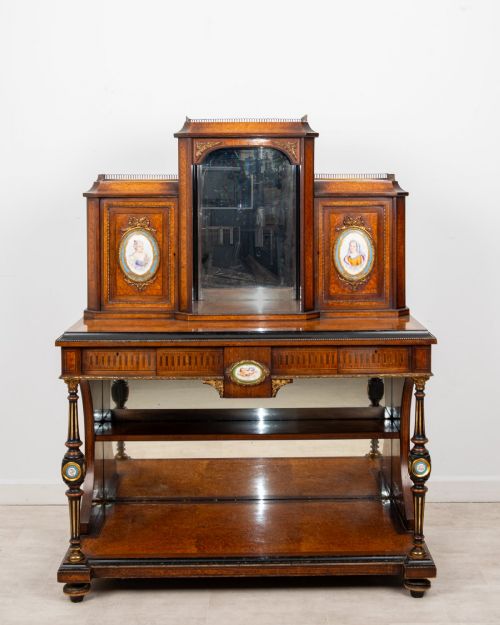
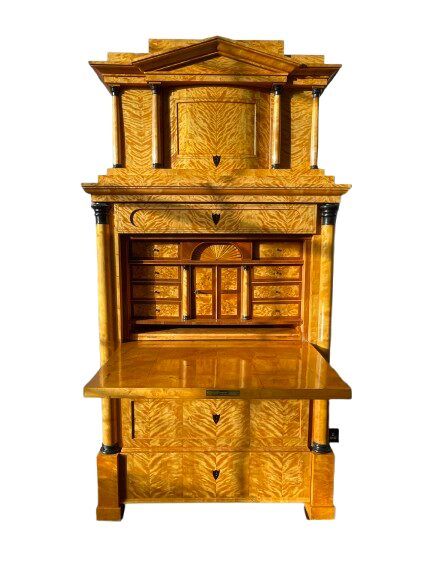
When you search for an ebonised writing cabinet, you encounter sophisticated compact desks and small escritoires rooted in the nineteenth century, alongside earlier Regency and eighteenth-century forms. These pieces often take the shape of a French bonheur du jour or a Biedermeier secretaire, combining enclosed writing surfaces with display areas or drawers.
The materials span ebonised wood contrasted with amboyna, burr walnut, mahogany, and birch, frequently embellished with brass, ormolu, and porcelain plaques. Such variations reflect French Napoleon III, Biedermeier, and Victorian Louis XVI Revival aesthetics rather than a single uniform design.
Materials and construction methods
Ebonisation involves staining or treating woods like birch or mahogany to imitate dense, polished ebony, creating a deeply dark, uniform surface. Cabinetmakers then applied contrasting veneers such as amboyna and burr walnut to drawer fronts and writing flaps.
Ornaments of cast ormolu, brass inlay, and inset porcelain plaques were meticulously fitted into the wooden carcasses. Many of these cabinets relied on specialised drop-front writing surfaces or hinged ledges supported by pull-out arms.
Ebonised Writing Cabinet Retail Price Guide 2026
Typical asking prices for ebonised writing cabinet among the pieces listed under this phrase on Sellingantiques today, from the lower quarter to the upper quarter. They describe what is for sale here now, not the wider market.
Materials appearing across current cabinet entries include ebonised wood, amboyna, burr walnut, mahogany, brass, ormolu, porcelain, and glass.
Judging the calibre of a piece
Quality rests upon the depth and finish of the ebonisation, together with the precision of the underlying wood preparation. Finer examples display richly figured secondary timbers like amboyna or burr walnut that have retained their natural warmth despite the dark exterior.
The integration of decorative elements dictates the upper tier of the range. Master makers secured ormolu mounts and porcelain plaques with exact alignment, whereas simpler pieces relied on plain ebonised surfaces without contrasting inlays or metalwork.
Gillows·Befort Jeune
The Ebonised Writing Cabinet Glossary
- Ebonised
- Wood treated with stain or polish to resemble genuine ebony. This finish gained immense popularity during the Victorian and Napoleon III periods for its dramatic contrast.
- Bonheur du jour
- A small, light lady's writing desk featuring a cabinet or tier of small drawers and pigeonholes above the writing surface. The form emerged in France during the eighteenth century.
- Secretaire
- A desk incorporating a writing drawer or a fall-front panel that conceals a series of small compartments and pigeonholes. It allows private correspondence to be locked away securely.
- Ormolu
- Gilt bronze mounted onto furniture as decorative handles, feet, or edging. The technique involves applying a gold amalgam to bronze before firing.
- Pietra dura
- Inlay technique using cut and fitted polished coloured stones to create geometric or pictorial designs. It frequently decorates the panels of nineteenth-century cabinetwork.
Ebonised Writing Cabinet: Frequently Asked Questions
What is an ebonised writing cabinet?
An ebonised writing cabinet is a compact desk or bureau finished in a dark, ebony-mimicking stain, often dating from the nineteenth century. These pieces usually feature a combination of drawers, shelves, and a dedicated writing surface.
Such cabinets served domestic correspondence and record-keeping in formal drawing rooms or private studies. Their dark facades allowed makers to highlight contrasting brass, ormolu, or porcelain embellishments.
How were these cabinets used originally?
These pieces provided a private space for writing letters, managing household accounts, and storing personal documents. The upper tiers often held books or displayed small decorative objects.
During the nineteenth century, smaller variants like the bonheur du jour became essential items for drawing rooms. They combined functional writing surfaces with ornamental display capabilities.
How do I live with one today?
An ebonised cabinet suits modern interiors by providing a striking dark focal point without occupying excessive floor space. Place it in a study or living area where natural light can catch the polished wood and metal mounts.
Keep these pieces away from direct heat sources and strong sunlight to protect the ebonised finish and delicate veneers. Regular dusting with a soft cloth maintains the deep lustre of the surface.
How do I tell periods apart?
Period distinction relies on underlying structural forms and decorative motifs rather than the dark finish alone. Regency examples tend to show classical mahogany foundations with restrained brass details, while Victorian and Napoleon III pieces often embrace ornate ormolu, porcelain plaques, and exotic wood veneers.
Biedermeier cabinets emphasise clean architectural lines and pale birch timbers transformed by ebonisation. Examining the secondary woods inside drawers helps confirm the era of construction.