



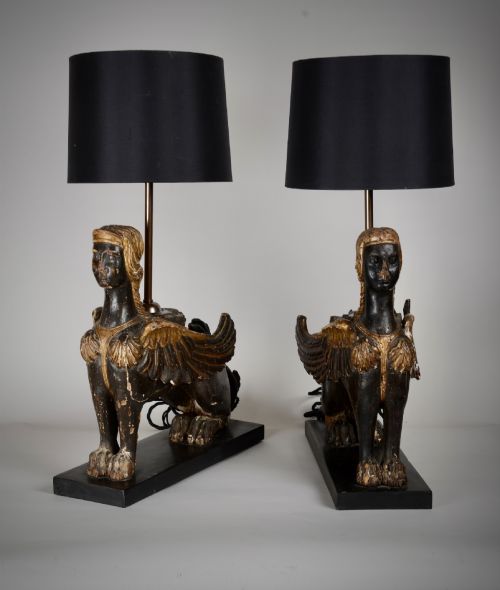
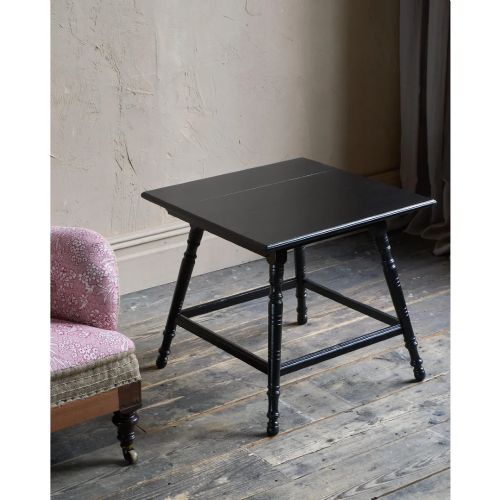
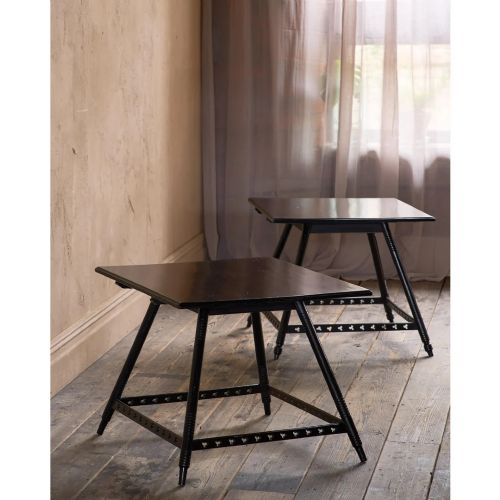
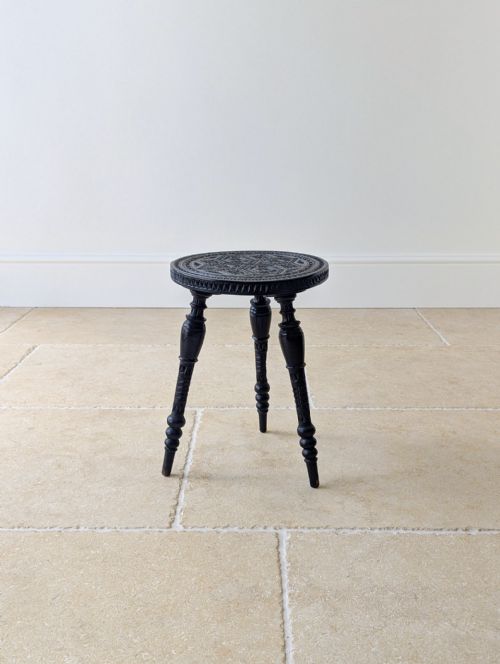
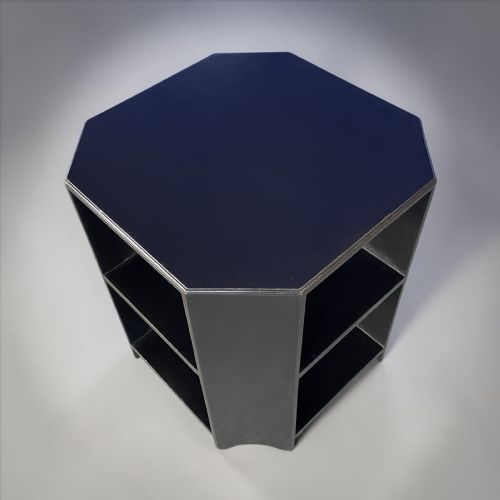

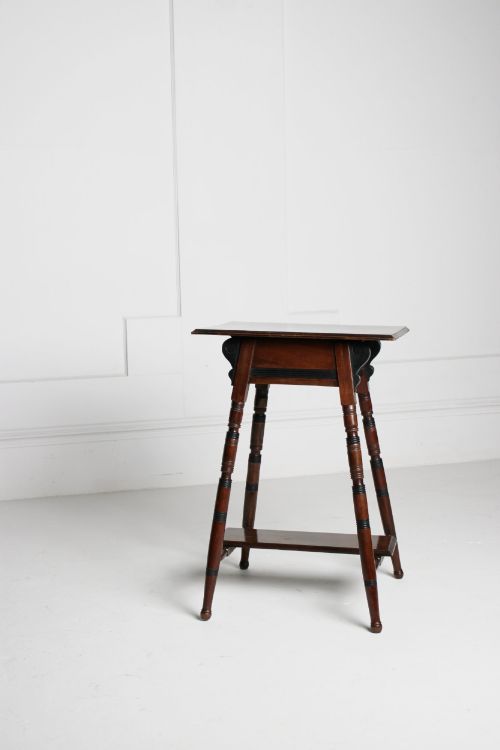
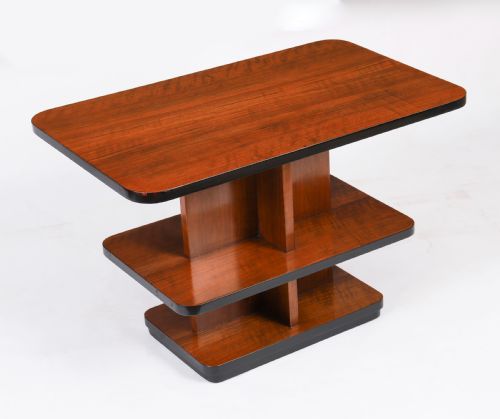


Ebonised Wooden Side Table
An ebonised wooden side table brings dark, striking contrast to a room, drawing the eye with its deep black surface and crisp carved detail.
Ebonised Wooden Side Table
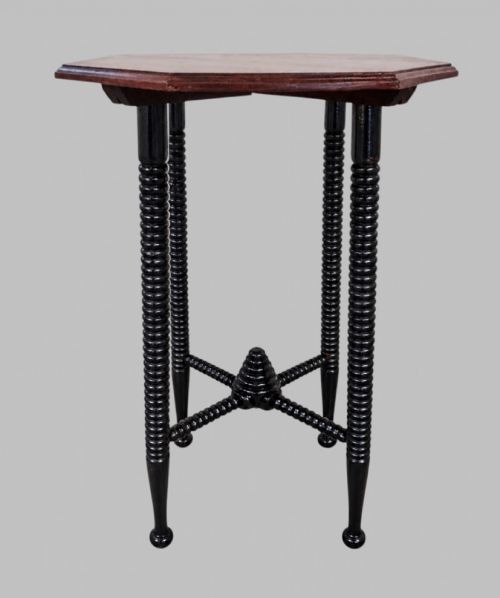
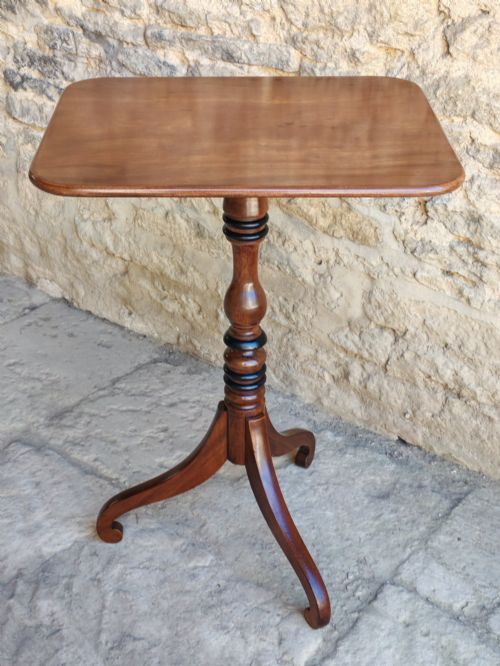
When you search for an ebonised wooden side table, you encounter pieces spanning the nineteenth and early twentieth centuries, with Victorian and Aesthetic Movement examples appearing most frequently. These tables arrive in forms such as occasional tables, coffee tables, centre tables, and two-tier designs intended for display or daily use. Many reflect specific period movements, including Anglo-Indian craftsmanship, French Napoleon III taste, and Edwardian Chinoiserie.
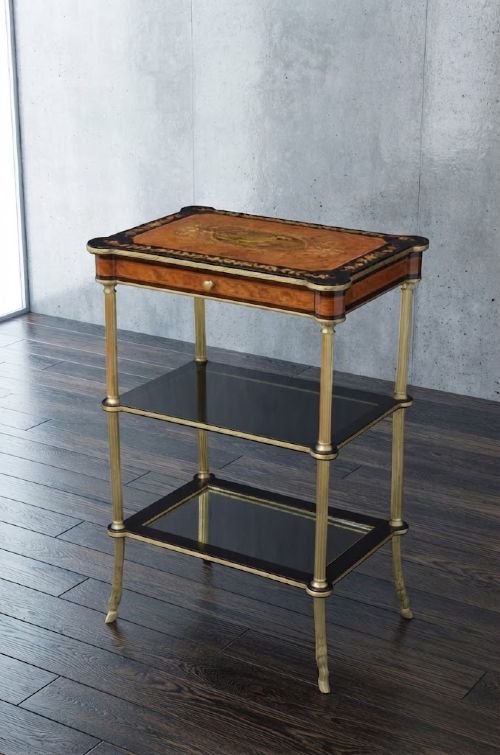
The materials paired with the dark wood range from brass and glass to burr walnut and rosewood, showing how makers combined rich secondary timbers and metal accents. You find occasional tables with inlaid details, chip-carved surfaces, and mirrored tiers that catch the light against the blackened finish. These pieces serve practical roles as lamp tables or plant stands while anchoring a room with distinct period character.
Judging quality
Quality rests upon the crispness of the carving, the integrity of the ebonised finish, and the selection of secondary timbers beneath or alongside the black surface. Tables exhibiting sharp, hand-carved details and well-executed inlay stand apart from simpler production pieces.
The refinement of brass mounts, the inclusion of original glass or mirrored tiers, and the structural balance of multi-tiered designs determine the standing of an individual table. Superior examples show careful attention to internal joinery and harmonious proportions across legs, shelves, and tabletops.
Ebonised Wooden Side Table Retail Price Guide 2026
Typical asking prices for ebonised wooden side table among the pieces listed under this phrase on Sellingantiques today, from the lower quarter to the upper quarter. They describe what is for sale here now, not the wider market.
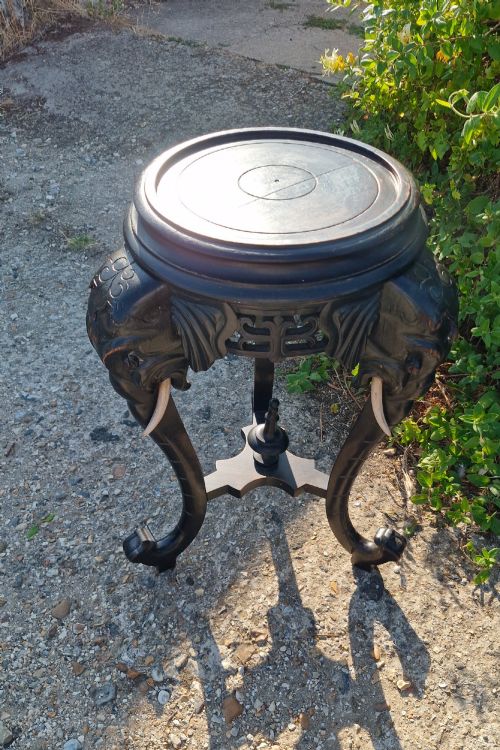
Several tables arrive with painted wooden tusks, bringing an unexpected menagerie into the Victorian parlour.
Hindley and Sons·Druce and Co London·Liberty and Co·Cottier and Co
The Ebonised Wooden Side Table Glossary
- Ebonised
- Wood treated with stain or paint to imitate ebony. This dark finish gained popularity during the Victorian and Aesthetic periods to create stark, dramatic furniture.
- Aesthetic Movement
- A late nineteenth-century design style emphasising visual beauty over narrative content. Pieces from this movement often feature ebonised surfaces and oriental influences.
- Chip-carving
- A relief carving technique where small chips are removed from a wooden surface with gouges and chisels. It creates geometric patterns on tables and stands.
- Sabot
- A metal sleeve or shoe fitted to the foot of a furniture leg. These brass fittings protect the base and add a decorative accent.
- Étagère
- A piece of furniture consisting of open shelves for displaying small objects. These tiered stands appear frequently in nineteenth-century French and English interiors.
Ebonised Wooden Side Table: Frequently Asked Questions
What is an ebonised wooden side table?
An ebonised wooden side table is a piece of furniture made from timber treated with a black finish to resemble ebony. These tables date primarily from the nineteenth and early twentieth centuries.
They appear in forms such as occasional tables, two-tier display stands, and lamp tables, often reflecting Victorian or Aesthetic Movement design.
How do I style an ebonised side table?
The dark, neutral finish allows these tables to anchor a room while contrasting brightly with lamps, ceramics, or books. Their compact proportions make them suitable for placing beside seating or in hallways.
Matching pairs or multi-tiered versions offer additional surface area for display without overwhelming surrounding furniture.
What periods do these tables come from?
The selection spans the nineteenth and early twentieth centuries, encompassing Victorian, Edwardian, and Art Deco eras. Pieces from the 1880s and 1890s frequently display Aesthetic Movement or Anglo-Indian influences.
Later examples extend into the 1920s and 1930s, showing cleaner lines and alternative wood pairings.
Are these tables solid ebony?
Makers rarely used solid ebony due to its weight and cost. Instead, they utilised hardwoods, walnut, oak, and rosewood, applying a specialised stain or finish to achieve the deep black appearance.
Inspectters can often identify the underlying timber beneath the ebonisation on unpainted sections or interior surfaces.