


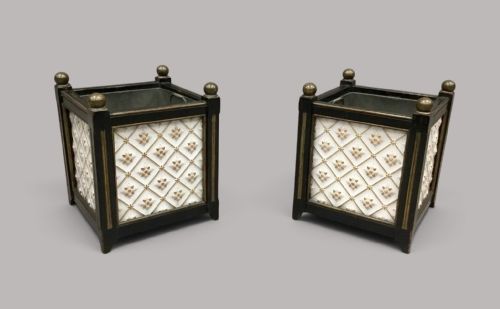


Ebonised Wood Jardiniere
An ebonised wood jardiniere brings dramatic dark timber and classical plant display into a room with distinct Victorian or nineteenth-century presence.
Ebonised Wood Jardiniere
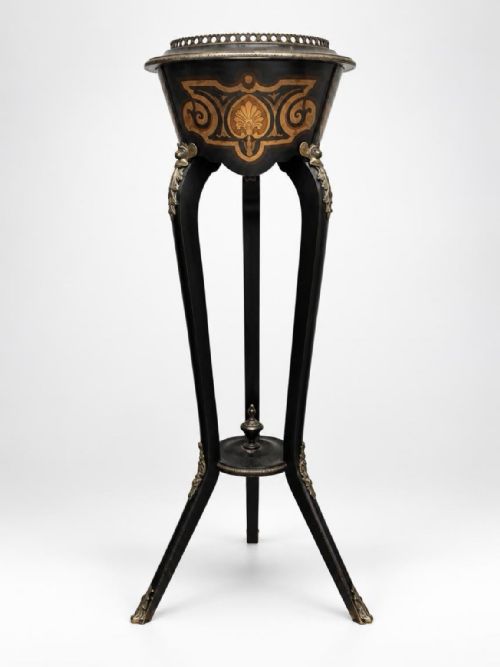
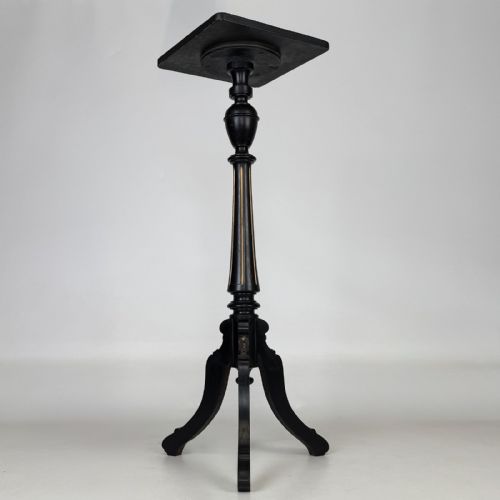
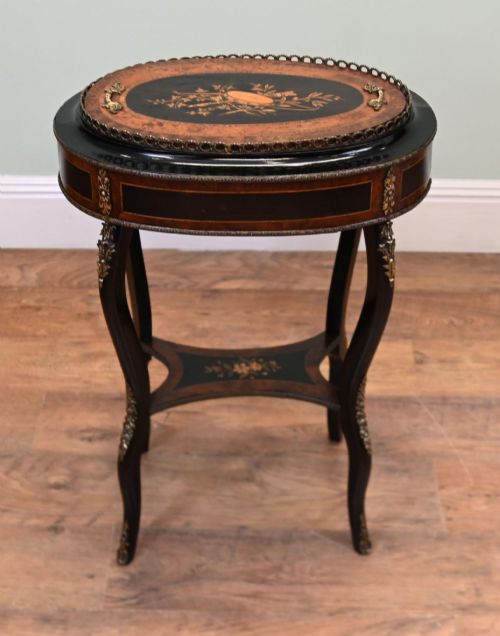
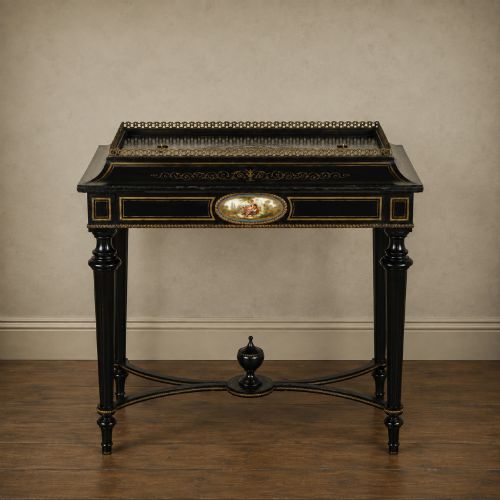
An ebonised wood jardiniere serves as a decorative plant stand or planter table designed to elevate greenery within nineteenth-century interiors. These pieces take the form of tripod stands, portico planter tables, side tables with amboyna inlay, and square planters.
The version most commonly met on this page is the Victorian or nineteenth-century ebonised stand, frequently featuring contrasting brass mounts, ormolu, or painted porcelain plaques. Origin styles span French Napoleon III, Dutch traditional, and Victorian Aesthetic Movement or Anglo-Japanese designs.
The category encompasses both tall plant stands and tabletop jardiniere forms intended to hold pots securely. Makers and workshops of the period utilised dark finishes to imitate costly ebony, pairing the timber with ceramics and metalwork.
How these pieces were made
Hardwood serves as the primary structural material, heavily ebonised to achieve a uniform, dense black surface that mimics ebony. This dark timber is often combined with contrasting brass, ormolu mounts, or intricate amboyna inlay.
Specialised techniques include coopered wood construction for bucket forms and precise joinery for tripod bases and portico frames. Workshops incorporated decorative elements such as painted porcelain plaques and original Minton ceramic panels into the wooden framework.
Ebonised Wood Jardiniere Retail Price Guide 2026
Typical asking prices for ebonised wood jardiniere among the pieces listed under this phrase on Sellingantiques today, from the lower quarter to the upper quarter. They describe what is for sale here now, not the wider market.
Listings feature nineteenth-century pieces utilising ebonised wood, brass, ormolu, porcelain, and hardwood across French, Dutch, and Victorian styles.
What varies in quality
Quality rests upon the refinement of the ebonised finish and the precision of any applied inlay or joinery. Pieces that incorporate high-status decorative additions like hand-painted porcelain plaques or original Minton panels represent a higher tier of craftsmanship.
The sophistication of the metalwork, whether cast ormolu mounts or patinated brass details, distinguishes standard utilitarian stands from finer salon pieces. Structural integrity in complex forms like tripod bases and portico frames also dictates the standing of a piece.
The Ebonised Wood Jardiniere Glossary
- Ebonised wood
- Timber treated with stain, dye, or polish to simulate the dark, dense appearance of ebony. This finish became especially popular during the nineteenth century for furniture and decorative objects.
- Jardiniere
- A decorative receptacle or stand designed to hold plants or flowers indoors. The term applies equally to tabletop vessels and freestanding floor stands.
- Ormolu
- Gilded bronze mounts applied to furniture and decorative objects for ornamentation. It adds metallic contrast and richness to dark ebonised surfaces.
- Coopered wood
- Construction method utilising narrow staves of wood joined edge-to-edge and bound with hoops, typically seen in bucket-form vessels.
- Amboyna
- A highly prized exotic wood featuring mottled, swirling grain patterns. It is frequently utilised for contrasting inlay work on nineteenth-century pieces.
Ebonised Wood Jardiniere: Frequently Asked Questions
What is an ebonised wood jardiniere?
An ebonised wood jardiniere is a nineteenth-century decorative stand or vessel designed for displaying indoor plants. These pieces utilise dark stained timber, often enhanced with metal mounts or ceramic plaques.
They function as both practical plant holders and sculptural furniture items within Victorian and nineteenth-century interiors. Forms range from tall tripod stands to low planter tables.
How were these stands used originally?
Original nineteenth-century interiors utilised these stands to showcase prized potted ferns, flowering plants, or decorative vases in parlours and drawing rooms. They elevated greenery off the floor to protect surfaces and highlight botanical displays.
Wealthy households placed them near windows or within reception rooms as part of a curated interior scheme. The waterproof or lined inserts within the planters accommodated damp pots safely.
How do I style a jardiniere today?
A jardiniere works effectively as a focal point in a hallway, living room, or conservatory holding a lush potted plant. The dark ebonised finish contrasts well against foliage and complements both traditional and eclectic modern interiors.
Tabletop versions sit comfortably on side tables or desks as decorative containers. Freestanding plant stands can be positioned empty as sculptural furniture or utilised for trailing plants.