

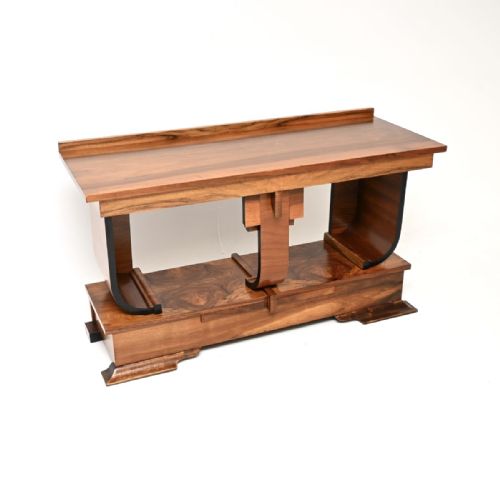
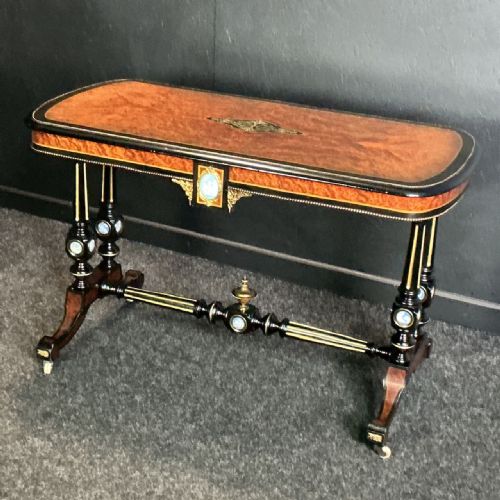
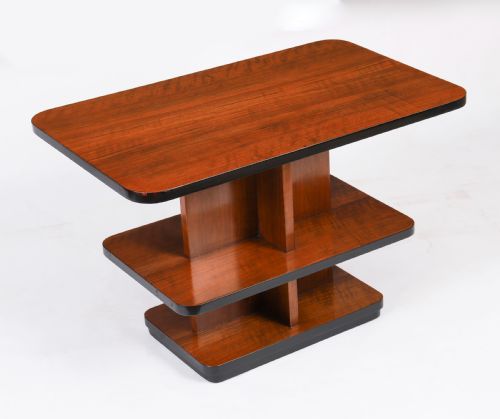
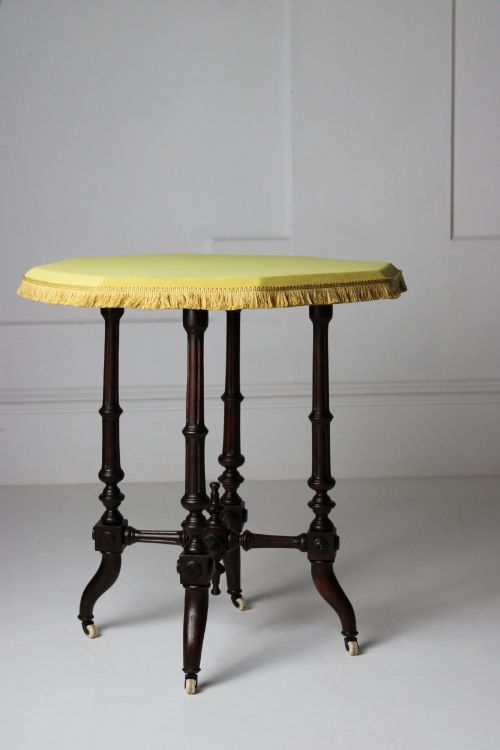


Ebonised Walnut Side Tables
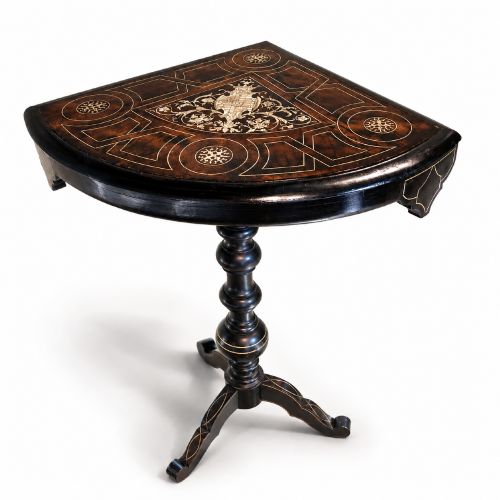
These ebonised walnut side tables combine dark finishes with rich timber grain to anchor a room.
Ebonised Walnut Side Tables
Ebonised walnut side tables encompass a variety of occasional, centre, and coffee tables produced primarily during the nineteenth and early twentieth centuries. These tables frequently display influences from the Aesthetic Movement, Victorian eras, and Art Deco periods.
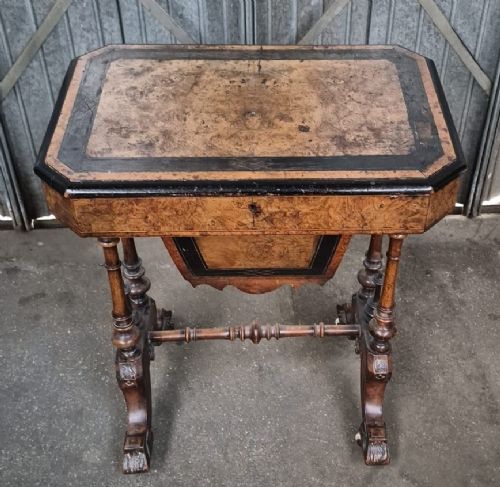
The version most commonly encountered on this page pairs dark ebonised wooden frames with walnut or burr walnut surfaces. They serve practical functions beside seating or against walls while introducing contrasting dark tones to an interior.
How they were made
Craftsmen utilised solid timbers and applied veneers, notably burr walnut and figured walnut, over supportive structural woods. Surfaces often received an ebonising treatment to imitate ebony, creating a dense black finish that contrasted with the warm brown grain of untreated or polished walnut sections.
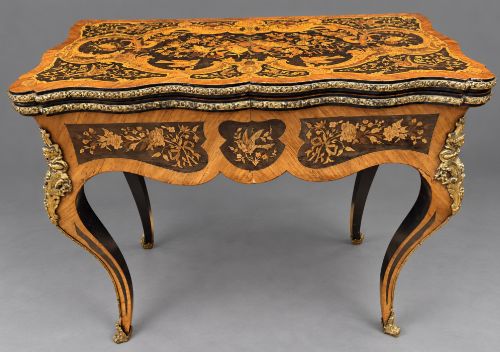
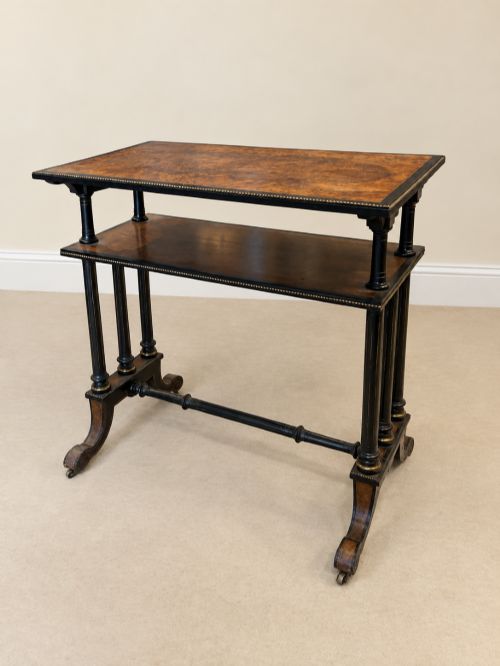
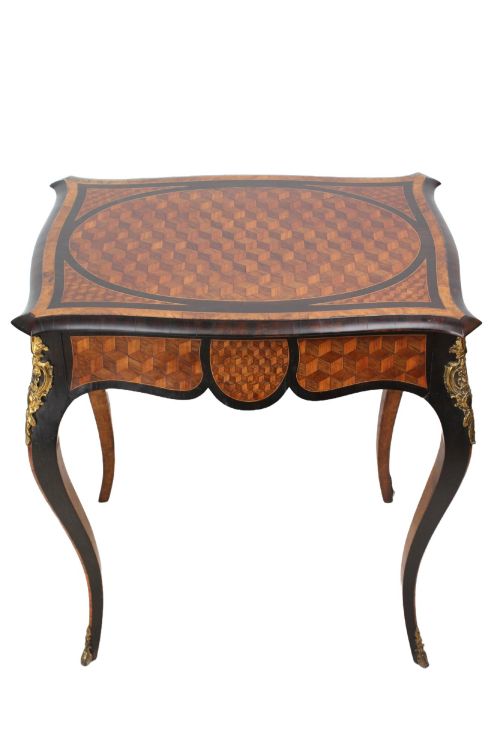
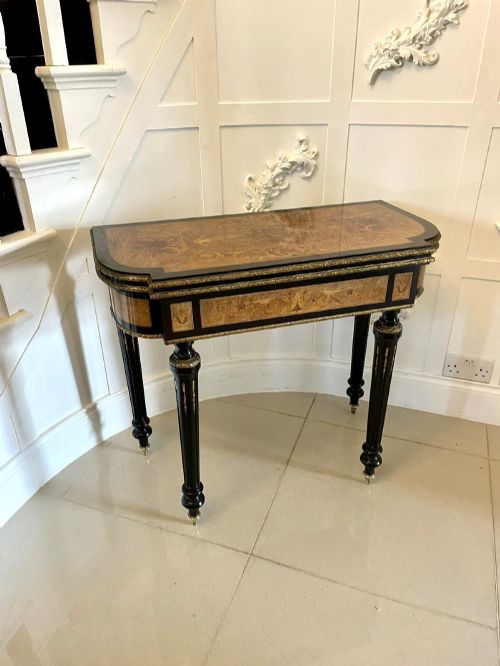
Many examples incorporate decorative elements such as brass mounts, ormolu, parquetry inlay, and marquetry details. Workshops also utilised marble tops, porcelain inserts, and tiered structures supported by turned legs or casters.
Ebonised Walnut Side Tables Retail Price Guide 2026
Typical asking prices for ebonised walnut side tables among the pieces listed under this phrase on Sellingantiques today, from the lower quarter to the upper quarter. They describe what is for sale here now, not the wider market.
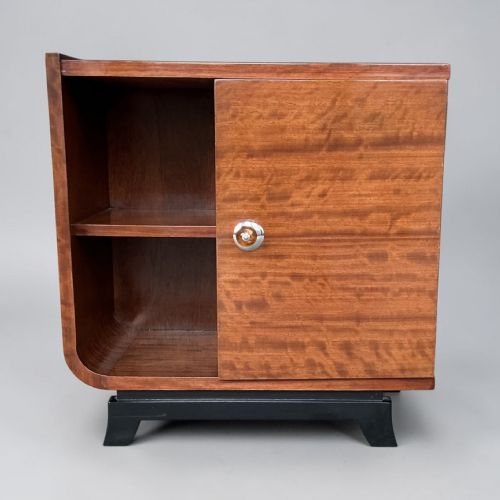
The furniture styles range from French Napoleon III and Louis XV Revival to geometric Art Deco designs.
What varies in quality
The standard of execution in ebonised walnut side tables depends on the precision of the timber matching and the intricacy of the inlay work. Finer pieces demonstrate seamless parquetry, tightly fitted joints, and carefully selected burr walnut veneers that display complex natural figuring.
Hardware and secondary materials also indicate grade, with substantial ormolu mounts, quality brass fittings, and inset porcelain plaques distinguishing more ambitious workshop productions from simpler utilitarian items.
JAS Shoolbred·Edward’s And Robert’s·H Ogden of Manchester
The Ebonised Walnut Side Tables Glossary
- Ebonised
- Wood treated with stain, paint, or chemical processes to turn it black, mimicking genuine ebony. This technique was popular in nineteenth-century furniture design.
- Burr walnut
- Timber taken from a tree growth or root, revealing highly figured, swirling grain patterns. It is sliced into veneers for decorative table tops and cabinets.
- Ormolu
- Gilt bronze mounts cast and chased for decorative effect on furniture. It appears frequently on French revival and nineteenth-century pieces.
- Marquetry
- The art of applying pieces of veneer to a structure to form decorative patterns and pictures. Makers used various coloured woods to achieve tonal depth.
- Aesthetic Movement
- A late nineteenth-century design style emphasising visual beauty over narrative content. Furniture from this movement often shows Japanese or geometric influences.
- Parquetry
- Geometric mosaic woodwork used for floors and table surfaces. Small blocks of timber are arranged in repeating patterns such as cubes or chevrons.
Ebonised Walnut Side Tables: Frequently Asked Questions
What is an ebonised walnut side table?
These are small tables made from walnut timber that feature a darkened, ebonised finish on parts of the frame or legs. They bridge decorative styles from the Victorian period through to Art Deco.
Craftsmen created them to provide a surface for lamps, books, or decorative objects while introducing strong colour contrasts to a room.
How do I identify an Aesthetic Movement table?
Aesthetic Movement tables usually exhibit clean geometric lines, ebonised surfaces, and sometimes Japanese-inspired motifs. They date from the late nineteenth century and prioritise form over heavy ornamentation.
Look for contrasting timber tones and simpler structural profiles compared to ornate Victorian revival pieces.
Where were these tables used originally?
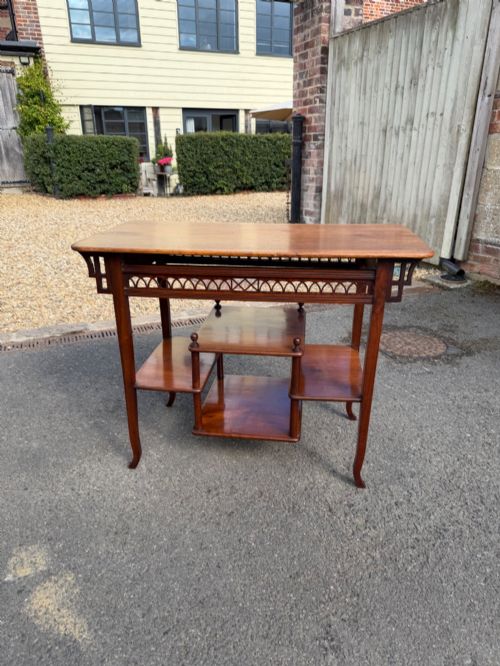
They functioned as versatile furniture pieces placed beside seating, in hallways, or positioned centrally in reception rooms. Tiered versions and étagères held ornaments or writing materials.
Their mobility allowed owners to shift them around drawing rooms as social habits required.
How do I care for ebonised wood?
Maintain ebonised surfaces by dusting with a soft, dry cloth and avoiding direct sunlight or excessive moisture. Harsh chemical cleaners can damage the dark finish over time.
Feed the walnut sections occasionally with appropriate furniture wax to preserve the depth of the grain.