


Ebonised Striking Clock
An ebonised striking clock brings dark timber cases and audible hour or quarter-hour chimes into a room, appealing to collectors of historical timepieces.
Ebonised Striking Clock
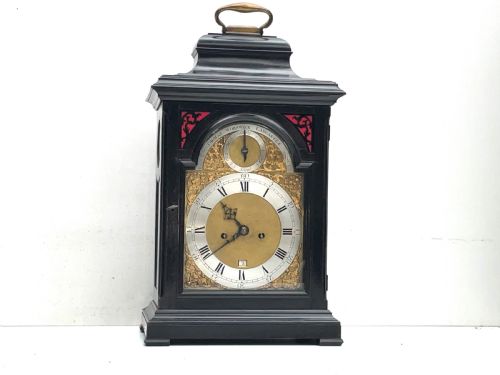
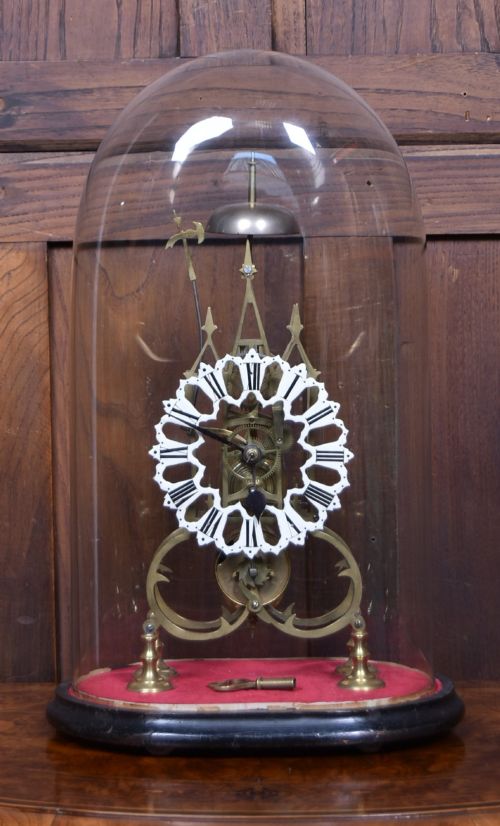
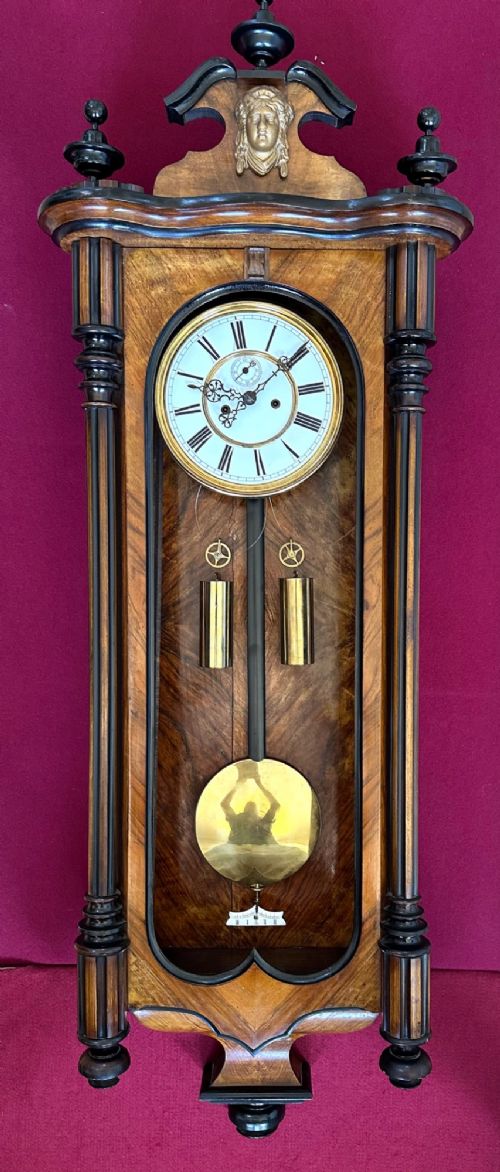
An ebonised striking clock is a mechanical timepiece housed in a dark, treated wooden case designed to mimic ebony, paired with an internal movement that sounds the hours or quarters. When searching for an ebonised striking clock, buyers encounter forms ranging from table and bracket clocks to wall and mantel timepieces.
The selection spans multiple centuries, incorporating 17th-century table clocks alongside Georgian bracket clocks with bell-top or break-arch cases, and later Victorian or Aesthetic Movement examples. Makers such as Henry Jones, John Witherston, and William Withers appear across the 18th century, while later periods introduce French and American movements.
Surviving pieces utilise various escapements and strike configurations, including verge movements striking on bells, twin fusee systems, and quarter-striking mechanisms. The physical presence combines the dark finish of the wood with contrasting metal dials, bezels, and mounts.
Indicators of Quality
Quality in these timepieces rests upon the sophistication of the movement, from standard bell strikes to complex quarter-striking, ting-tang systems, and twin fusee mechanisms. The refinement of the brass engraving on backplates and dials also separates standard production from the work of notable makers.
The execution of the ebonised case and the preservation of original mounts, such as ormolu or gilded brass feet and handle fixtures, dictate the overall integrity of the piece. Cases retaining their original bell-top, break-arch, or inverted bell-top proportions command higher regard than those with altered elements.
Henry Jones·John Witherston·Des Granges·Payne and Co·Somersall·William Withers·John Leroux·John Fletcher·John Taylor·William Smith·Isaac Hurley·Joseph Lum·Henry Marc·John Seddon·John Ellicott
The Ebonised Striking Clock Glossary
- Ebonised
- Wood finished to resemble solid ebony through staining or painting. This treatment was common on 17th-century and later bracket clock cases.
- Fusee
- A conical pulley used in clock movements to maintain even force on the gear train as the mainspring unwinds. It appears frequently in better quality English table and bracket clocks.
- Verge escapement
- An early type of clock escapement that controls the release of power from the gear train using a vertical rod and pallets. It is typically paired with a pendulum or balance spring.
- Quarter-striking
- A mechanism that sounds the time at every quarter hour on bells or gongs. This adds complexity to the movement compared to standard hourly strikes.
- Bracket clock
- A portable timekeeper originally designed to sit on a bracket on the wall or on a piece of furniture. Many feature arched or bell-top cases with carrying handles.
Ebonised Striking Clock: Frequently Asked Questions
Where should I place a bracket clock?
These clocks sit securely on sturdy furniture such as a sideboard, desk, or dedicated wall bracket where vibrations are minimal.
Ensuring a level surface allows the pendulum or balance to beat evenly and keeps the striking train functioning correctly.
How do I wind an ebonised striking clock?
Use the appropriate winding key to turn the arbors located on the dial face, taking care not to overwind the mainsprings.
Allow the strike train to complete its sequence naturally without forcing the hands backwards past the hour.
What is the difference between a fusee and an eight-day movement?
A fusee movement uses a conical drum and cord or chain to equalise power delivery, which improves timekeeping accuracy as the spring runs down. An eight-day movement simply requires winding once a week but may rely on a standard barrel spring rather than a fusee.
How can I tell an 18th-century clock from a Victorian one?
Eighteenth-century examples often feature verge escapements, brass dial plates with cast spandrels, and makers' signatures engraved on the backplate. Victorian pieces frequently utilise platform escapements, enamel dials, and different case styles associated with the Aesthetic Movement or French influences.