




Ebonised Oriental Table
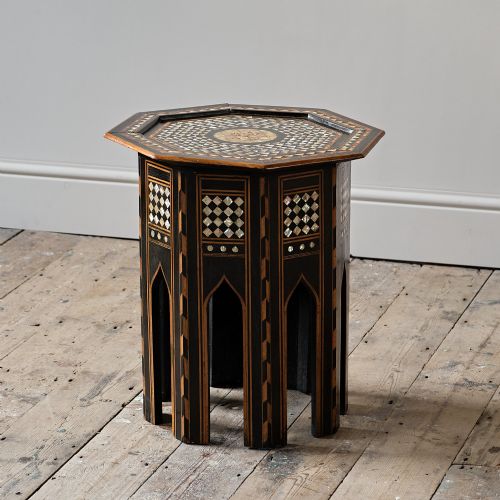
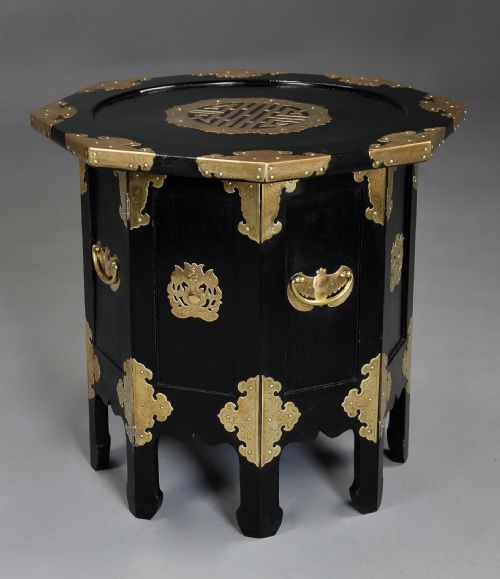
An ebonised oriental table brings dark, striking contrast and intricate Far Eastern detail to a room.
Ebonised Oriental Table
An ebonised oriental table combines dark blackened finishes with stylistic influences from China and Japan. Buyers searching for an ebonised oriental table will find various forms on this page, ranging from plant and jardiniere stands to low coffee tables and nests of four.
The pieces span multiple periods including the Victorian era, Edwardian period, and the nineteenth century. Common materials recorded in the listings include ebonised wood, hardwood, marble, lacquer, and brass.
Makers drew on traditions such as Chinese Chinoiserie, Chinese Export, and Japanese Meiji styles. Side tables, occasional tables, and tray top coffee tables dominate the current selection.
Materials and construction
Cabinet makers utilised dense hardwoods, elm, and general timber treated to achieve a deep ebonised finish that mimics ebony. Many surfaces feature black lacquer, while others incorporate inset rouge marble tops or brass detailing.
Decorative techniques include intricate carving, Boulle-work, and gold leaf applied to Chinoiserie motifs. Structural forms often rely on tripartite bases, portico frames, and nested configurations.
Ebonised Oriental Table Retail Price Guide 2026
Typical asking prices for ebonised oriental table among the pieces listed under this phrase on Sellingantiques today, from the lower quarter to the upper quarter. They describe what is for sale here now, not the wider market.
Listings show pieces spanning from the eighteenth century through to the Edwardian period, utilising ebonised wood, hardwood, marble, and lacquer.
Distinguishing quality
Quality rests in the precision of the carving, the depth of the ebonised finish, and the integration of secondary materials like marble or brass. Examples with intact lacquerwork and detailed hand-carved motifs represent the upper tier.
Simpler occasional pieces sit at the other end, where the finish is applied to plainer timber with minimal ornamentation. The presence of specialised forms, such as nested sets or inset marble tops, elevates a piece.
The Ebonised Oriental Table Glossary
- Ebonised
- Wood finished with a dark stain or paint to imitate ebony. This treatment became particularly popular during the Victorian period for decorative furniture.
- Chinoiserie
- European artistic style reflecting Chinese motifs and decorative techniques. It frequently appears on lacquer furniture and occasional tables.
- Jardiniere stand
- A tall table designed to hold a plant pot or flower arrangement. These often feature marble inserts to protect the wood from water.
- Meiji
- A period of Japanese history spanning from 1868 to 1912. Furniture from this era heavily influenced contemporary Western design.
Ebonised Oriental Table: Frequently Asked Questions
What is an ebonised oriental table?
An ebonised oriental table is a piece of furniture finished in a dark, blackened surface and styled with Chinese or Japanese design elements. These range from small plant stands to side tables and nests.
They bring distinct dark tones and cultural motifs into interior spaces, utilising materials like hardwood, lacquer, and marble.
How were these tables used originally?
These tables served practical and decorative functions in period homes as lamp tables, wine tables, or stands for displaying vases and plants.
Taller stands held heavy planters, while smaller occasional tables and nests provided movable surfaces for entertaining.
How do I live with one of these tables?
These tables integrate well into modern interiors by providing a dark accent piece with historical depth. They suit quiet corners as plant stands or sit beside seating as occasional coffee tables.
Care should be taken to protect delicate lacquer and ebonised surfaces from moisture and direct heat.