
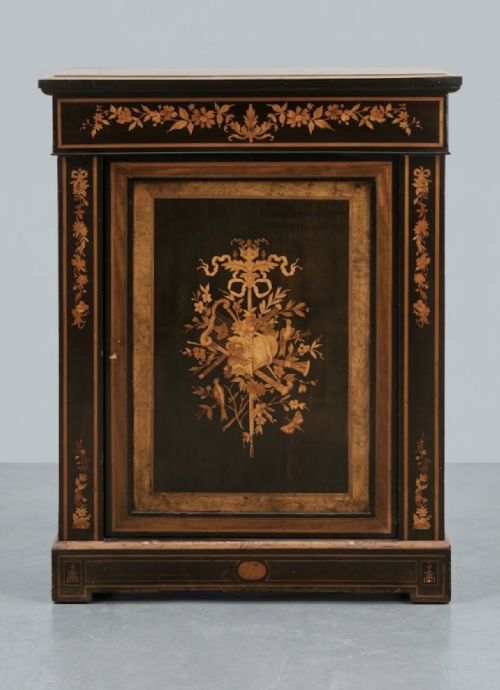
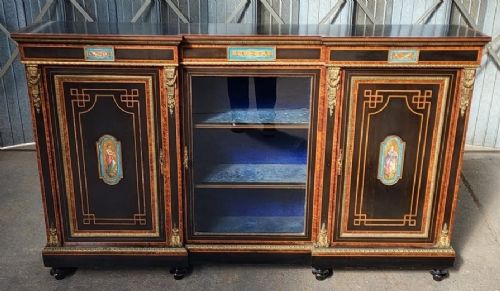

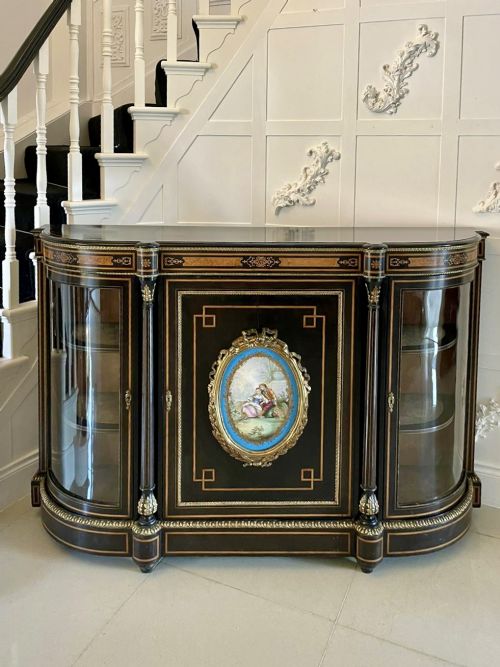
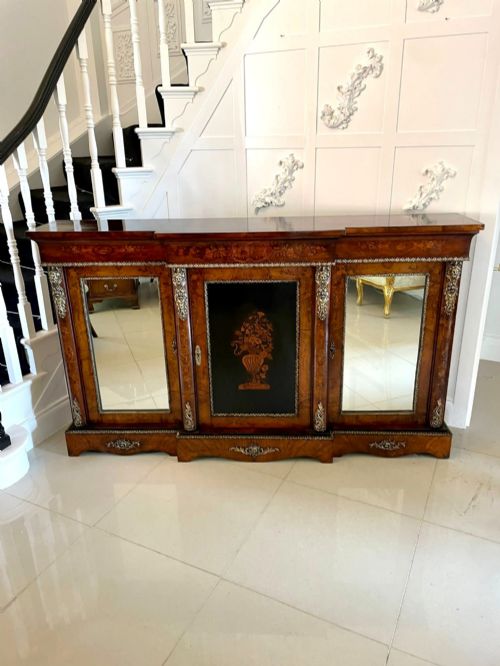

Ebonised Marquetry Cabinet
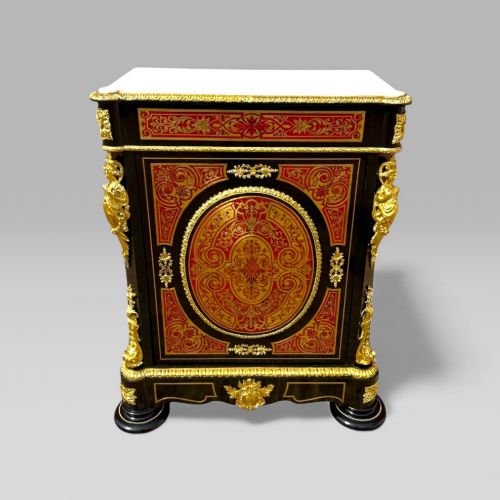
An ebonised marquetry cabinet brings dark timber and intricate floral or tortoiseshell inlay together for a striking nineteenth-century interior statement.
Ebonised Marquetry Cabinet
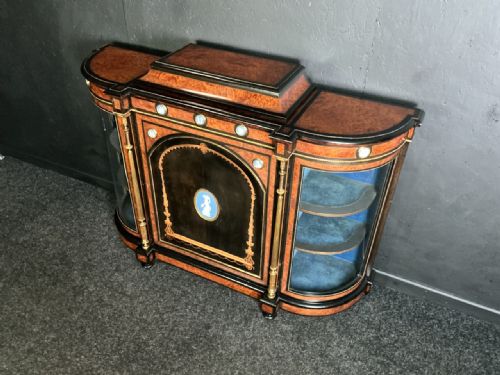
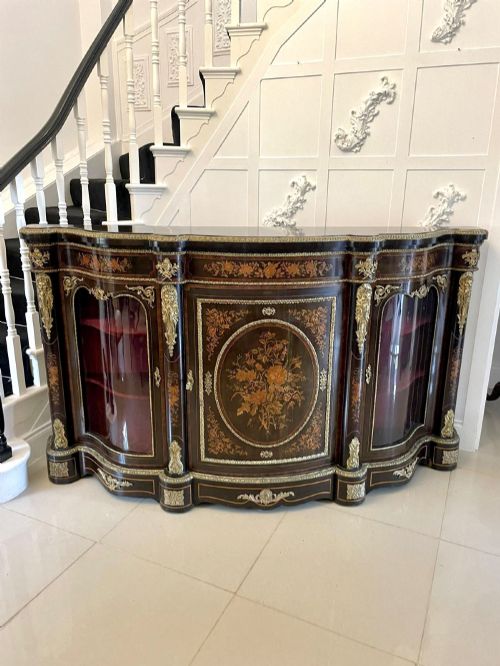
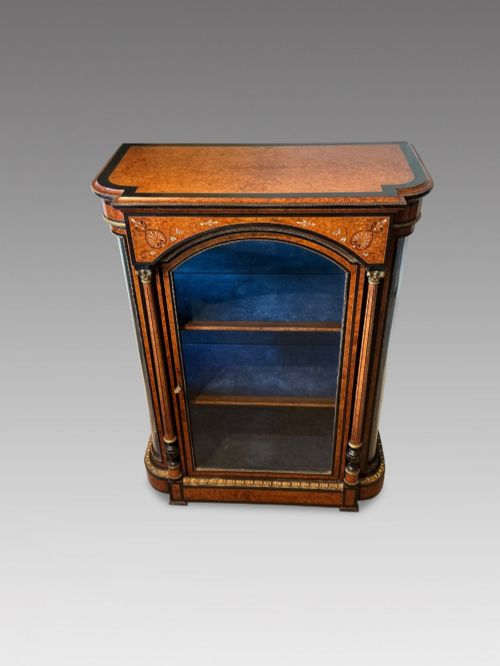
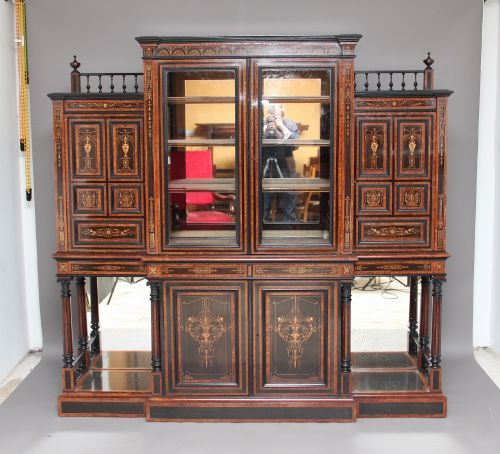
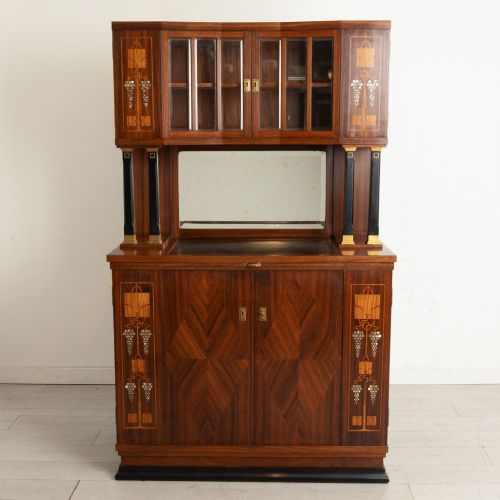
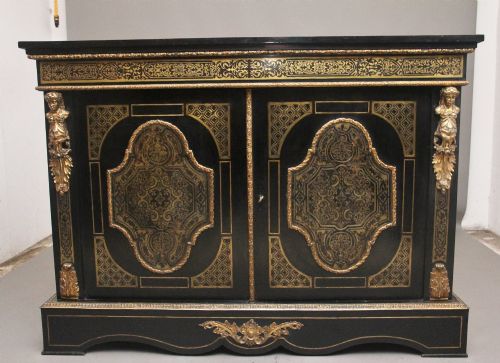
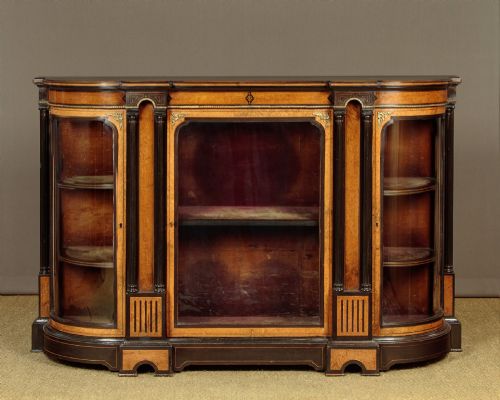
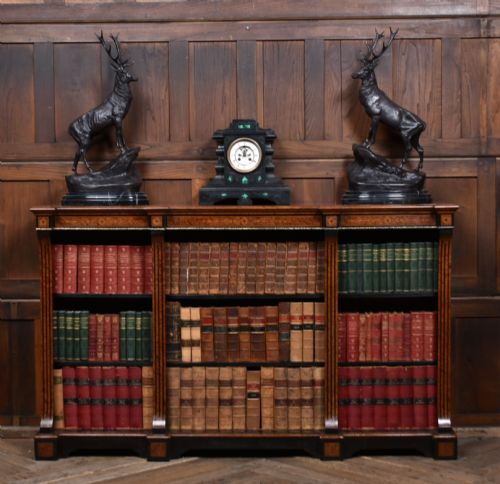
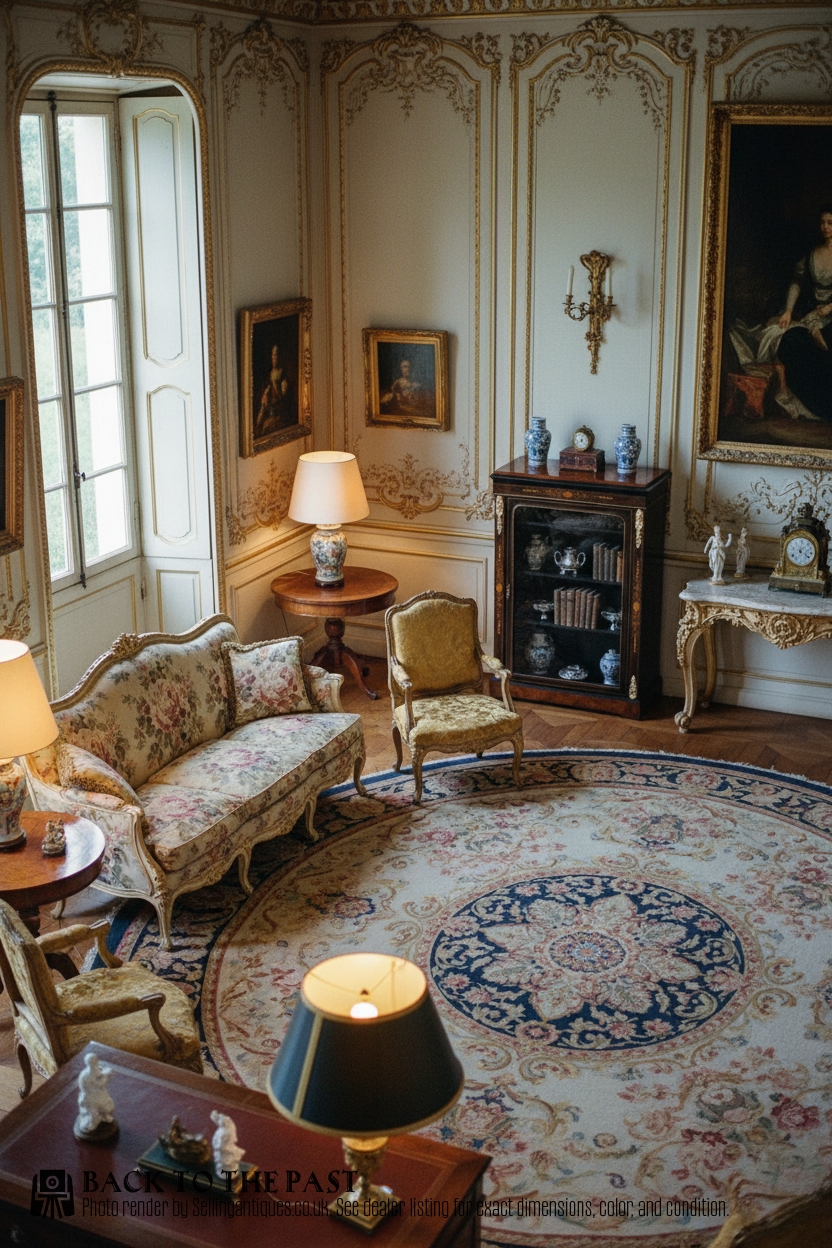
When you search for an ebonised marquetry cabinet, you encounter nineteenth-century credenzas, pier cabinets, and display pieces designed to command attention in a formal room. These items originate predominantly from Victorian British workshops and French Napoleon III salons, reflecting a shared nineteenth-century fascination with dark surfaces and contrasting inlay.
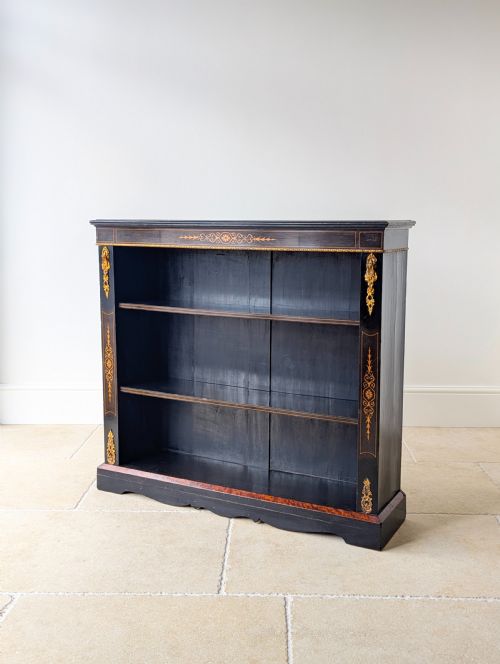
You meet credenzas with serpentine fronts, glazed pier cabinets, and bookcases that combine deep black finishes with lighter wood veneers. The form serves primarily to display porcelain and glassware while offering enclosed shelving beneath decorative timber tops.
How they were made
Makers constructed these pieces using solid timbers like walnut and applied dark ebonised finishes to mimic expensive ebony. They layered burr walnut, amboyna, and brass alongside tortoiseshell into precise geometric and floral patterns.
Ormolu mounts, gilt metal, and marble tops completed the structures, secured with traditional joinery that held heavy glass doors and curved wooden panels.
Ebonised Marquetry Cabinet Retail Price Guide 2026
Typical asking prices for ebonised marquetry cabinet among the pieces listed under this phrase on Sellingantiques today, from the lower quarter to the upper quarter. They describe what is for sale here now, not the wider market.
Tortoiseshell inlay means a nineteenth-century turtle sacrificed its shell so your cabinet could shimmer under gaslight.
What varies in quality
Quality depends on the crispness of the marquetry and the depth of the ebonised finish applied to the timber. Superior examples integrate cast ormolu mounts cleanly into the woodwork without gaps or clumsy fixings.
The sophistication of the internal cabinetry and the weight of the marble or glass components distinguish standard utility pieces from high-status salon furniture.
Lamb of Manchester·August Ungethüm·Gillow
The Ebonised Marquetry Cabinet Glossary
- Ebonised
- Wood treated to imitate ebony, usually through staining or painting dark surfaces. This technique creates a dense, dark background that highlights inlaid metals and lighter veneers.
- Marquetry
- Decorative veneer work arranged in pictorial or geometric patterns across furniture surfaces. Craftsmen cut thin slices of contrasting woods and shells to fit tightly together.
- Ormolu
- Gilded bronze mounts applied to furniture corners, feet, and doors. The metal adds structural reinforcement and decorative contrast to dark timber cabinets.
- Boulle
- A specific technique of inlaying brass and tortoiseshell developed in France. It produces a shimmering, patterned surface often seen on French pier and display cabinets.
- Credenza
- A low cabinet enclosed by doors, frequently fitted with glass panels for display. Originating as a sideboard, it became a central drawing room piece in the nineteenth century.
- Pier cabinet
- A narrow cabinet designed to stand against the wall space between windows. These pieces often feature glass doors and velvet-lined interior shelves.
Ebonised Marquetry Cabinet: Frequently Asked Questions
How do I clean an ebonised cabinet?
Dust gently with a dry, soft cloth to protect the delicate ebonised surface and inlaid details from moisture damage.
Avoid commercial polishes containing silicone, as they build up over time and dull the timber finish.
Where should I place a credenza?
Position your credenza against a flat interior wall away from direct sunlight to prevent the marquetry veneers from fading or cracking.
Ensure the room maintains stable humidity levels to protect the antique glues and wood joints.
Are these cabinets structurally fragile?
Nineteenth-century cabinets are robustly built using traditional joinery, but heavy marble tops and glass panels require careful handling during any room rearrangement.
Support the base evenly across the floor to prevent doors from binding in their frames.
How do I distinguish Victorian from French styles?
Victorian pieces often favour straightforward burr walnut and floral marquetry, whereas French Napoleon III examples frequently incorporate elaborate brass and tortoiseshell boulle work alongside heavy ormolu mounts.
Examine the internal construction timbers for clues regarding British or continental workshop origins.