


Ebonised Library Furniture
Ebonised library furniture brings together heavy Victorian timberwork and dark finishes, giving studies and libraries a severe architectural gravity.
Ebonised Library Furniture
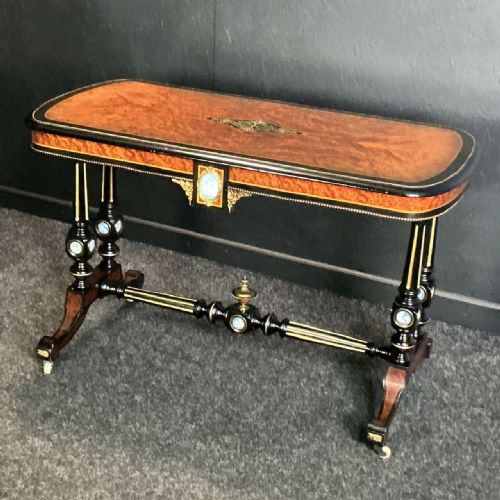
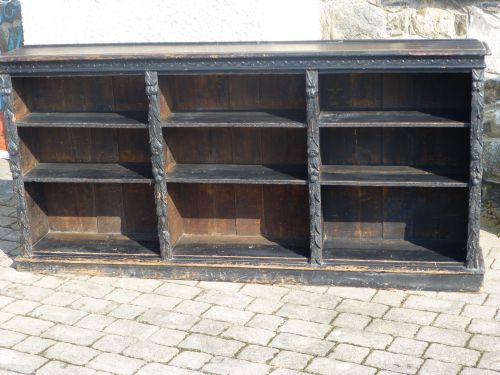
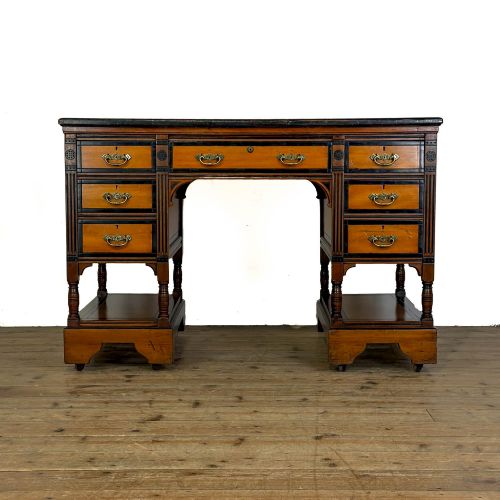
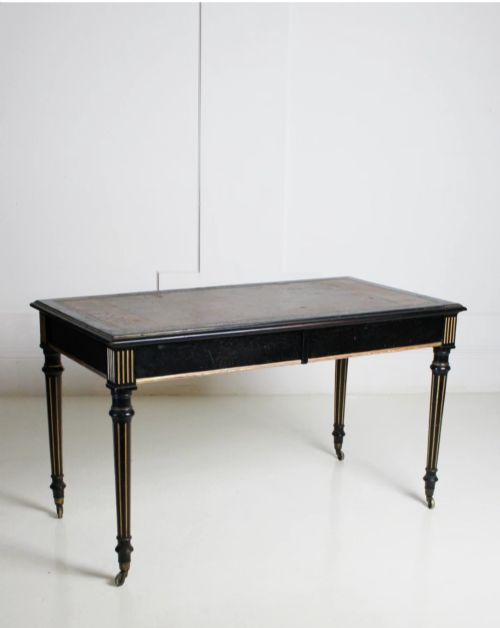
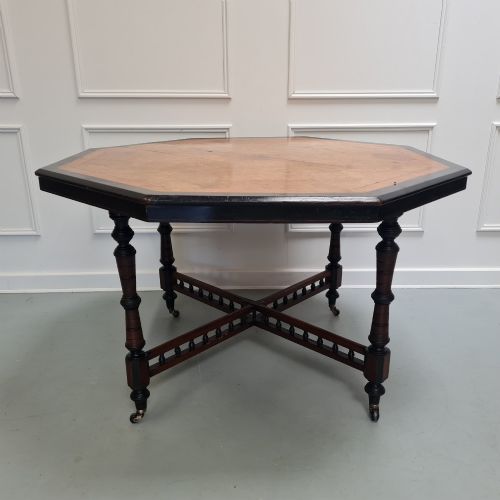
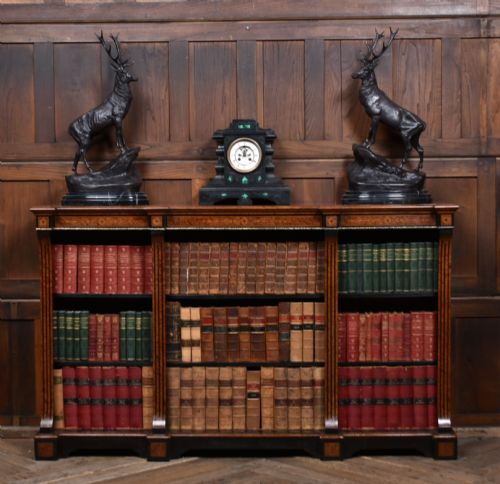
Ebonised library furniture encompasses substantial pieces designed for study and reading rooms, predominantly from the nineteenth century and the Victorian era. The selection centres heavily on centre tables, partner desks, bookcases, and occasional armchairs finished in dark wood.
Buyers will encounter items influenced by the Aesthetic Movement alongside Regency and French revival designs. These pieces range from dwarf bookcases with adjustable shelves to large octagonal tables intended for the middle of a room.
The objects serve practical domestic roles while projecting formal dignity through their dark surfaces. Most surviving examples rely on ebonisation to mimic ebony, often highlighted with contrasting materials or marquetry.
How they were made
Makers utilised native timbers such as oak, mahogany, and birch, applying a dark stain or finish to simulate the dense black wood of the tropics. This ebonisation process was frequently paired with contrasting veneers like amboyna or burr oak to break the dark expanse.
Metal mounts in ormolu and cast brass, alongside ceramic or porcelain plaques and leather desk inserts, added functional and decorative detail. Construction often incorporated carved elements, intricate marquetry, and adjustable shelving mechanisms for practical utility.
Materials appearing across these library pieces include cast brass, ormolu, leather inserts, and contrasting amboyna veneers.
What varies in quality
Quality reveals itself in the depth of the ebonisation and the crispness of the carved details or inlaid brass work. Pieces that integrate secondary woods like amboyna or feature double-sided construction, such as partners desks, demonstrate greater ambition in their design.
The integration of hardware, from solid brass sabots to adjustable shelf fittings, separates standard utilitarian pieces from workshop items of higher standing. Structural integrity in heavy forms like bookcases and centre tables dictates the long-term viability of the piece.
Edward And Robert·Gillows·Maison Millet·Daniel Cottier
The Ebonised Library Furniture Glossary
- Ebonised
- Wood treated with stain or paint to imitate ebony. This dark finish was popular during the Victorian period to lend ordinary timbers an exotic appearance.
- Partners desk
- A large double-sided desk designed for two people to work opposite one another. These often feature drawers and cupboards accessible from both sides.
- Ormolu
- Gilded bronze used for decorative mounts and feet. It provides a bright metallic contrast against dark ebonised wood.
- Marquetry
- Inlaid patterns of wood veneer forming pictures or geometric designs. Craftsmen used contrasting timbers to create decorative surfaces on tabletops.
- Sabot
- A metal shoe fitted to the foot of a furniture leg. These protected the timber base from wear and added decorative weight.
- Bergère
- An enclosed upholstered armchair with wooden framing. The style often incorporates cane work on the sides and back.
Ebonised Library Furniture: Frequently Asked Questions
What is ebonised library furniture?
Ebonised library furniture consists of nineteenth-century tables, desks, and bookcases finished in a dark, black-stained wood. These pieces were built for studies and libraries to create a formal and cohesive interior.
They reflect Victorian tastes, the Aesthetic Movement, and various revival styles, often combining dark timber with brass or inlaid wood.
How do I care for ebonised surfaces?
Ebonised wood requires gentle dusting with a dry, soft cloth to prevent scratching the dark finish. Avoid harsh chemical cleaners and keep the furniture away from direct sunlight and moisture.
Applying a suitable wax occasionally helps maintain the lustre of the wood without building up a heavy residue.
How do I identify Victorian ebonised pieces?
Victorian ebonised items typically show nineteenth-century construction methods, such as hand-cut dovetails and solid timber carcasses beneath the dark stain. Look for characteristic details like Aesthetic Movement incised carving or brass mounts.
Materials like amboyna, ormolu, and leather inserts frequently accompany these pieces, confirming their period context.
Where were these pieces used?
Such furniture was designed for the private libraries, studies, and drawing rooms of nineteenth-century homes. Centre tables were placed in the middle of large rooms, while partners desks accommodated two working individuals.
Bookcases and canterburys provided specialised storage for books, music, and papers within domestic reading spaces.