

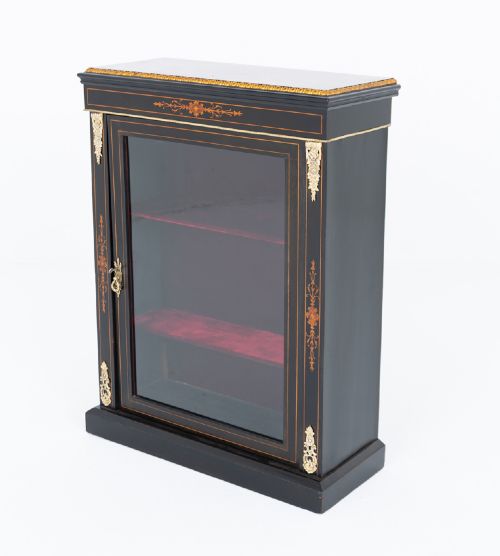
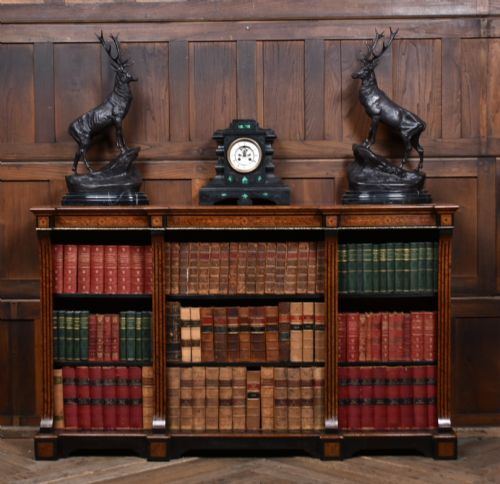
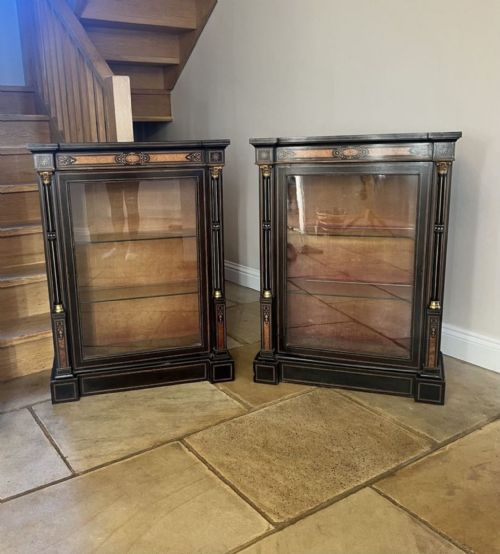


Ebonised Inlaid Bookcase
An ebonised inlaid bookcase brings together dark timber surfaces and contrasting marquetry to form a striking piece of nineteenth-century furniture.
Ebonised Inlaid Bookcase
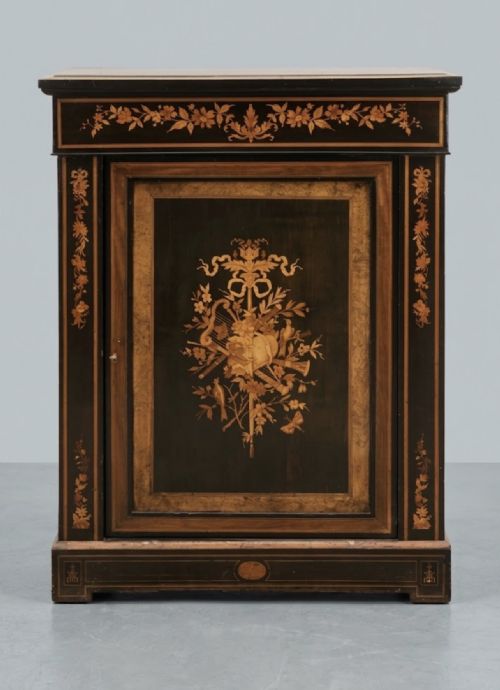
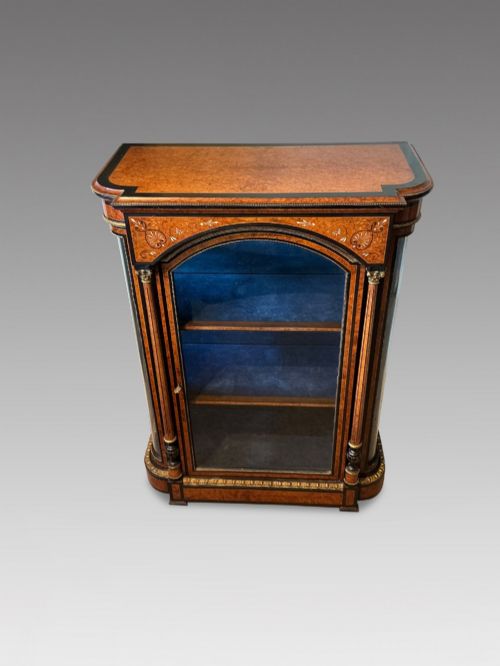
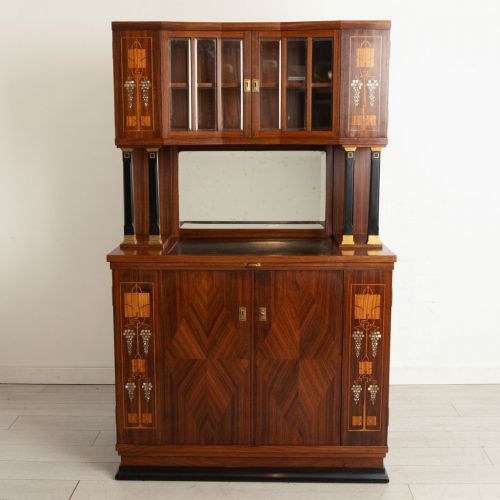
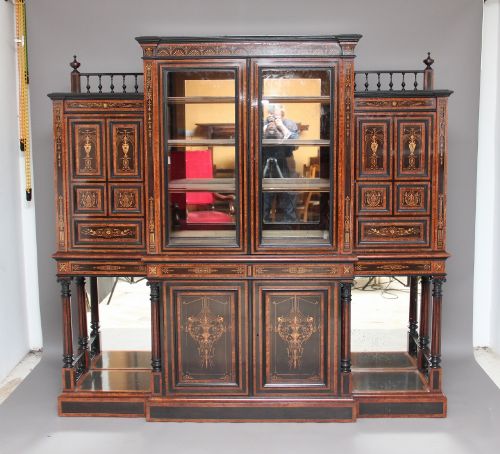
When searching for an ebonised inlaid bookcase, a buyer encounters pieces spanning the Victorian era, the nineteenth century, and specific decades from the eighteen-fifties to nineteen-hundred. These items frequently take the form of display cabinets, pier cabinets, open bookcases, side cabinets, and music cabinets.
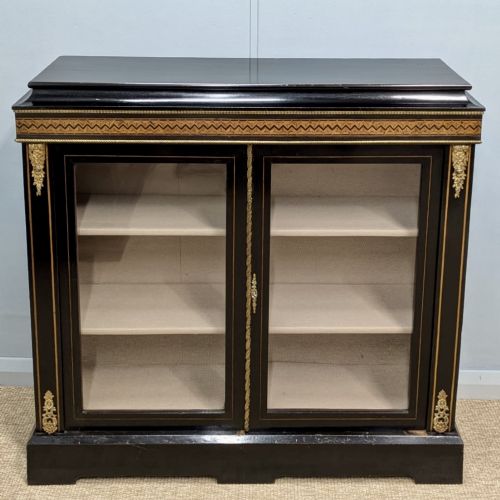
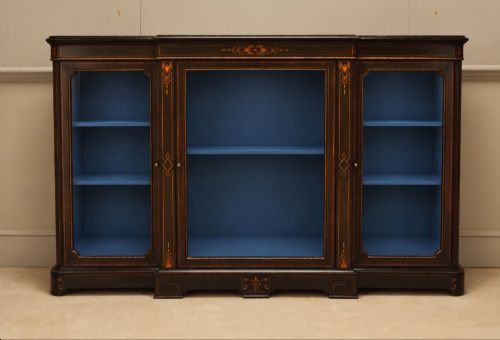
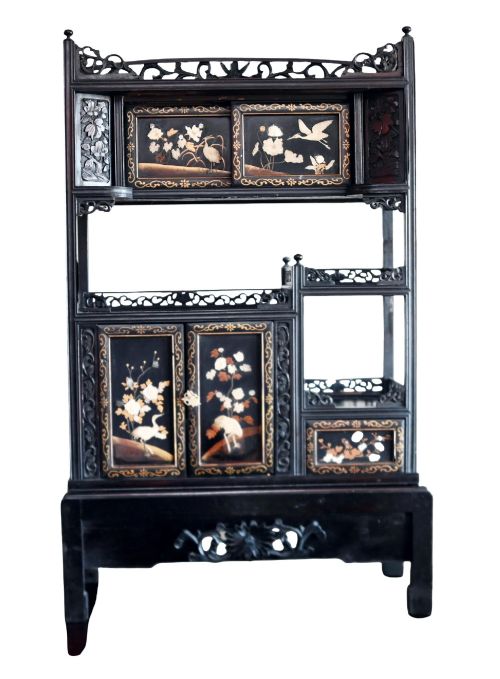
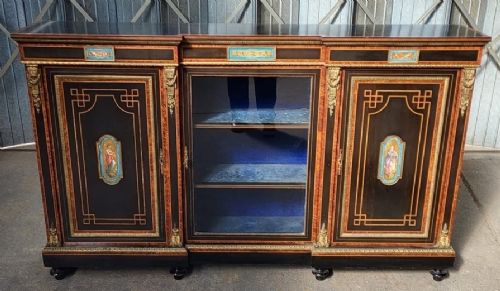
The versions most commonly met on this page originate from English Victorian workshops or continental makers working in French Napoleon III, Aesthetic Movement, and Qing Dynasty styles. The design often incorporates glazed doors, brass mounts, and breakfront configurations to house collections of books and decorative objects.
Materials and construction
The construction relies upon ebonised wood as the primary carcass material, often paired with secondary timbers such as walnut, amboyna, and burr walnut. Craftsmen applied contrasting veneers and detailed stringing to the dark surfaces to create geometric or floral patterns.
Many examples incorporate glass panels within doors, alongside cast brass or ormolu mounts and occasional porcelain plaques. Boulle marquetry and mother of pearl additions appear across French and Chinese pieces, showcasing varied decorative techniques of the period.
Ebonised Inlaid Bookcase Retail Price Guide 2026
Typical asking prices for ebonised inlaid bookcase among the pieces listed under this phrase on Sellingantiques today, from the lower quarter to the upper quarter. They describe what is for sale here now, not the wider market.
Listings feature Victorian, Napoleon III, and Aesthetic Movement pieces constructed from ebonised wood, amboyna, walnut, and brass.
Subtleties of execution
The standard of a piece rests upon the precision of the inlay and the depth of the ebonised finish. Finer examples display crisp marquetry work using premium contrasting timbers like amboyna, set flush into the dark ground.
Hardware and mounts also differentiate levels of craftsmanship, with hand-chased ormolu and substantial brass fittings marking out superior cabinet-making. The integration of glazed panels and the structural integrity of breakfront forms further distinguish the range.
Lamb of Manchester·August Ungethüm
The Ebonised Inlaid Bookcase Glossary
- Ebonised
- Timber treated to resemble ebony, achieving a deep black surface finish popular in nineteenth-century cabinet-making. This finish provides a dark ground that highlights contrasting inlay.
- Boulle
- Marquetry technique utilising tortoiseshell and brass inlay, associated with French Napoleon III pieces. The method creates ornate metallic patterns across the dark timber carcass.
- Pier cabinet
- A low freestanding cabinet designed to fit narrow wall spaces between windows. These pieces often feature glazed doors and enclosing shelves for display.
- Breakfront
- A piece of furniture where the central section projects forward from the flanking wings. This architectural arrangement adds depth and presence to larger bookcases.
- Stringing
- Thin lines of contrasting wood or metal inlaid into the surface of furniture. It outlines panels and drawers to define the proportions of the carcass.
Ebonised Inlaid Bookcase: Frequently Asked Questions
What is an ebonised inlaid bookcase?
An ebonised inlaid bookcase is a nineteenth-century storage piece featuring darkened timber surfaces decorated with contrasting marquetry, stringing, or metal inlay.
These items range from open shelves to glazed display cabinets and pier units produced during the Victorian period and continental European movements.
How do I identify a pier cabinet?
A pier cabinet is a specific form of low, upright display unit designed to fit narrow architectural wall spaces between windows.
These pieces typically feature single or paired glazed doors enclosing shelves, standing on plinth bases with brass mounts and inlaid surfaces.
What materials are used in these pieces?
The primary structure utilises ebonised wood combined with walnut, burr walnut, and amboyna veneers.
Decorative elements incorporate glass panels, brass mounts, ormolu, porcelain, mother of pearl, and tortoiseshell details.