





Ebonised Giltwood Wall Mirror
An ebonised giltwood wall mirror brings high contrast and reflective depth to a room through dark wood and bright metallic highlights.
Ebonised Giltwood Wall Mirror
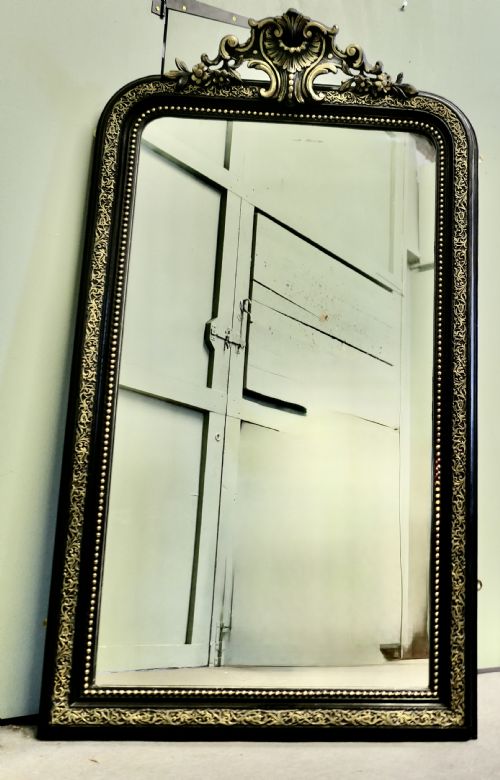
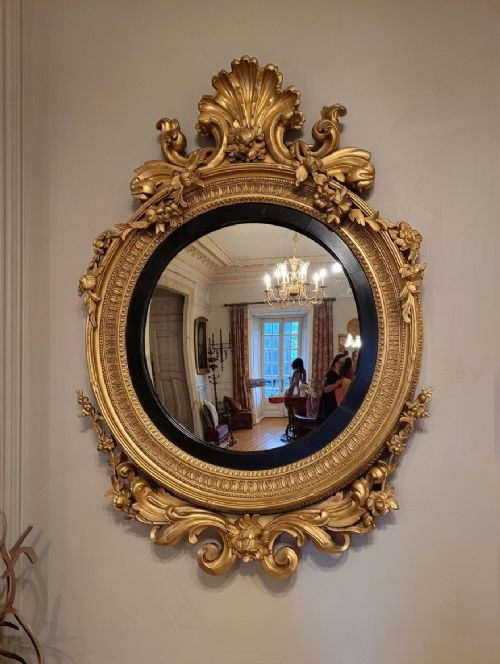
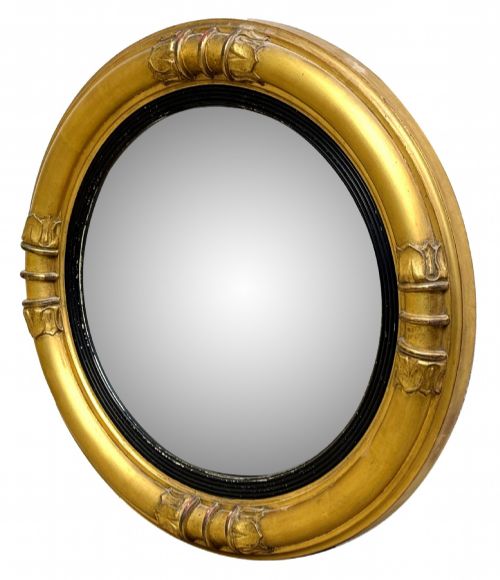
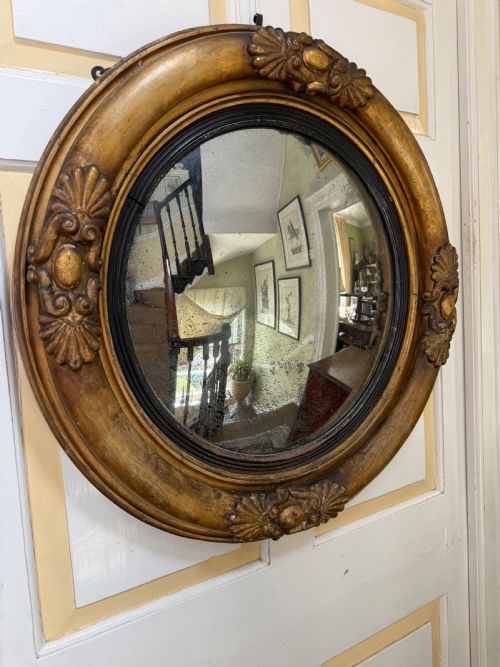
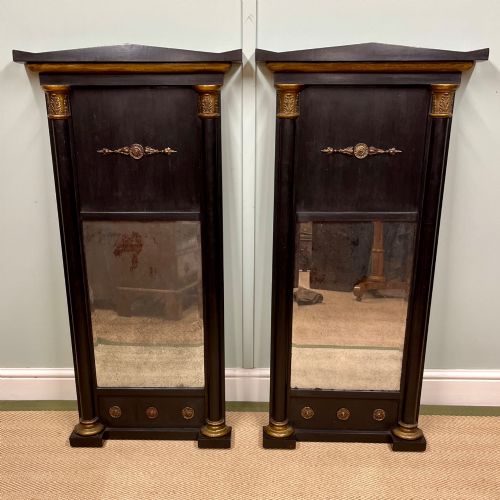
An ebonised giltwood wall mirror combines dark ebonised wood with gold leaf or gilt details to create a striking visual boundary. When searching for an ebonised giltwood wall mirror, buyers encounter a mix of convex porthole glasses, large rectangular overmantels, and pier mirrors.
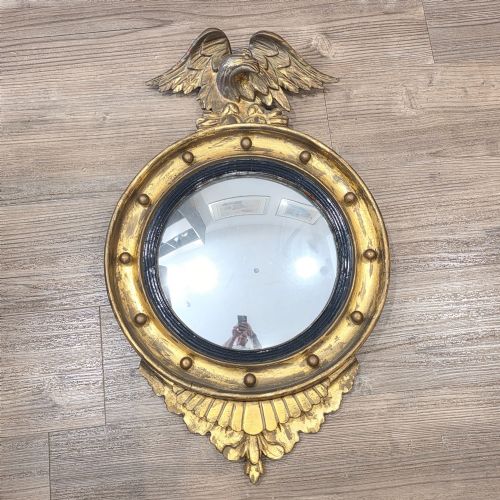
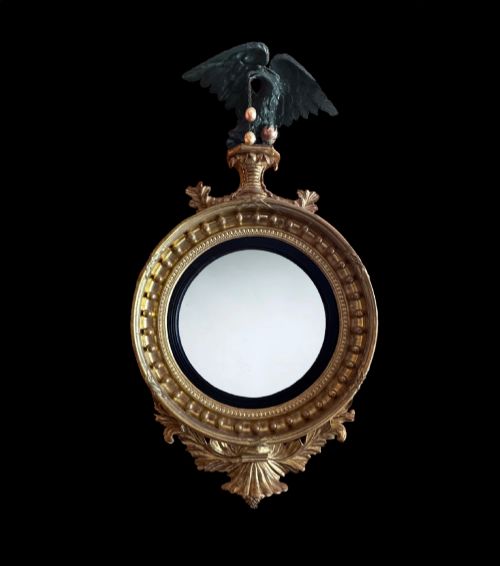
The surviving pieces span the Regency and Victorian eras, along with Napoleon III and Empire styles. Convex mirror formats with ebonised slips and spread eagle crests appear frequently among these listings.
Originating primarily from nineteenth-century workshops, these mirrors served to bounce natural light around formal drawing rooms and halls. The combination of black and gold elements provides a crisp, architectural framing suited to both period and modern interiors.
How they were made
Cabinetmakers constructed the frames using native or imported hardwoods, applying ebonising treatments to darken the timber to a deep black finish. Gilding was then applied using gold leaf or composition metal over layers of gesso to catch the light.
Glass plates, particularly curved convex lenses, required specialised blowing and silvering techniques to achieve a wide-angle reflection without distortion. Hand-carved wooden details and composition ornaments were secured to the primary frame before finishing.
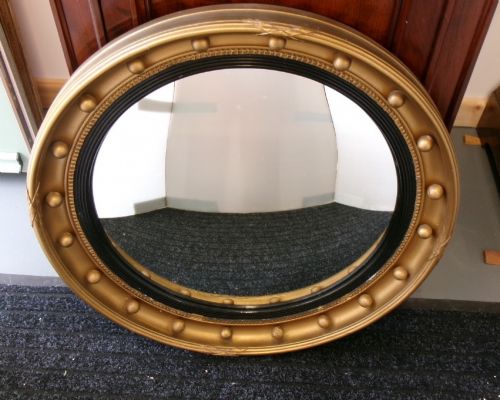
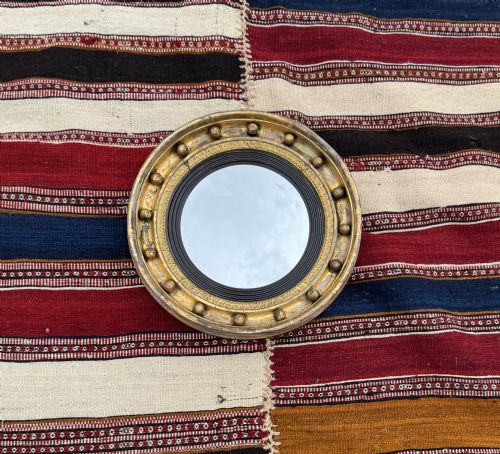
Many convex mirrors feature rows of small spherical balls set into the frame, designed to bounce light around the room like tiny stars.
What varies in quality
The distinction between standard examples and finer works rests on the crispness of the carved details, such as eagle crests, reeded slips, and applied spheres. Sharp, deeply defined carving denotes a skilled hand, whereas softened or worn composition ornament indicates a lesser grade.
The clarity and originality of the mirror glass also dictate worth. Early convex plates with minimal foxing and original backing boards retain more of their period character than later replacements.
The Ebonised Giltwood Wall Mirror Glossary
- Ebonised
- Wood treated with stain, dye, or paint to imitate expensive ebony wood. This finish gives the frame its dense black appearance.
- Giltwood
- Timber that has been coated with thin sheets of gold leaf or gold paint. It provides the bright contrast against the dark ebonised elements.
- Convex
- A lens or mirror surface that curves outward like the exterior of a sphere. This shape creates a wide-angle reflection of the entire room.
- Slip
- A narrow inner frame or border fitted between the main frame and the glass. In these pieces, the slip is frequently ebonised.
- Overmantel
- A large mirror designed specifically to hang above a fireplace mantelpiece. They often feature extended rectangular proportions to match the width of the hearth.
Ebonised Giltwood Wall Mirror: Frequently Asked Questions
Where should I hang a convex mirror?
These mirrors work best on principal walls in reception rooms, halls, or dining spaces where they can capture light from multiple angles.
Because convex glasses shrink the reflection of the room into a compact sphere, hanging them at eye level ensures maximum visual impact.
How do I clean an ebonised frame?
Dust the ebonised wood gently with a soft, dry cloth to remove surface particles without disturbing the finish.
Avoid using liquid cleaners or polishes, as moisture can damage both the fragile ebonised coating and the underlying gesso.
Are these mirrors heavy?
Many nineteenth-century frames possess substantial weight due to dense hardwoods, layered gesso, and thick glass plates.
Secure mounting into structural wall studs or brickwork using appropriate hardware is essential for safe suspension.
What is an eagle surmount?
An eagle surmount is a carved wooden bird figure mounted at the very top of the mirror frame.
This neoclassical motif was particularly popular on Regency convex mirrors, often shown perched on a rocky base with outspread wings.