



Ebonised Footstool
An ebonised footstool brings dark, polished timber and tactile textile tops into a room, offering a distinct nineteenth-century silhouette.
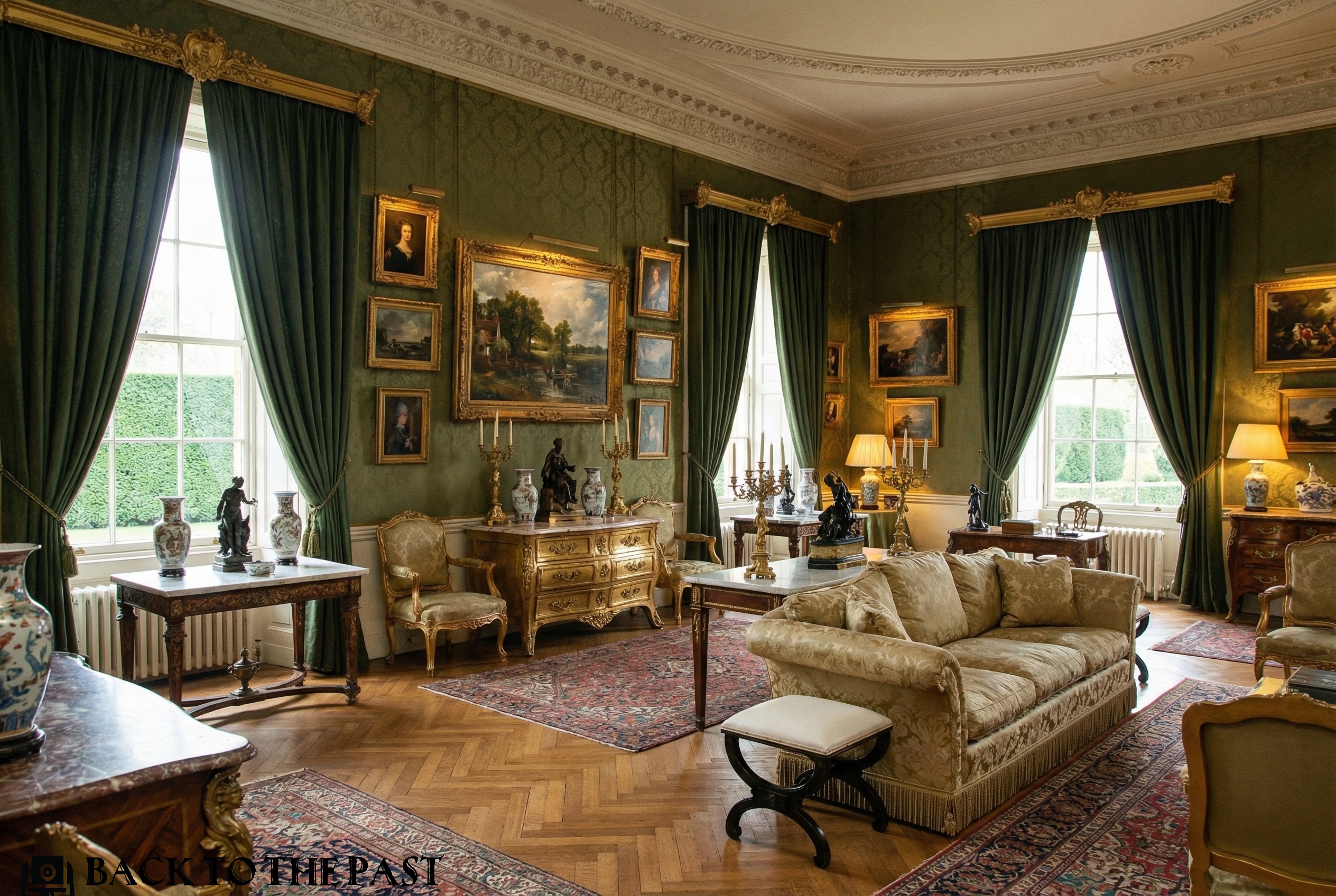
Ebonised Footstool
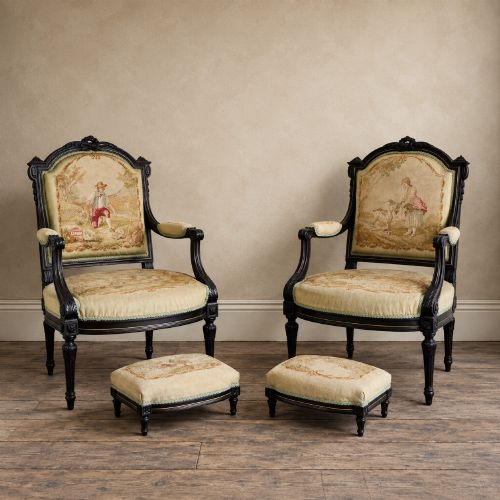
An ebonised footstool is a low seating piece defined by its blackened wood finish, mimicking costly ebony through staining or painting. Buyers searching for an ebonised footstool encounter varied forms ranging from Victorian aesthetic period pieces to Edwardian examples and Louis XVI revival salons.
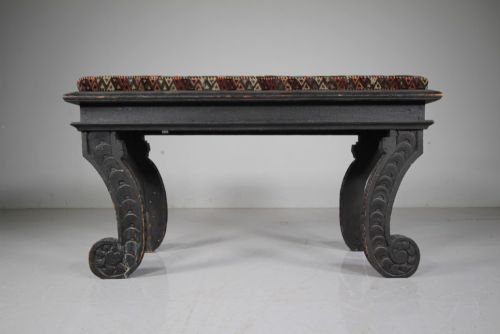
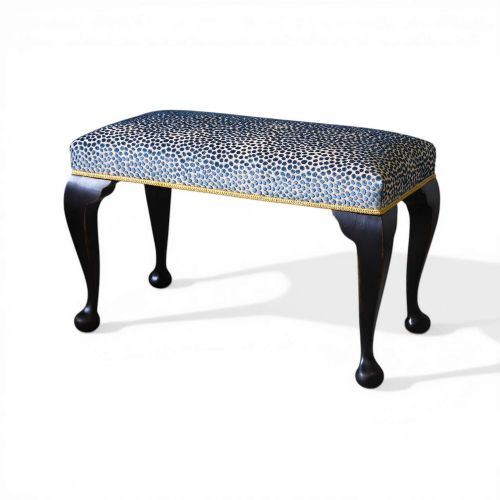
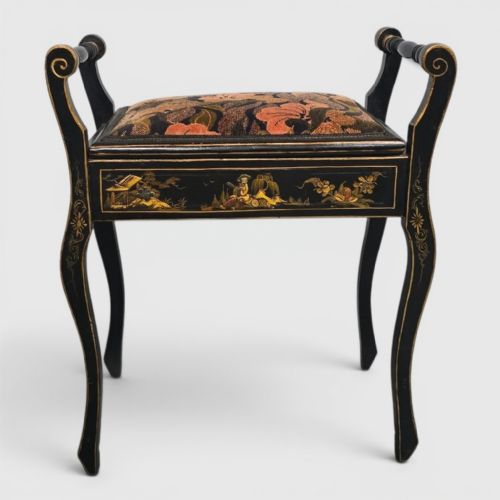
The selection on this page centres on nineteenth-century and early twentieth-century examples, including compact low stools, adjustable piano stools, and occasional benches. Many feature turned legs, parcel gilding, or bamboo-turned frames that reflect the diverse revival styles of their eras.
Origins span English and French workshops, with materials shifting from hardwood and beech frames to pine and oak. Upholstery varies widely from plain hessian and modern textiles to rich velvet and buttoned padding.
How they were made
Frames are constructed from hardwoods such as beech, oak, and mahogany, often shaped with turned legs or carved details before receiving a dense black ebonising finish. This dark surface is frequently enhanced with parcel gilt highlights or polished to a smooth sheen.
Upholstery techniques involve securing textiles over padded seats, utilising traditional materials like hessian and horsehair beneath top covers of velvet or woven fabric. Some examples incorporate brass hardware for adjustable mechanisms or decorative accents.
Ebonised Footstool Retail Price Guide 2026
Typical asking prices for ebonised footstool among the pieces listed under this phrase on Sellingantiques today, from the lower quarter to the upper quarter. They describe what is for sale here now, not the wider market.
Listings feature ebonised footstools spanning the eighteenth, nineteenth, and twentieth centuries, incorporating oak, beech, hardwood, and brass elements.
What varies in quality
Quality rests in the crispness of the turning on the wooden legs and the integrity of the ebonising finish, where deeper, more even staining surpasses flat, modern paint layers. Finer examples retain delicate parcel gilding or subtle aesthetic movement carving that remains sharp and undisturbed.
Structural merit depends on the joinery of the hardwood frame and the preservation of original or sympathetic upholstery materials. Pieces showing thoughtful proportion and balanced decorative details separate standard utilitarian seating from superior cabinet work.
Marsh and Jones
The Ebonised Footstool Glossary
- Ebonised
- Wood treated with stain, dye, or paint to imitate expensive ebony. This dark finish became particularly popular during the Victorian and aesthetic periods.
- Parcel Gilt
- Woodwork decorated with partial applications of gold leaf. This technique highlights carved details or turned mouldings against a dark ebonised ground.
- Aesthetic Movement
- A late nineteenth-century design style emphasising visual beauty over narrative subject matter. Pieces from this movement often feature ebonised surfaces and clean lines.
- Faux Bamboo
- Wood turned and carved to resemble segments of natural bamboo. This decorative technique appears frequently in nineteenth-century seating furniture.
- Louis XVI Revival
- A nineteenth-century French style drawing on neoclassical furniture forms. It typically incorporates symmetrical proportions and refined classical ornament.
Ebonised Footstool: Frequently Asked Questions
What is an ebonised footstool?
An ebonised footstool is a low seat constructed with wood finished in a dense black coating to emulate ebony. These pieces frequently date from the nineteenth century and incorporate various revival styles.
They serve as compact decorative furnishings, combining dark timber frames with textile or velvet upholstered tops designed for resting feet or low seating.
How do I date an ebonised footstool?
Dating relies on examining the timber species, turning styles of the legs, and the upholstery build beneath the top fabric. Victorian and aesthetic period examples often feature specific bamboo turnings or parcel gilt highlights.
Construction methods, such as the type of joinery and hand-cut screws or nails, also provide clear indicators of whether a piece belongs to the nineteenth or early twentieth century.
Where were these footstools used?
These footstools were placed in nineteenth-century drawing rooms, parlours, and bedrooms to accompany armchairs or dressing tables. Low centre stools provided comfortable seating near fireplaces or writing desks.
Adjustable variants were specifically designed for music rooms, pairing with pianos to allow players to alter their seating height.
Are the upholstery covers original?
Most antique footstools have undergone reupholstering during their lifespan to maintain usability and match changing interior aesthetics. Hessian and foundational stuffing beneath the top layer may date to earlier periods even when the top fabric is modern.
Finding completely untouched nineteenth-century upholstery is uncommon, as fabric naturally wears out with regular household use.
How do I care for ebonised wood?
Ebonised wood requires gentle dusting with a soft, dry cloth to protect the dark finish from scratching. Avoid commercial polishes containing silicone, which can build up on the blackened surface and dull the sheen.
Keep the timber away from direct sunlight and excessive heat sources to prevent the wood from drying out or the finish from fading.