
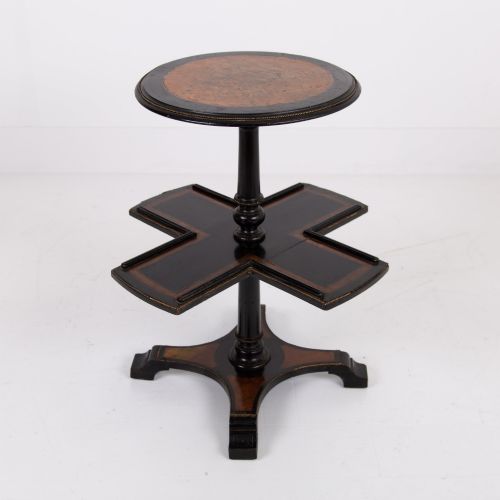


Ebonised Display Table
An ebonised display table brings dark polish and structured surfaces to a room, designed to showcase precious objects.
Ebonised Display Table
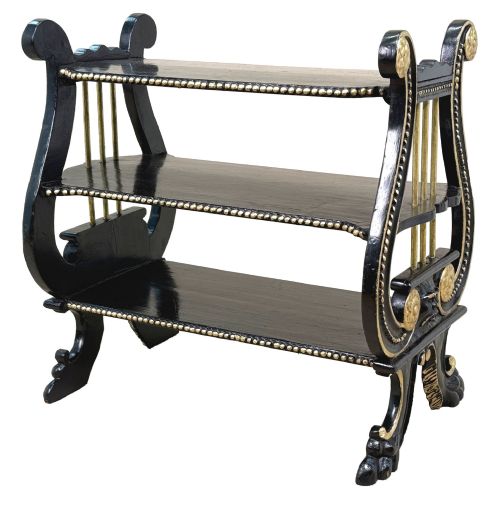
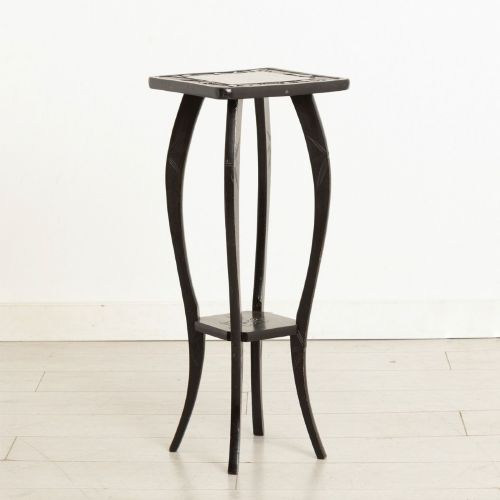
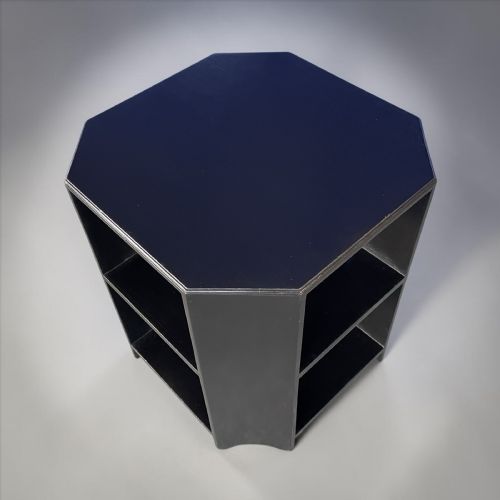
An ebonised display table combines dark timber finishes with surfaces built for showing objects, appearing frequently in Victorian rooms and later contexts. The selection spans etageres, side tables, plant stands, and occasional tables from the nineteenth and early twentieth centuries.
Makers drew on French Napoleon III, Aesthetic Movement, and Chinese Export traditions to shape these pieces. Side tables and multi-tiered etageres provide the primary structural formats seen in this selection.
The period manufacture ranges from the mid-nineteenth century through to the early decades of the twentieth century. These furnishings served as focal points for porcelain, bronzes, and curiosities in domestic interiors.
Design and Execution
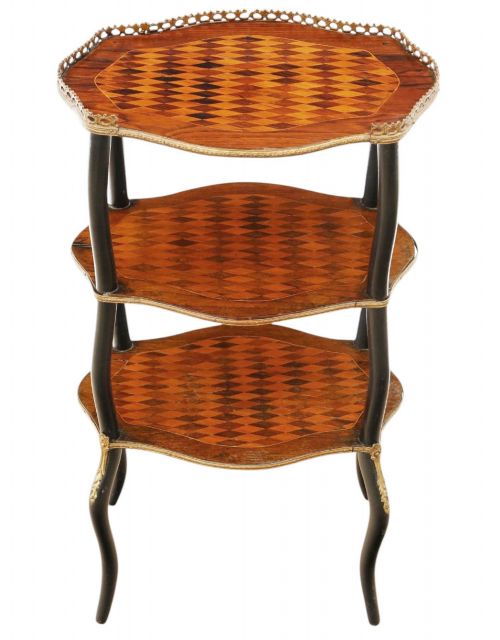
Quality rests in the precision of the parquetry inlay, the crispness of any hand carving, and the integration of ormolu mounts. Finer examples display harmonious proportions across multiple tiers and refined finishing to the ebonised surfaces.
Lesser pieces rely on plain timber framing without auxiliary decoration or sophisticated veneer work. The presence of secondary timbers like amboyna or walnut alongside the ebonised finish elevates the piece.
Card tables double as secret display frames, holding delicate portrait photographs behind glass for Victorian callers to admire.
Liberty of London·Bertram and Son·Quincy Showcase Works
The Ebonised Display Table Glossary
- Ebonised
- Timber treated with stain or paint to imitate the dark, dense appearance of true ebony. This finish gained popularity during the Victorian period for accentuating cabinet work.
- Étagère
- A piece of furniture consisting of several open shelves for displaying small objects. These tiered stands developed in France and spread through European drawing rooms.
- Ormolu
- Gilded bronze mounts cast and chased for decorative effect on furniture. Makers applied these metallic ornaments to corners, legs, and aprons.
- Parquetry
- Geometric patterns formed by small pieces of wood fitted together on a surface. This technique decorates tabletops and shelves.
- Whatnot
- A set of open shelves used for holding ornaments or books. Victorian interiors utilised these tall, multi-tiered display pieces.
Ebonised Display Table: Frequently Asked Questions
What is an ebonised display table?
An ebonised display table is a piece of furniture finished in dark, simulated ebony, built specifically to exhibit small decorative objects, porcelain, or curiosities.
These items range from single-tier side tables to multi-shelf etageres designed for Victorian and Aesthetic Movement interiors.
How were these tables used?
Owners used these tables in drawing rooms and parlours to display prized possessions, plants, and art objects.
The tiered shelves and glass-topped surfaces allowed collectors to arrange their collections safely in well-lit areas.
How do I clean an ebonised finish?
Dust the surface regularly with a soft, dry cloth to prevent accumulation without abrasive friction.
Avoid chemical polishes or excessive moisture, which can damage the dark stain and delicate parcel gilding.
How can I tell a Victorian table apart?
Victorian pieces often feature characteristic details like brass stringing, turned supports, and multi-tiered arrangements.
Construction methods, timber choices such as amboyna, and decorative styles like the Aesthetic Movement help date these items.