
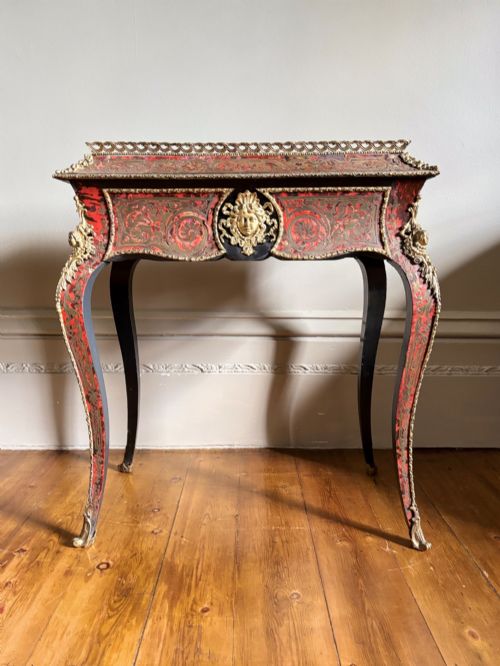
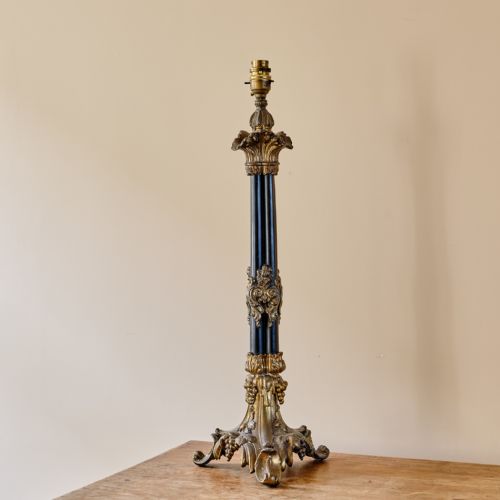


Ebonised Brass Side Table
An ebonised brass side table brings together dark timber and bright metal with a distinct nineteenth-century architectural confidence that suits a modern interior.
Ebonised Brass Side Table
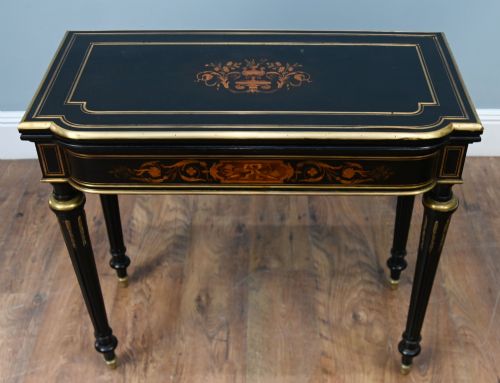
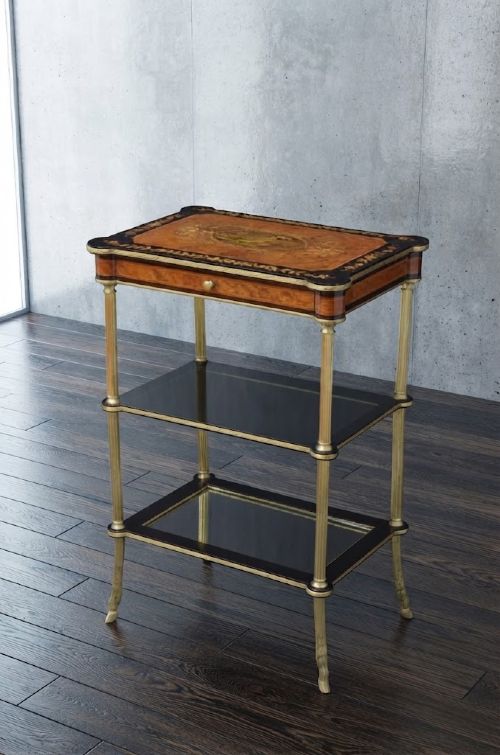
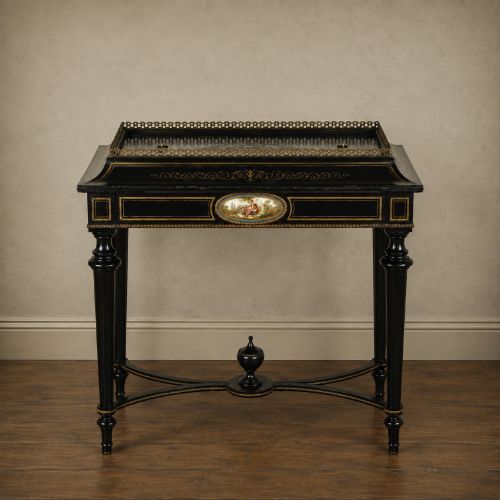
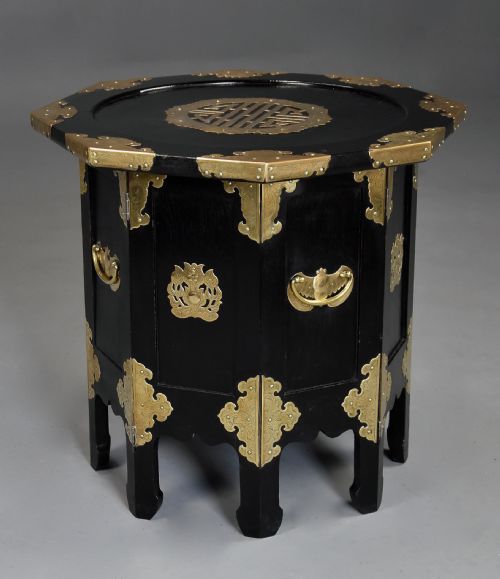
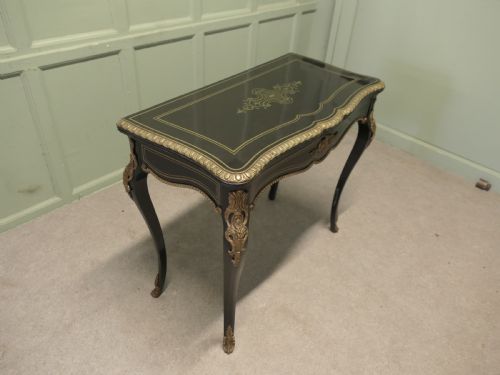
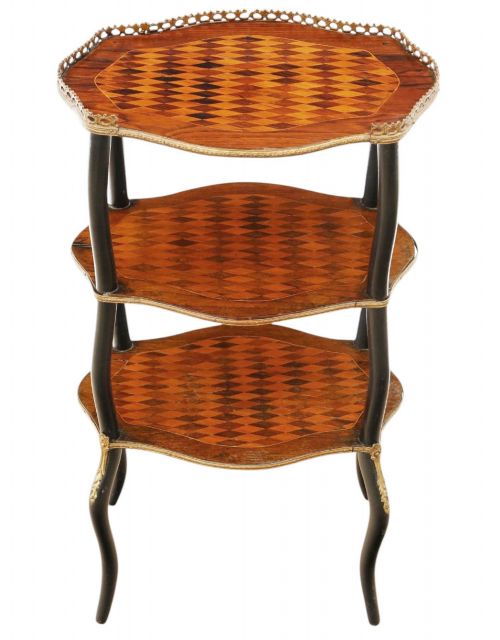
An ebonised brass side table typically emerges from nineteenth-century European workshops, spanning Victorian, Napoleon III, and Aesthetic Movement periods. The selection here leans heavily towards French and English forms, encompassing side tables, centre tables, occasional tables, and tiered etageres.
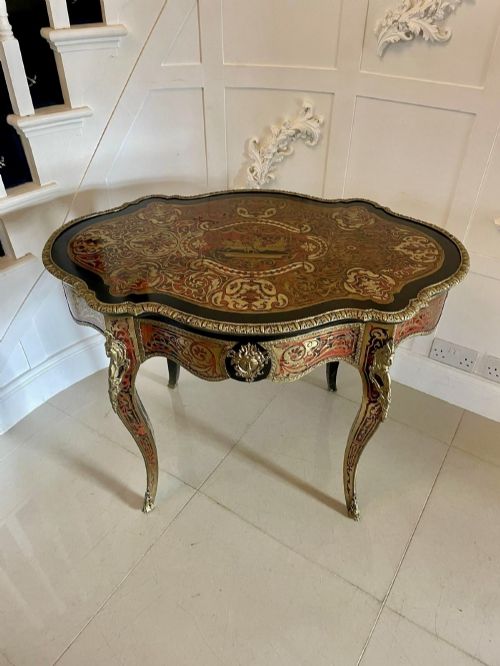
Makers and designers of the period utilised dark finishes to imitate costly ebony, contrasting the heavy black surfaces with gleaming brass inlay, ormolu mounts, and gilt bronze details. These forms range from simple occasional tables to elaborate card tables and jardiniere stands fitted with porcelain plaques or mother-of-pearl.
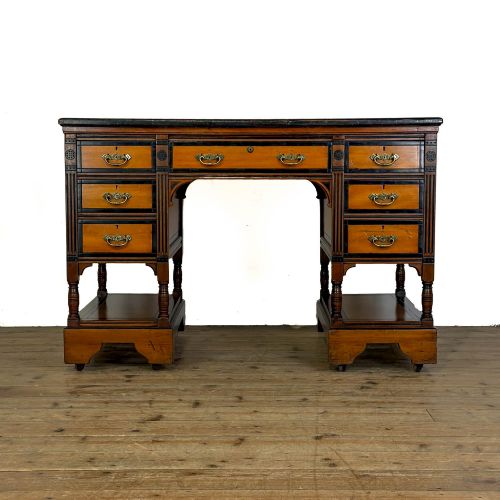
Buyers will encounter various incarnations, from compact lamp tables to multi-tiered display shelves and writing desks. The underlying structure frequently employs walnut, mahogany, or birch before receiving the characteristic ebonisation treatment.
How they were made
The construction relies upon hardwoods treated with dark stains or black lacquer to achieve an ebonised surface, which serves as a dark canvas for metallic ornamentation. Artisans embedded brass stringing, marquetry, and parquetry directly into the timber surface using precision cutting techniques.
Cast brass or ormolu mounts, sabots, and gallery rails secure to the corners and edges, providing structural protection alongside decorative contrast. Secondary elements incorporate marble tops, mirrored tiers, and hand-painted porcelain plaques set firmly into the wooden frames.
Listings feature nineteenth-century French and English pieces utilising brass, ebonised wood, ormolu, and walnut across styles spanning Napoleon III, Aesthetic Movement, and Regency.
What varies in quality
Quality rests upon the crispness of the brass inlay and the precision of the joinery where the ebonised components meet. Superior examples display tightly fitted metalwork flush with the wood, whereas lesser items show gaps or lifting along the brass stringing.
The depth and durability of the ebonised finish dictate the piece's integrity, alongside the quality of the cast ormolu mounts. Finer pieces incorporate secondary timbers such as amboyna or rosewood beneath intricate marquetry, whereas simpler iterations rely solely on surface staining.
Maison Millet·Daniel Cottier·Cottier and Co·Diehl Paris·Carlo Bugatti
The Ebonised Brass Side Table Glossary
- Ebonised
- Wood treated with a chemical stain, dye, or black lacquer to simulate costly solid ebony. This technique gained immense popularity during the nineteenth century for furniture requiring sharp metallic contrasts.
- Ormolu
- Gilded bronze applied to furniture mounts, feet, and decorative edges. The process involves treating the bronze base with a gold-mercury amalgam before heating.
- Etagere
- A set of open display shelves supported by columns or slender pillars. These pieces emerged in France to showcase small ornaments and porcelain.
- Boulle
- A form of marquetry consisting of tortoiseshell and brass inlaid in contrasting patterns. Named after the royal cabinetmaker André-Charles Boulle, it defines nineteenth-century revival furniture.
- Parquetry
- Geometric wood inlay forming repetitive patterns across a tabletop or panel. It differs from pictorial marquetry through its strict reliance on angles and symmetry.
Ebonised Brass Side Table: Frequently Asked Questions
How do I clean an ebonised surface?
Dust the timber gently with a dry, soft microfibre cloth to remove daily particles without disturbing the finish.
Avoid commercial liquid polishes and water, which can penetrate hairline fractures in the ebonisation and loosen delicate brass inlay.
Were these tables used for dining?
These tables served primarily as decorative furniture for reception rooms, parlours, and drawing rooms rather than heavy daily dining.
Their surfaces held lamps, cards, books, or decorative plants, reflected by the prevalence of etageres, card tables, and jardiniere stands.
How do I distinguish Napoleon III pieces?
Napoleon III pieces frequently feature dense ebonised wood heavily accented with polished brass marquetry, ormolu mounts, and mother-of-pearl detail.
This mid-to-late nineteenth-century French style drew inspiration from earlier Louis periods while embracing eclectic Victorian tastes.
Can I place these tables near radiators?
Dry heat from radiators causes nineteenth-century timber to shrink, leading to warped tops and lifting brass inlay.
Keep these tables away from direct heat sources and maintain stable room humidity to preserve the ebonised finish.