



Eastern Brass Tray
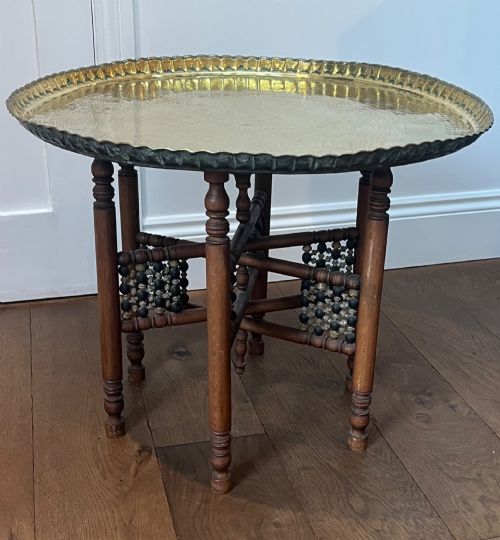
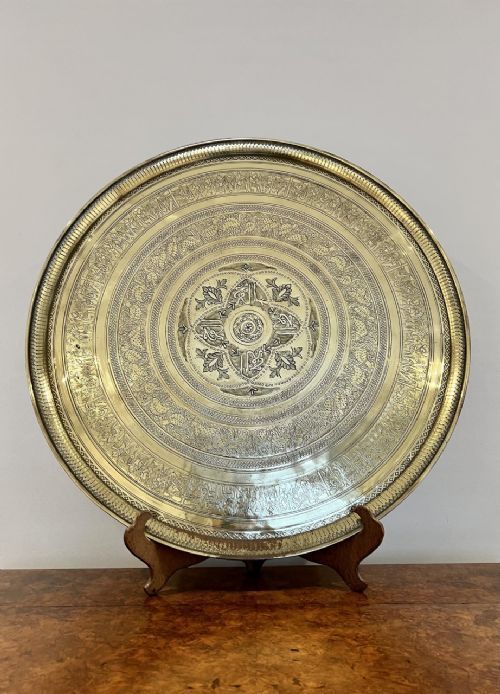
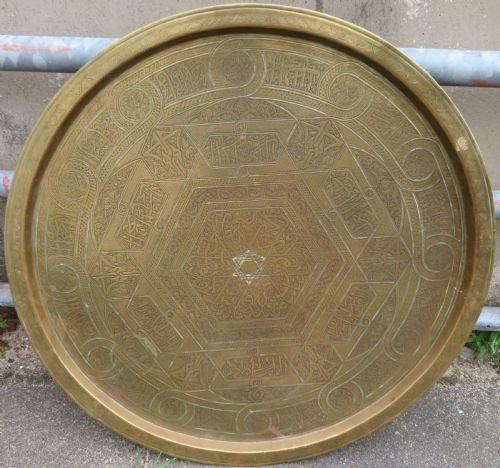
An eastern brass tray brings warmth and intricate craftsmanship into a room, serving wonderfully as a coffee table top or a striking wall charger.
Eastern Brass Tray
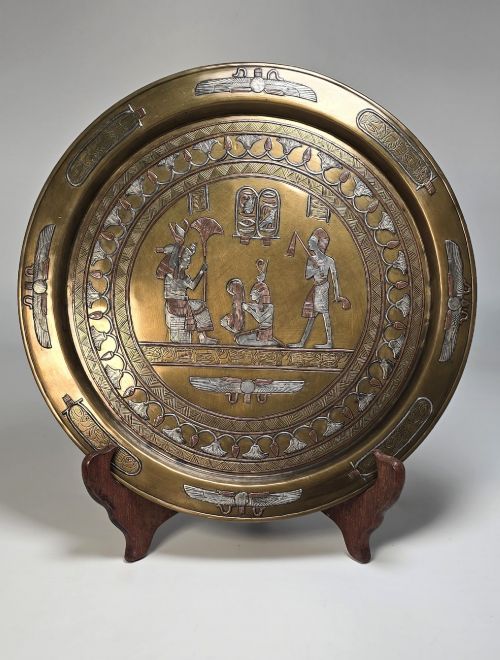
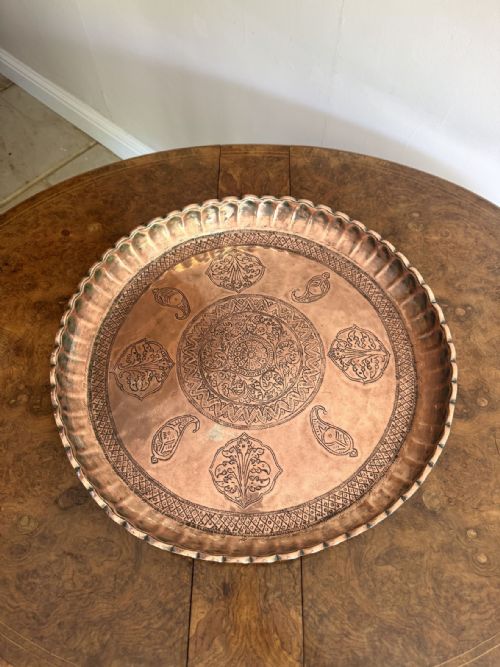
When you search for an eastern brass tray, you encounter a variety of forms including large circular dishes, chargers, and complete folding coffee tables. These pieces span the nineteenth and early twentieth centuries, drawing on design traditions from Persia, Egypt, India, and Syria.
The most common formats on this page are generous wall chargers and brass tops paired with foldable wooden stands. They function equally well mounted for display or resting on a base to form a low coffee table.
Originating from periods such as the Victorian era and the early twentieth century, these metalwork items reflect global influences like Anglo-Indian, Mamluk Revival, and Egyptian Revival styles. Each piece carries a distinct cultural narrative expressed through pattern and metal.
How they were made
Maker workshops utilised sheet metals including brass, copper, and patinated copper, often combining them as mixed metal or applying silver inlay. Surfaces were frequently hand pierced, engraved, or decorated with meticulous detail.
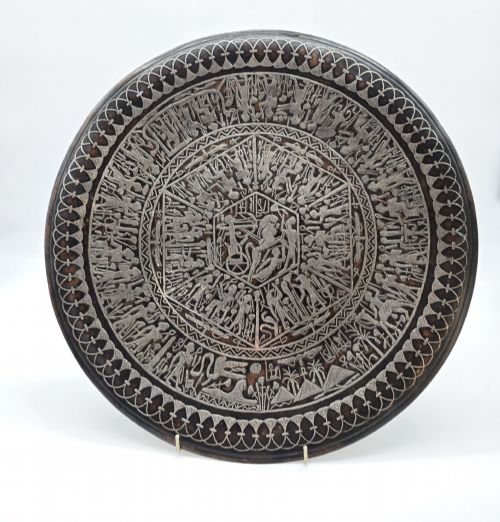
Techniques relied heavily on skilled manual labour, from the chasing of intricate geometric and zodiac motifs to the inlay of contrasting metals. Wooden elements, where present in folding tables, utilised hardwoods to support the heavy metal tops.
Eastern Brass Tray Retail Price Guide 2026
Typical asking prices for eastern brass tray among the pieces listed under this phrase on Sellingantiques today, from the lower quarter to the upper quarter. They describe what is for sale here now, not the wider market.
Keep an eye out for trays bearing the signs of the zodiac, perfect for consulting the cosmos over your afternoon tea.
What varies in quality
The distinction between ordinary and superior pieces rests on the depth and precision of the engraving, alongside the complexity of the inlaid metals. Finer items exhibit crisp, deeply cut designs that maintain clarity across the entire surface.
Material composition also dictates the grade of the work, with mixed metal combinations and heavy silver inlay pointing toward high-end production. The integrity of the hand piercing and the weight of the metal distinguish workshop standards.
The Eastern Brass Tray Glossary
- Charger
- A large decorative plate or tray meant for display or serving rather than daily dining use. They often feature elaborate central medallions and rim decoration.
- Cairo Ware
- Metalware produced in Egypt around the turn of the twentieth century, typically featuring distinctive silver and copper inlay on a brass or copper ground.
- Mamluk Revival
- A nineteenth-century design style that emulates the rich, complex brasswork and calligraphy of the medieval Mamluk Sultanate.
- Mixed Metal
- An artistic technique combining different metals such as brass, copper, and silver within a single surface to create visual contrast.
- Patinated Copper
- Copper that has been chemically treated or aged to produce a darkened, rich surface finish rather than a bright, polished look.
Eastern Brass Tray: Frequently Asked Questions
How are eastern brass trays used today?
Many people mount large chargers directly onto walls as focal art pieces, utilising their intricate engraving to add texture to a room.
Alternatively, trays with folding wooden bases function well as low coffee tables or occasional tables for entertaining.
Are these trays heavy?
Yes, solid brass and mixed metal trays carry substantial weight due to the thickness of the metal and the size of the chargers.
When placed on folding stands, the weight helps keep the table stable, though wall mounting requires secure hardware.
How do I clean an antique brass tray?
Gentle dusting with a soft cloth is usually sufficient to maintain the surface without stripping away the historical patina.
Harsh metal polishes should be avoided, as they can permanently remove the dark highlights that define the engraved patterns.
How can I tell the regional style apart?
Persian and Syrian pieces often incorporate fine silver inlay and calligraphic or floral motifs on patinated copper or brass.
Egyptian Cairo Ware frequently emphasises dense geometric and silver-inlaid patterns, while Anglo-Indian and Raj period items showcase intricate hand piercing.