







Earthy Tone Canvas
An earthy tone canvas brings warmth and natural pigment to a room, showing landscapes and rural scenes painted in oils.
Earthy Tone Canvas
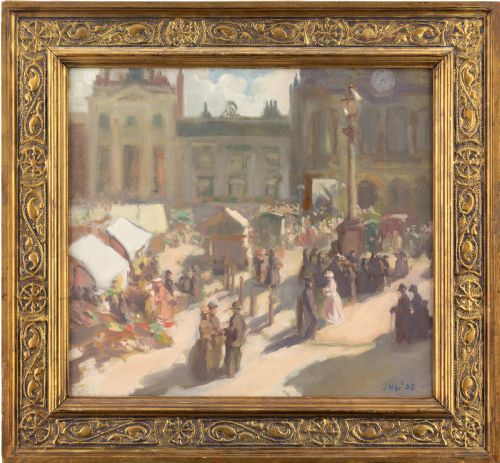
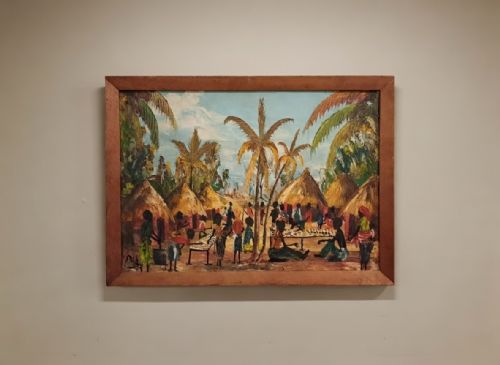
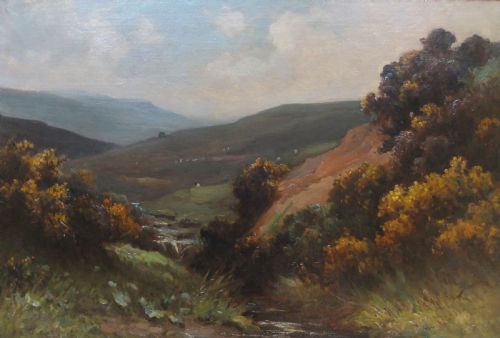
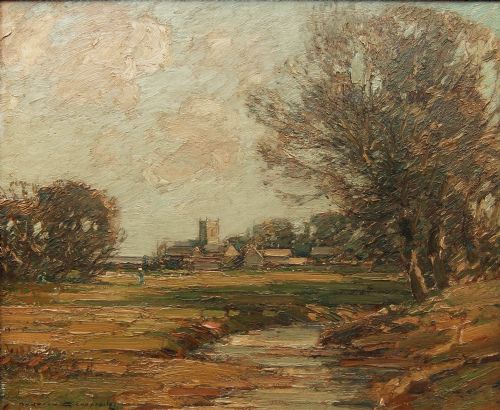
An earthy tone canvas captures pastoral landscapes, farmyards, and rural scenes through muted pigments and natural hues. When searching for an earthy tone canvas, buyers encounter oil paintings spanning the nineteenth century through the mid-twentieth century. British impressionism and French provincial styles dominate the subjects, often depicting horses, rustic villages, and moorland streams.
The works span several decades, reaching from nineteenth-century Victorian pieces into twentieth-century modernist and post-impressionist examples. Depictions range from Yorkshire morning views to Normandy farmyards and Belgian pastoral settings. Most pieces present framed oil paintings on canvas or board, retaining their original character.
Materials and construction
Painters applied oil paint directly onto stretched canvas or wooden board, utilising natural pigments to achieve subdued, earthy palettes. Many pieces incorporate original wood frames, sometimes finished with gilt accents that complement the muted tones of the artwork.
Artists built depth through layered brushwork, capturing texture in rural subjects like stone walls, farm animals, and country lanes. The combination of oil on canvas and supportive wooden stretchers ensured durability over the decades.
Listings span from the nineteenth century through the 1960s, featuring oil paint on canvas and board.
Distinguishing quality
Superior execution shows in the handling of light and shadow across natural landscapes, where brushstrokes remain confident and purposeful. Stronger pieces capture atmosphere and movement, such as working horses or running water, with notable precision.
The harmony of the palette defines the visual success of each composition, balancing muted earth colours without losing depth. Framing also contributes, as period-appropriate wood surrounds enhance the presence of the painting.
John Hodgson Lobley RBA·Raimond Louis Lecourt·Herbert Royle·Reginald Grange Brundrit RA·Vincenzo Irolli·Majorie Hoare·John Frederick Herring·Thomas Creswick RA·Owen Bowen·Ernest Higgins Rigg·Kershaw Schofield·George F Wetherbee·William Greaves·Maurice Wagermans
The Earthy Tone Canvas Glossary
- Canvas
- A heavy woven fabric used as a surface for oil painting. It is typically stretched across a wooden frame before application.
- Board
- A rigid flat panel utilised as an alternative support for oil paint in various nineteenth and twentieth-century works.
- Gilt
- A thin layer of gold leaf applied to wood frames for decorative effect. This finish enhances the border of the artwork.
- Barbizon School
- A nineteenth-century French art movement focused on realism in landscape painting. Artists drew inspiration directly from nature and rural life.
Earthy Tone Canvas: Frequently Asked Questions
What subjects appear on these canvases?
The artworks primarily show rural landscapes, farmyards, marine views, and animals such as working horses. Scenes often depict specific regions in Britain, France, and Belgium.
Artists focused on everyday country life, capturing markets, rivers, and moorland views with naturalistic charm.
How should I hang an oil painting?
Hang the piece away from direct sunlight and damp environments to protect both the canvas and the oil pigments. Ensure the wall fixings can support the weight of the framed artwork.
Keep the painting at a stable room temperature to prevent warping of the wooden stretcher or board.
Are the frames original to the pieces?
Many listings include period-appropriate wood frames that match the age and style of the oil painting. Some frames feature gilt details characteristic of their nineteenth or twentieth-century origin.
Examining the back of the frame often reveals clues about its age and past restoration work.
How do I identify the period of a painting?
Dating relies on stylistic clues, artist signatures, and the materials used in the canvas and framing. Nineteenth-century works often display traditional academic or romantic influences, while twentieth-century pieces show modernist tendencies.
Records of the artist's working years provide the most reliable guide to a painting's precise decade of creation.