



Dutch Earthenware Jugs
Dutch earthenware jugs bring bold tin-glazed colour and rustic slipware forms to a table, offering centuries of historic character for any collector.
Dutch Earthenware Jugs
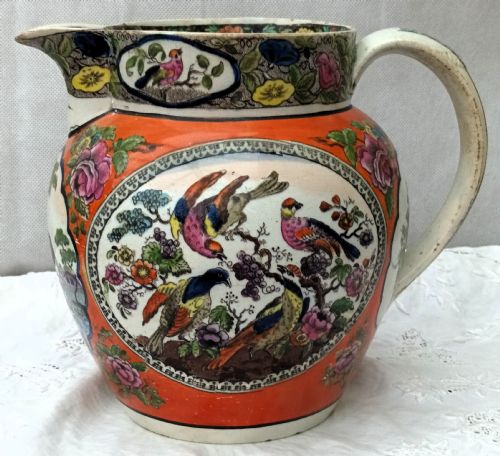
These dutch earthenware jugs span the seventeenth, eighteenth, and nineteenth centuries, encompassing tin-glazed delftware and heavier lead-glazed slipware. A buyer searching this phrase encounters everything from blue and white floral vessels to polychrome coffee pots and figural toby jugs.
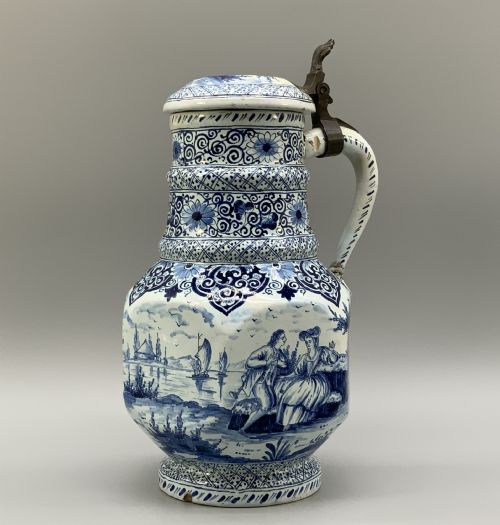
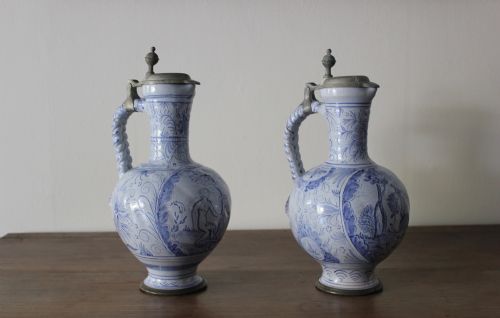
The delftware examples often feature traditional tin glaze with blue and white or manganese decoration, sometimes fitted with pewter lids. Slipware pieces from the seventeenth century provide a heavier, earthier alternative with distinct lead glazes.
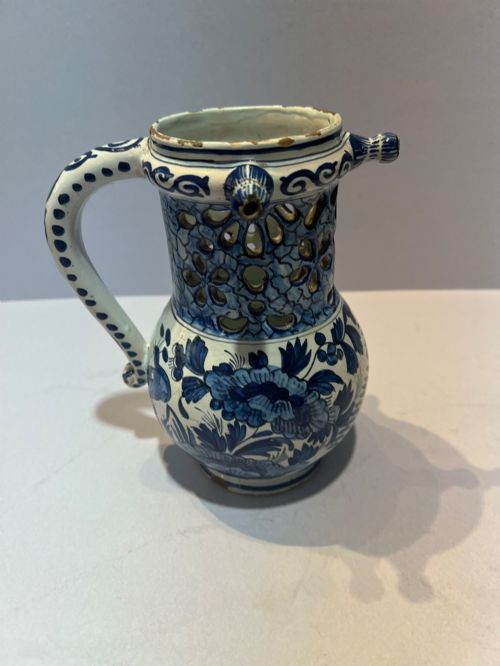
Figural forms such as toby jugs and puzzle jugs appear alongside practical ewers and coffee pots. Most pieces on offer date from the eighteenth century, representing the height of Dutch ceramic production in this style.
Materials and methods
Potters shaped these vessels from local clays before applying tin or lead glazes to create the characteristic glossy surface. Tin glaze provided a white opaque background suitable for painting in cobalt blue, manganese, and polychrome pigments.
Many eighteenth-century pieces receive hand-painted floral, Chinoiserie, or figural motifs directly onto the unfired glaze. Pewter mounts and lids, frequently added to better jugs, required precise metalwork to fit the ceramic rims securely.
Dutch Earthenware Jugs Retail Price Guide 2026
Typical asking prices for dutch earthenware jugs among the pieces listed under this phrase on Sellingantiques today, from the lower quarter to the upper quarter. They describe what is for sale here now, not the wider market.
Monkeys wearing waistcoats occasionally peer out from eighteenth-century toby jugs, proving that historical drinkers appreciated a good primate joke.
Assessing quality and execution
Quality rests in the crispness of the hand-painted decoration and the stability of the glaze application. Finer delftware displays controlled brushwork in cobalt blue or polychrome, whereas lesser examples show muddied pigments or hasty lines.
The inclusion of intact pewter lids and marked bases elevates a piece above standard domestic ware. Survival of delicate handles, spouts, and overall glaze integrity dictates the standing of each vessel within its period.
Pieter Verburg
The Dutch Earthenware Jugs Glossary
- Tin Glaze
- An opaque white glaze containing tin oxide that forms the canvas for painted decoration. It absorbs pigments deeply during firing.
- Slipware
- Pottery decorated with liquid clay slip applied before firing under a transparent lead glaze. This technique creates rich, warm earthen tones.
- Chinoiserie
- European decorative motifs imitating Chinese artistic styles. Painters used these designs frequently on seventeenth and eighteenth-century delftware.
- Puzzle Jug
- A vessel with a perforated neck that forces the drinker to solve a riddle to imbibe without spilling. These interactive items tested tavern patrons.
- Manganese
- A purple-brown metallic oxide used by potters for drawing outlines or monochrome shading. It yields a distinctive warm violet hue.
Dutch Earthenware Jugs: Frequently Asked Questions
How do I clean an antique jug?
Dust gently with a dry, soft brush to remove surface particles without disturbing fragile tin glazes.
Avoid submerging porous earthenware in water for long periods, as moisture can penetrate old ceramic bodies.
Can I use these jugs for serving?
Most seventeenth and eighteenth-century pieces remain strictly decorative due to hairline cracks, glaze wear, and historical repairs.
Using them for liquids risks staining the porous earthenware and damaging fragile tin glazes.
What is a pseudo mark?
Potters sometimes painted imitation marks on the base to mimic popular factories or secure higher status.
These marks serve as decorative elements rather than reliable indicators of a specific workshop.
Why do some jugs have pewter lids?
Pewter mounts protected vulnerable ceramic rims and kept contents covered during everyday use.
Metalworkers custom-fitted these lids to high-quality delftware vessels during the eighteenth century.