
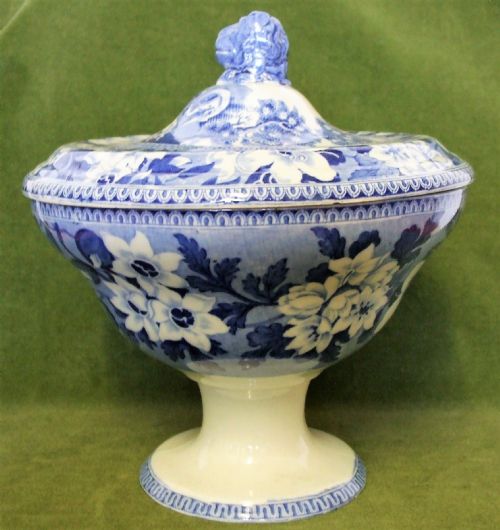
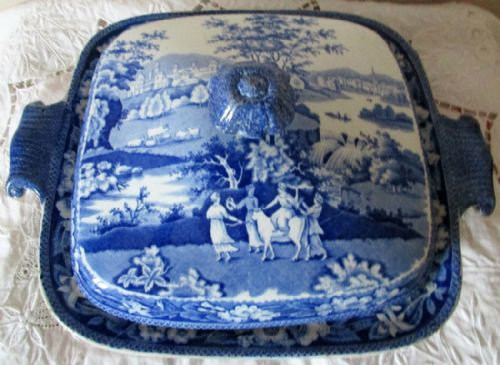


Earthenware Covered Tureen
An earthenware covered tureen brings substantial service to the table, offering pottery forms that hold heat and display transfer prints or polychrome glaze.
Earthenware Covered Tureen
An earthenware covered tureen serves as a substantial vessel for soups, vegetables, or game pies upon the dining table. These pieces span Georgian and Victorian periods, often taking the form of vegetable tureens, sauce tureens, or specialised game pie dishes complete with matching lids.
The versions most frequently met on this page include nineteenth-century English blue and white transfer-printed pottery alongside tin-glazed faience and caneware. Makers such as J. & R. Clews, John Rogers & Son, and Wedgwood produced these serving dishes for domestic dining rooms.
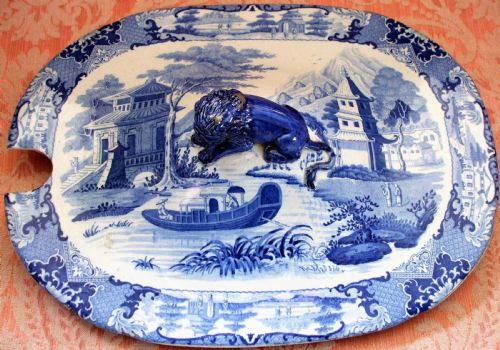
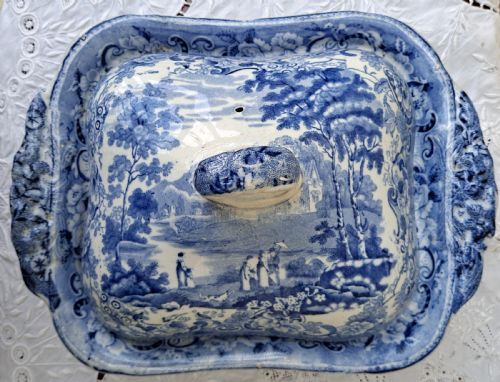
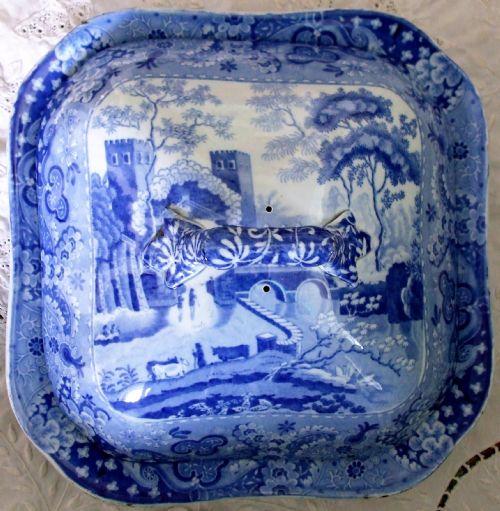
Forms range from pedestal dessert tureens to large lidded vessels with ladles and matching stands. Each item combines utilitarian function with decorative transfer scenes like the Canton River, rural scenery, and castle patterns.
Materials and production techniques
Potters shaped these vessels from earthenware, terracotta, and caneware, often applying tin glaze or clear ceramic glazes over the clay body. The pottery was fired in kilns to achieve a durable surface suitable for containing food and sauces.
Decoration relied heavily on blue and white transfer printing, which allowed complex topographical or figurative designs like the elephant and Europa patterns to transfer cleanly onto the curved pottery surface. Polychrome faience pieces required hand-painting over tin glaze before a final protective firing.
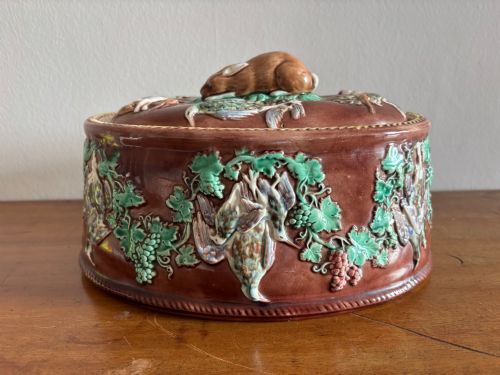
Partridge-tureens and elephant designs prove that nineteenth-century dining tables welcomed a menagerie alongside the gravy.
Assessing the grade of the work
Quality rests in the crispness of the transfer print and the registration of the pattern across the tureen and its matching cover. Blurred lines or muddy colours indicate a less careful execution in the pottery works.
The ambition of the form dictates the standing of the piece, separating standard vegetable dishes from modelled game pie tureens featuring animal handles or specialised lion head covers. Potteries such as Doulton Burslem and Copeland & Garrett achieved particular refinement in their moulded details and glaze finishes.
Robert Hamilton·James Wallace & Co·J. & R. Clews·John Rogers & Son·John and Richard Riley·Doulton Burslem·Alcora·Wedgwood·Ridgways·Davenport·Copeland & Garrett
The Earthenware Covered Tureen Glossary
- Earthenware
- Porous pottery fired at lower temperatures than stoneware, typically coated in glaze to ensure it holds liquids. It forms the base body for the majority of these serving vessels.
- Transfer Print
- A decorative technique where an engraved copper plate transfers a design onto tissue paper, which is then pressed onto the unfired pottery. This method enabled consistent production of detailed topographical scenes.
- Faience
- Tin-glazed earthenware originating from European traditions, often painted in polychrome colours. Alcora examples demonstrate this glazed earthenware style.
- Caneware
- A fine, pale yellow earthenware resembling the colour of bamboo or cane, popular for moulded game pie dishes during the Georgian and Victorian periods.
- Majolica
- Low-fired earthenware decorated with colourful opaque lead glazes. Wedgwood produced game tureens using this vibrant glazing method.
Earthenware Covered Tureen: Frequently Asked Questions
What were earthenware covered tureens used for?
These vessels held hot food at the dining table, including soups, sauces, vegetables, and game pies. The heavy ceramic walls and tight-fitting lids kept contents warm during long meals.
Larger pieces often sat on matching stands or included ladles for systematic serving by household staff. Smaller sauce tureens handled table condiments and gravies.
How do I care for antique earthenware?
Wash these pieces gently by hand using mild soap and warm water rather than placing them in a modern dishwasher. The old glaze can craze over time, so avoid soaking them for extended periods.
Display them away from direct heat sources and sudden temperature shifts to protect the historic ceramic body and any delicate transfer printing.
How do I distinguish Georgian from Victorian pieces?
Georgian tureens often feature flowing blue and white transfer scenes with pastoral or classical motifs, produced before the mid-nineteenth century. They tend to display hand-thrown traits or earlier Staffordshire potting styles.
Victorian examples frequently incorporate heavier moulded decoration, majolica glazes, or factory marks from expansive industrial potteries like Doulton Burslem and Copeland & Garrett.
Are all blue and white patterns English?
While the majority of transfer-printed tureens on this page originate from English potteries in Staffordshire, continental European kilns also produced tin-glazed earthenware.
Spanish workshops such as Alcora created polychrome faience animal tureens, showing that painted and glazed earthenware traditions extended across Europe alongside British transferware.