


Earth Tone Horse Painting
These earth tone horse painting selections capture rural work and rural movement across the early twentieth century through muted palettes and naturalistic brushwork.
Earth Tone Horse Painting
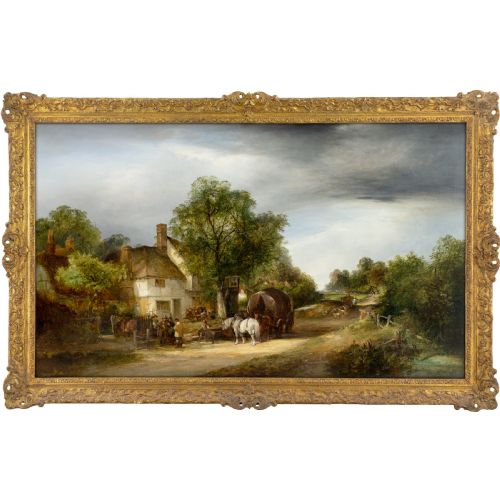
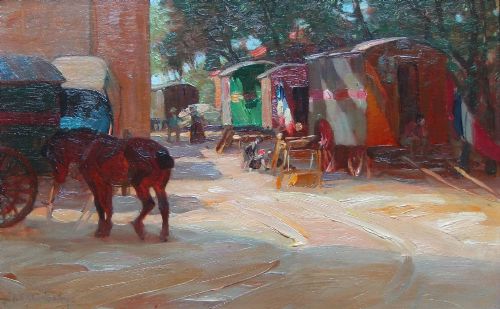
When you search for an earth tone horse painting, you find works depicting horses at work and on the road across rural landscapes. These pieces record agricultural scenes, carts, races, and riders from the opening decades of the twentieth century.
You are most likely to meet British works from the nineteen tens, twenties, and thirties on this page. Painters capture these subjects through the lenses of British Impressionism, Impressionism, and Edwardian pastoral traditions.
The compositions show horses in daily country life, pulling carts, hauling timber, and resting at farms. Artists render these animals using paper, board, canvas, and watercolours.
How they were made
Makers build these works using oil paint on canvas, board, and primed surfaces, alongside watercolours on paper. Artists apply pigment with loose, impressionistic brushstrokes or controlled washes to describe animals and landscape elements.
Many of these paintings retain their period framing beneath glass or within traditional wooden mouldings. The physical support dictates the surface texture, from the absorbent grain of watercolour paper to the woven tooth of artist canvas.
Several horses captured mid-plough or hauling timber take brief pauses to look straight out at the painter.
What varies in quality
The success of an earth tone horse painting rests upon the sureness of the draftsmanship in rendering equine anatomy and movement. Stronger works convey the weight and musculature of working animals through confident, economical handling of the brush.
Compositional balance distinguishes the finest examples from standard illustrative records. The integration of horses into the surrounding landscape creates a cohesive tonal harmony that elevates the piece beyond mere illustration.
Paul Ehrenberg·Adrian Jones·Herbert Royle·Frederick J. Knowles·William Manners·James W. Booth·John Atkinson·J. E. Hood
The Earth Tone Horse Painting Glossary
- British Impressionism
- A painting style developed in Britain focusing on contemporary rural life and natural light. Artists use broken brushwork and muted palettes to capture transient atmospheric effects.
- Watercolour
- A paint consisting of pigment suspended in a water-based solution applied to paper. This medium allows for transparent washes and luminous atmospheric effects.
- Oil on Canvas
- A technique where oil paint is applied to a stretched woven fabric support. This combination permits rich impasto and subtle tonal blending.
- Edwardian Pastoral
- An artistic style celebrating rural idylls and agricultural traditions during the reign of Edward VII. These works emphasise nostalgic views of country life.
Earth Tone Horse Painting: Frequently Asked Questions
What periods do these paintings date from?
These works date from the early twentieth century, specifically spanning the nineteen hundreds through the nineteen fifties.
The majority of pieces cluster around the nineteen tens, twenties, and thirties during the height of traditional rural painting styles.
What materials were used by the artists?
Artists utilised oil paint and watercolour as their primary mediums for these pastoral compositions.
Supports include prepared canvas, wooden boards, and heavy watercolour paper housed within glazed frames.
How should I display these watercolours?
Watercolours require protection from direct sunlight to prevent the fading of delicate pigments on paper.
Keep them in stable indoor environments away from excessive moisture and hang them using secure picture wire.
What subjects appear in these works?
The paintings depict horses engaged in agricultural labour, ploughing, cart transport, and rural travel.
Scenes frequently incorporate farmers, carts, harvest times, and country pathways across changing seasons.