



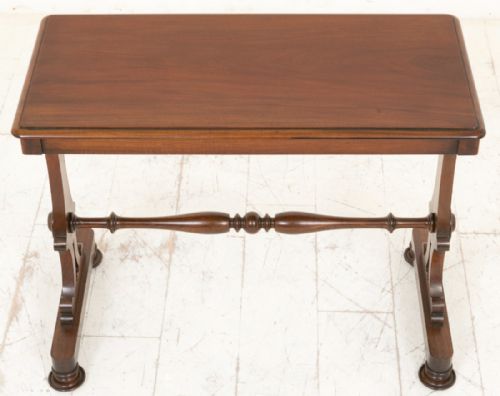
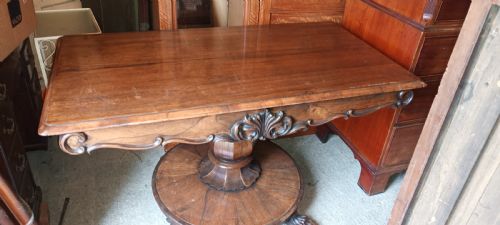
Early Victorian Rosewood Desk
An early victorian rosewood desk brings rich, dark grain and solid nineteenth-century craftsmanship into a room.

Early Victorian Rosewood Desk
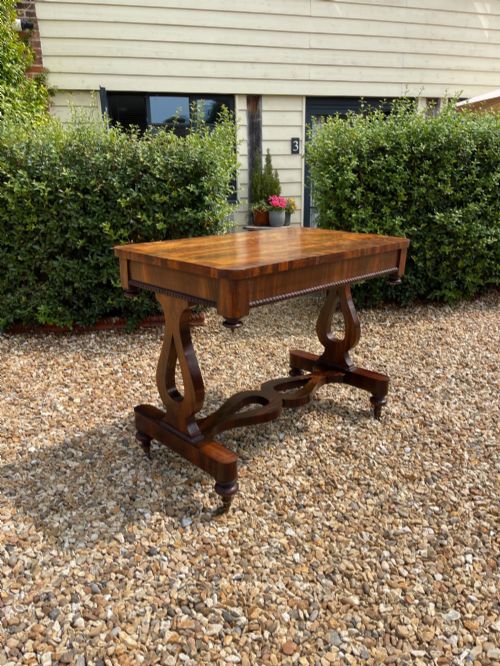
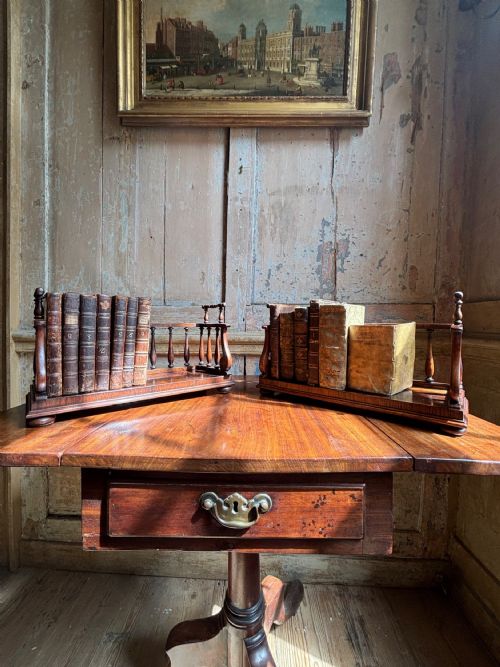
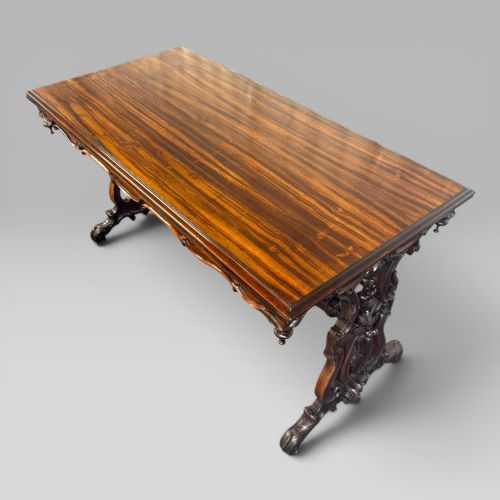
When you search for an early victorian rosewood desk, you encounter substantial nineteenth-century writing furniture alongside related library tables, sofa tables, and pedestal desks.
The pieces appearing on this page span the Victorian, early nineteenth century, and William IV eras, capturing a period when dense exotic hardwoods defined fine cabinet making.
Construction and materials
Cabinet makers utilised solid rosewood and handsome veneers, often pairing the dark timber with contrasting secondary woods like mahogany.
Working surfaces frequently incorporate inset leather or velvet panels, whilst structural elements sometimes feature brass fittings, glass components, and upholstered fabrics.
Early Victorian Rosewood Desk Retail Price Guide 2026
Typical asking prices for early victorian rosewood desk among the pieces listed under this phrase on Sellingantiques today, from the lower quarter to the upper quarter. They describe what is for sale here now, not the wider market.
The listings here encompass Victorian, William IV, and Regency styles alongside early Gothic Revival designs.
Markers of quality
Quality reveals itself in the depth of the rosewood grain and the precision of the cabinet work across drawers, joints, and turned supports.
Pieces that retain original leather writing surfaces, intact brass details, and uncompromised secondary timbers command greater appreciation among collectors.
Gillows
The Early Victorian Rosewood Desk Glossary
- Rosewood
- A dense, heavily figured tropical hardwood prized for its dark purple-brown colour and rich grain patterns. It forms the primary visual signature of these nineteenth-century pieces.
- Sofa table
- A rectangular occasional table fitted with drop leaves at either end and usually featuring two small drawers. These versatile pieces were originally designed to stand in front of a sofa.
- Pedestal desk
- A large freestanding writing table supported by two banks of drawers or cupboards beneath the top. They offer substantial workspace and storage.
- Library table
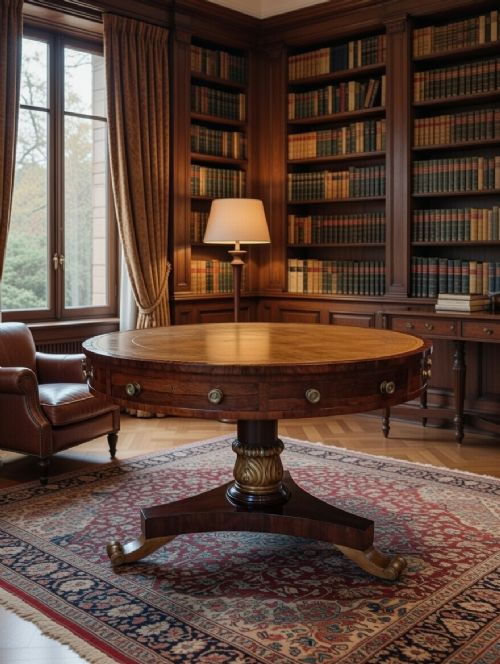
- A large freestanding table used for reading and writing, often finished on all four sides so it could sit in the middle of a room.
Early Victorian Rosewood Desk: Frequently Asked Questions
What defines an early victorian rosewood desk?
These pieces combine dense nineteenth-century rosewood timbers with traditional forms such as pedestal bases, library tables, and sofa tables. They reflect the solid construction methods and dark wood preferences of the era.
Cabinet makers of the period selected timber for dramatic grain patterns, often incorporating fitted drawers and leather writing surfaces into the design.
How do I care for rosewood furniture?
Keep your desk away from direct sunlight and steady heat sources to prevent the rosewood veneer from drying out or splitting. Regular dusting with a soft, dry cloth preserves the finish.
Avoid using modern silicon-based polishes, relying instead on traditional beeswax sparingly applied to nourish the timber.
Where should I place a library table?
Library tables and drum desks are finished on all sides, making them ideal as freestanding centrepieces in a study or living room. Ensure there is adequate clearance around the piece for chairs and movement.
Positioning the table away from damp exterior walls protects the underlying secondary woods and structural joints.
How do I distinguish early Victorian from later styles?
Early Victorian pieces retain much of the Regency and William IV boldness, featuring restrained classical lines before heavier Victorian ornamentation took hold. Construction details like hand-cut dovetails and solid secondary timbers point to this earlier window.
Examining the underside and drawer interiors helps confirm the nineteenth-century methods used by period cabinet makers.