





Early Scientific Instrument
An early scientific instrument brings precision engineering and optical mastery straight into a room, offering tactile connection to centuries of discovery.
Early Scientific Instrument
The early scientific instrument encompasses utilitarian apparatuses designed to measure, navigate, or observe the natural world, bridging practical science with domestic display. When seeking an early scientific instrument, buyers encounter brass barometers, mahogany-cased telescopes, and intricate surveying levels spanning the Georgian, Victorian, and Edwardian eras.
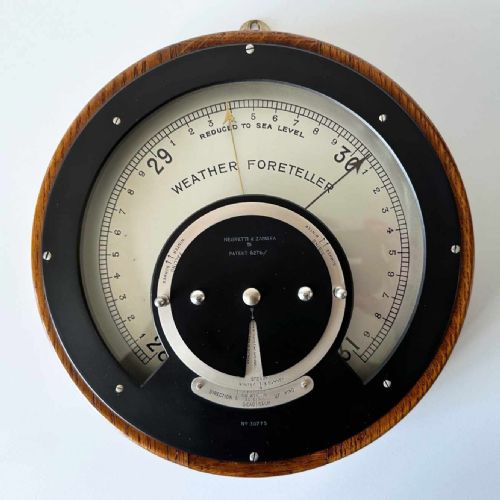
Makers such as L. Casella and Negretti & Zambra produced precision barometers and weather foretellers housed in polished wood or metal frames. Telescopes and optical mirrors demonstrate the period's reliance on clear glass and hand-adjusted brass draws for field or maritime use.
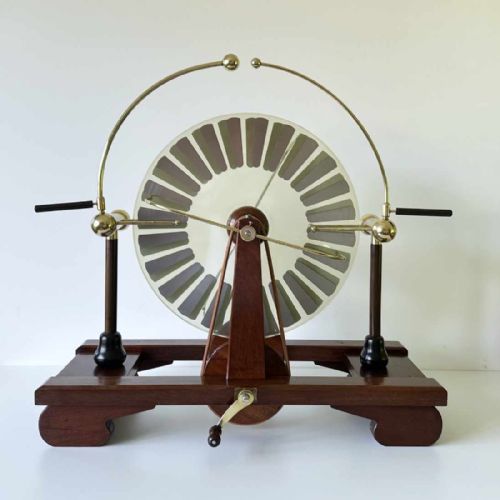
More specialised apparatuses include Wimshurst machines, induction coils, and drainage levels, reflecting the rapid technological expansion of the nineteenth and early twentieth centuries. These objects retain their functional forms while serving as sculptural focal points in contemporary interiors.
How they were made
Makers utilised heavy brass for structural components, gearing, and telescope bodies, often achieving a polished or lacquered finish. Glass served critical functions in barometer tubes, optical mirrors, and five-glass instrument cases.
Cabinetmakers constructed fitted enclosures in mahogany, rosewood, and other dense timbers to protect delicate internal mechanisms during travel. Secondary materials such as bone, leather, and silvered metal provided legible scales, dials, and adjustment handles.
Early Scientific Instrument Retail Price Guide 2026
Typical asking prices for early scientific instrument among the pieces listed under this phrase on Sellingantiques today, from the lower quarter to the upper quarter. They describe what is for sale here now, not the wider market.
Listings feature scientific instruments spanning the Georgian era through the mid-twentieth century, constructed in brass, mahogany, and glass.
What varies in quality
The distinction between standard production and top-tier workshop output lies in the crispness of the engraved dials, the weight of the cast brass, and the smoothness of mechanical movement. Instruments bearing signatures from notable opticians and instrument makers generally display superior optical clarity and more refined cabinetwork.
The integrity of the original timber housing and the preservation of delicate glass elements heavily influence the overall character of a piece. Finer examples retain legible maker inscriptions and smooth-operating draw tubes without excessive play or replacement components.
P. Orr Madras·L Casella Co·Thomas Rubergall·Negretti Zambra·W T Gilbert·Clarkson London·Chadburn Brothers·Heinrich Daniel Ruhmkorff·S B Solomons
The Early Scientific Instrument Glossary
- Sympiesometer
- A type of barometer containing oil and gas that measures atmospheric pressure with high sensitivity. It gained popularity in marine navigation during the nineteenth century.
- Barograph
- A self-registering meteorological instrument that records barometric pressure over time on a rotating drum. These typically reside within glazed wooden display cases.
- Aneroid barometer
- A barometer that measures air pressure without liquid, using a flexible metal box that expands or contracts. These instruments became widespread in homes during the Victorian and Edwardian periods.
- Induction coil
- An electrical device that produces high-voltage alternating pulses from a low-voltage direct current. Heinrich Daniel Ruhmkorff improved this apparatus for early electrical experiments.
- Prismatic compass
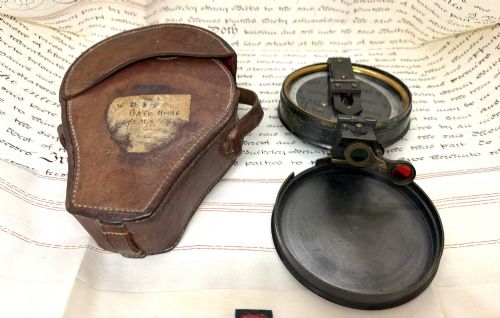
- A portable magnetic compass fitted with a prism that allows the user to sight an object while simultaneously reading the bearing. These find common use in surveying and military navigation.
Early Scientific Instrument: Frequently Asked Questions
What is an early scientific instrument?
An early scientific instrument is a device created for measurement, observation, or experimentation during periods such as the Georgian, Victorian, and Edwardian eras. These objects combine utilitarian engineering with decorative materials like brass and mahogany.
Collectors prize them for their historical association with the development of meteorology, navigation, and physics. Each piece reflects the technological priorities of its time of manufacture.
How were barometers used historically?
Historical barometers served to measure atmospheric pressure, allowing users to forecast weather changes before setting out on journeys or managing agricultural tasks. Households and ships relied on these readings to anticipate storms and fair conditions alike.
Different variants, from wheel barometers to stick barometers, hung in hallways or sat in cabins for daily reference. Their accuracy made them essential tools for domestic and maritime life.
How do I display an instrument at home?
Scientific instruments suit studies, libraries, and living rooms where their sculptural brass and wood components can be appreciated up close. Placing barometers on interior walls away from direct heat sources helps preserve their wooden cases and internal mechanisms.
Cased items like barographs and telescopes look effective on low tables or dedicated stands. Allowing adequate space around each piece highlights its mechanical complexity.
How do I identify the maker?
Makers typically engraved their names, firm titles, and business addresses directly onto the brass instrument plates, silvered barometer dials, or telescope draw tubes. Paper trade labels sometimes appear inside fitted wooden storage cases.
Comparing these signatures with historical trade directories helps establish the active working dates of the maker. This documentation provides a reliable guide to the instrument's age and origin.