

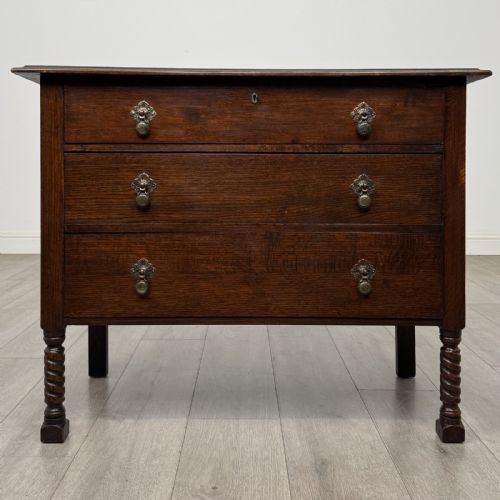
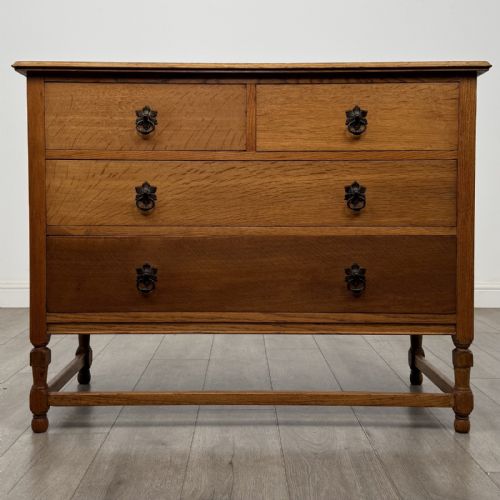
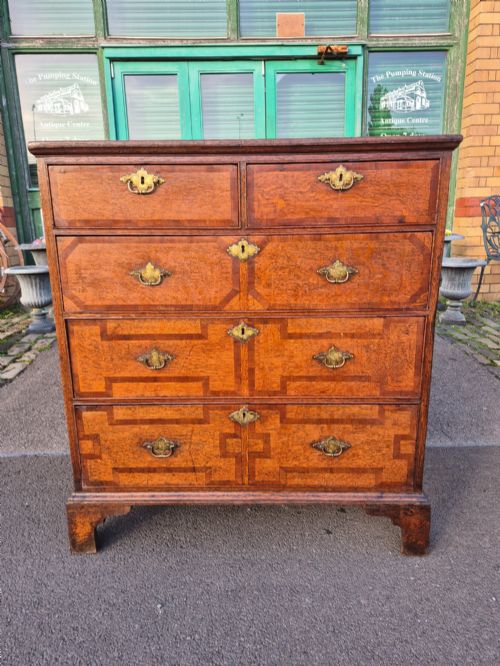
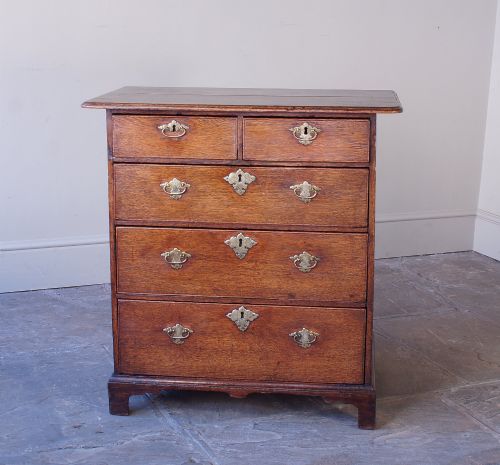



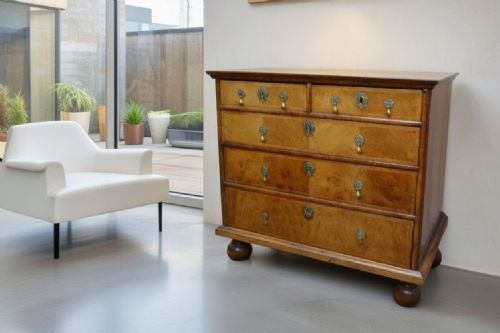
Early Oak Commode
An early oak commode brings robust vernacular strength to a room, offering heavy timber construction and deep drawers built to last centuries.
Early Oak Commode
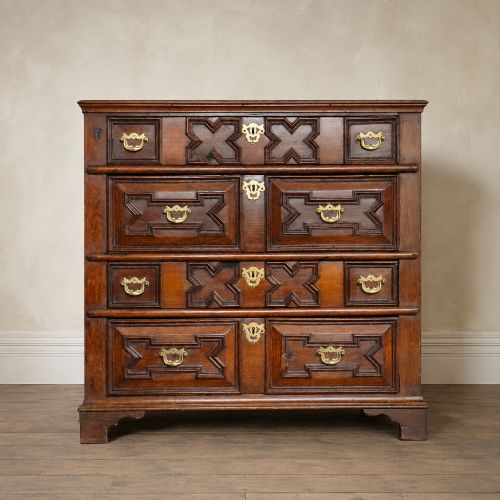
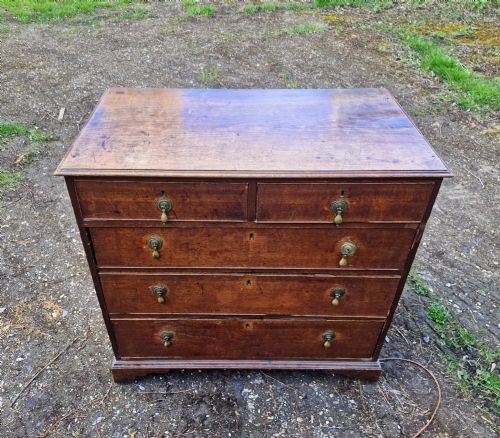
An early oak commode or chest of drawers spans several centuries of cabinet-making, drawing heavily on seventeenth and eighteenth-century traditions. Buyers seeking an early oak commode will find sturdy timber forms ranging from geometric moulded fronts to rustic country pieces.
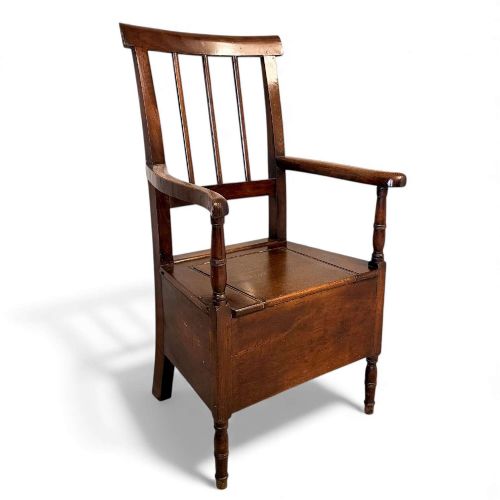
The selection includes chests of drawers alongside related forms like commode chairs and scrubbed utility pieces. Origins stretch across English, French, and Swedish workshops, spanning the Stuart period through to Edwardian revivals.
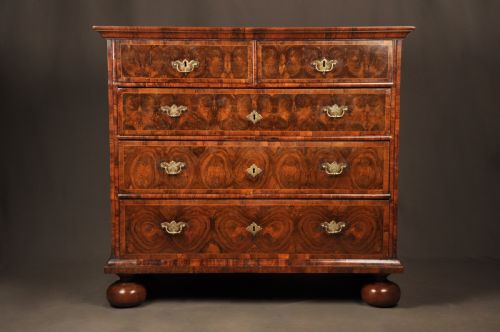
Most examples rely primarily on solid oak, frequently paired with walnut or olive veneers, brass hardware, and occasional wood inlay. Periods represented stretch from the late seventeenth century into the early twentieth century.
How they were made
Cabinet-makers built these carcases using solid oak timber, often shaped with geometric mouldings on drawer fronts to create depth and shadow. Workshops frequently combined native oak with walnut or olive wood veneers to contrast dark heartwood against lighter surrounds.
Structural integrity relied on pegged joinery and hand-cut dovetails within the drawer construction. Metal components, including brass drop handles and iron hinges, secured the functional elements to the heavy wooden frames.
Early Oak Commode Retail Price Guide 2026
Typical asking prices for early oak commode among the pieces listed under this phrase on Sellingantiques today, from the lower quarter to the upper quarter. They describe what is for sale here now, not the wider market.
Listings span multiple centuries, ranging from the seventeenth-century Charles II period through Georgian eras to early twentieth-century Edwardian and French provincial designs.
What varies in quality
The sophistication of the surface timber and the complexity of the moulding define the upper tier of these pieces. Fine geometric mouldings and crisp veneer work elevate a carcase far above simpler utility items.
Proportion and regional origin also mark the distinction between standard provincial pieces and finer urban cabinet-making. Original hardware and untouched surface patination separate pieces that retain their integrity from those altered over time.
The Early Oak Commode Glossary
- Commode
- A low chest of drawers or a seated chair enclosing a chamber pot. Early examples often took the form of sturdy wooden chests.
- Geometric moulding
- Raised wooden borders applied in geometric patterns to drawer fronts. This technique defined many seventeenth-century English pieces.
- Oyster veneer
- Thin slices cut horizontally across small branches to reveal circular growth rings. This decorative surface work appeared on seventeenth-century carcases.
- Scrubbed oak
- Timber finished with a pale, raw appearance through repeated washing. This surface treatment is typical of utility and servants' quarters furniture.
- Dovetail
- An interlocking joint used to join drawer sides to drawer fronts. Hand-cut versions indicate traditional cabinet-making methods.
Early Oak Commode: Frequently Asked Questions
How were these chests used?
These chests served practical storage needs in bedrooms, hallways, and living quarters across centuries of domestic life. Some utilitarian variants functioned in sculleries or servants' quarters for daily utility work.
Over time, many transitioned from working household furniture into decorative antique focal points within modern interiors.
How do I date an oak chest?
Dating relies on examining construction methods, timber choice, and decorative details like mouldings or hardware. Seventeenth-century pieces often display geometric moulded drawer fronts and pegged joinery.
Later nineteenth and twentieth-century examples tend to feature simpler lines, machine-cut elements, or revival styles referencing earlier historical periods.
How do I live with an antique oak commode?
Living with these pieces involves placing them away from direct heat sources and sudden humidity shifts to protect the timber. Their robust presence makes them practical for storing modern linens while adding architectural weight to a room.
Routine maintenance requires only gentle dusting and occasional waxing to preserve the natural grain and patination of the wood.