







Early Imari Ceramics
Early imari ceramics bring together rich palettes of iron red, blue, and gold across porcelain and earthenware forms.
Early Imari Ceramics
When you search for early imari ceramics, you encounter a distinct cross-section of pieces spanning Japanese Arita production, Chinese export wares, and British interpretations from factories such as Derby, Minton, and Worcester. These items range from chargers, vases, and jars originating in the Edo period to nineteenth-century Staffordshire plates and miniature sets utilising the characteristic imari palette.
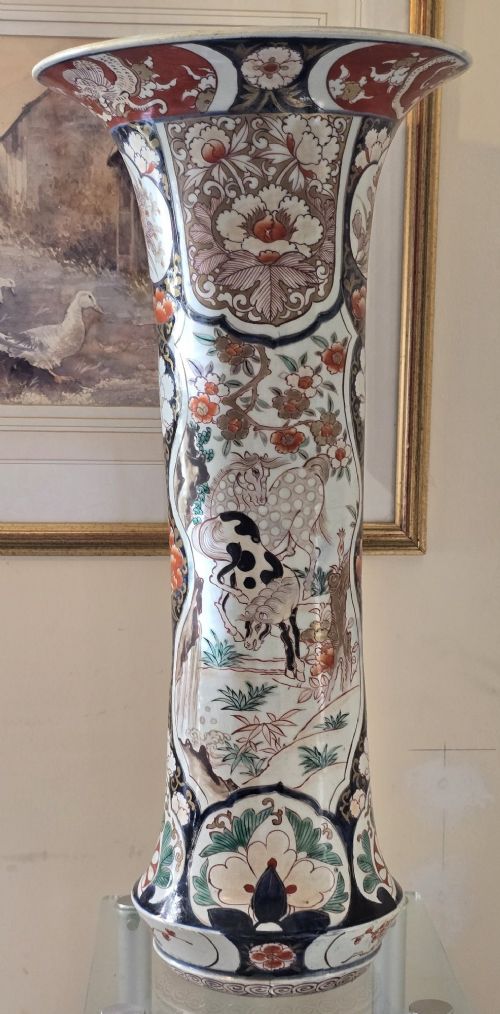
The selection on this page centres heavily on eighteenth-century Japanese porcelain alongside Regency-era English porcelain and ironstone pieces. Buyers meet everything from large trumpet vases and covered jars to armorial dessert plates and moulded dishes decorated in iron red, black, and gold.
How they were made
The pieces rely on porcelain, earthenware, and ironstone bodies finished with intricate glaze work and enamel painting. Artisans applied underglaze blue alongside overglaze iron red and enamels, often incorporating gold leaf or gilding to highlight floral, animal, and foliate motifs.
Japanese Arita pieces and Chinese Kangxi period wares utilised high-fired porcelain shaped into chargers, vases, and shallow relief dishes. British manufactories subsequently adapted these techniques onto bone china and earthenware, employing pattern numbers and hand-painted enamels to replicate the traditional palette.
Early Imari Ceramics Retail Price Guide 2026
Typical asking prices for early imari ceramics among the pieces listed under this phrase on Sellingantiques today, from the lower quarter to the upper quarter. They describe what is for sale here now, not the wider market.
Among the porcelain plates and chargers sits a miniature flat iron on a matching stand, proving that even laundry day had its decorative moments.
What varies in quality
Quality rests upon the crispness of the underglaze blue and the vibrancy of the overglaze enamels and gilding. Superior examples display precise brushwork, well-defined motifs such as the kylin pattern or horse decoration, and careful preservation of the gold leaf across the surface.
The refinement of the ceramic body itself dictates distinction, separating finely potted Japanese porcelain and early English porcelain bodies from heavier ironstone or later earthenware alternatives. Depth of colour and stability of the glaze further define the better specimens in this group.
Minton·Chamberlain Worcester·Royal Crown Derby·Masons
The Early Imari Ceramics Glossary
- Imari palette
- A decorative colour scheme typically combining underglaze blue, iron red, and gilt highlights on a white ceramic ground. This style originated in Japan before being widely copied by European potteries.
- Edo period
- The historical period in Japan spanning from sixteen hundred and three to eighteen hundred and sixty-eight, noted for the production of Arita porcelain wares. Pieces from this era often feature distinctive foliate borders and bird or animal motifs.
- Kangxi period
- A significant era of Chinese Qing dynasty porcelain production dating from sixteen hundred and sixty-one to seventeen hundred and twenty-two. Wares from this time frequently utilise fine blue, white, and gilt decoration.
- Armorial
- A ceramic design incorporating family coats of arms or crests, commonly found on eighteenth and nineteenth-century dessert plates and service pieces. These were often custom-ordered by prominent families.
- Ironstone
- A durable type of earthenware patented in the nineteenth century to imitate porcelain. It provides a sturdy body for richly enamelled imari patterns.
- Garniture
- A matched set of three or more vases or jars designed to be displayed together on a mantelpiece or sideboard. They typically share coordinated painted schemes.
Early Imari Ceramics: Frequently Asked Questions
What defines the imari palette?
The imari palette relies on a specific combination of underglaze blue, iron red, and gold highlights. This striking colour scheme was developed in Japan and later adopted by European kilns.
Artisans used these contrasting colours to build intricate floral, landscape, and animal designs across porcelain and earthenware surfaces.
How do japanese and english pieces differ?
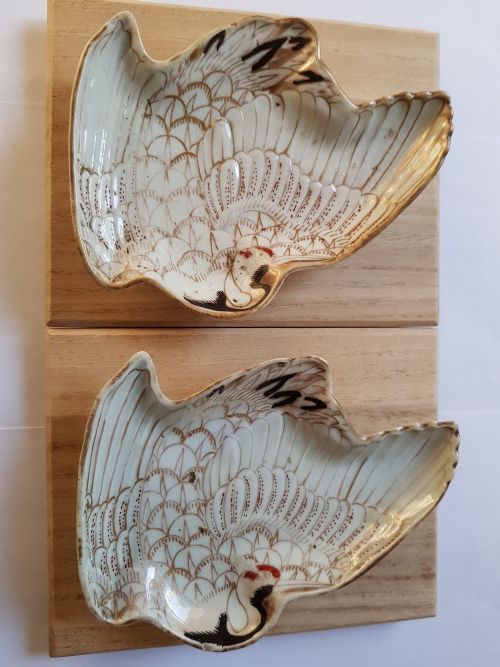
Japanese pieces from the Edo period generally feature fine Arita porcelain bodies with hand-painted iron red, black, and gold details. They often include moulded shapes like cranes or large chargers with scrolling borders.
English makers like Derby and Minton interpreted these styles during the Regency era on bone china and ironstone, creating armorial plates and miniature sets.
What are garniture sets used for?
Garniture sets of vases and jars were traditionally displayed together on mantelpieces or architectural ledges. They served as prominent decorative focal points in period interiors.
The sets usually consist of three matching pieces that share identical imari palette decorations.
How should I care for antique porcelain?
Antique porcelain and enamel pieces require gentle handling and should be washed by hand in lukewarm water when necessary. Avoid harsh detergents and abrasive scrubbers that can damage the delicate gilding.
Keep pieces away from direct sunlight to preserve the vibrancy of the iron red and blue enamels over time.