



Early Brass Clock
An early brass clock brings domestic timekeeping history into a room, spanning wall-mounted dials, carriage pieces and tall grandfather clocks.
Early Brass Clock
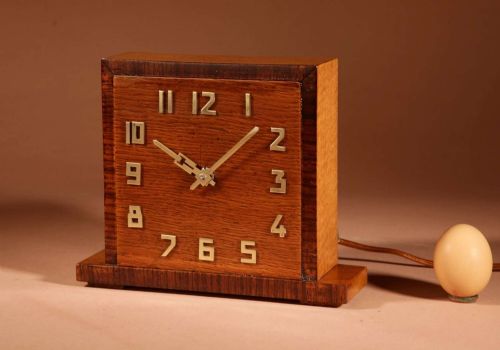
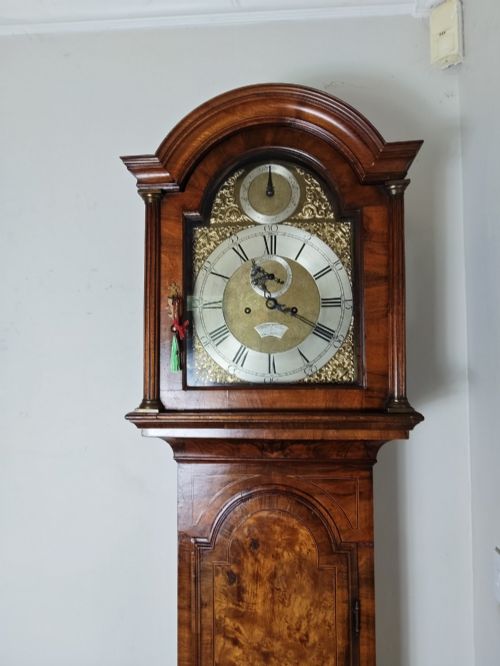
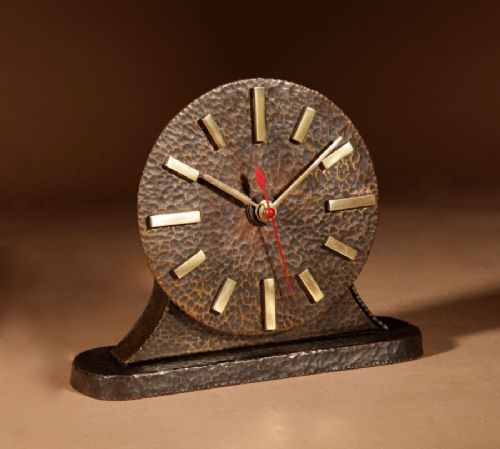
An early brass clock encompasses diverse horological forms from the late seventeenth century through to the twentieth century, appearing frequently as grand longcase grandfather clocks, wall dials and mantel pieces. The inventory includes Georgian oak and walnut examples alongside Victorian fusee timepieces and later electrical designs.
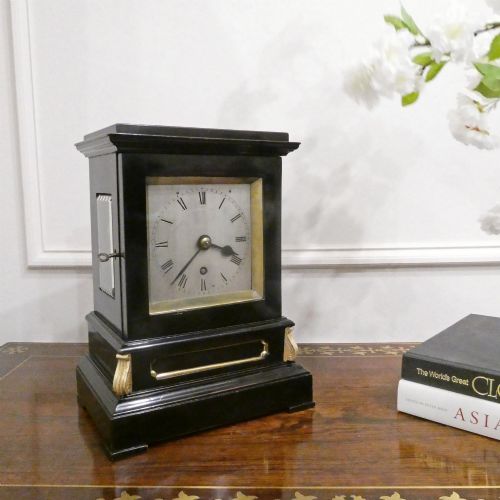
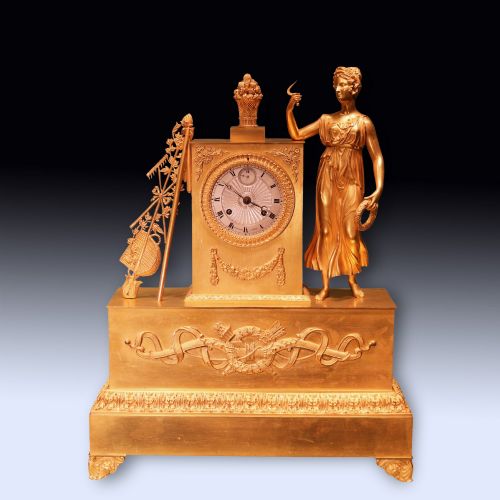
Tall case formats dominate alongside compact wall-mounted dial clocks and portable carriage pieces. Makers housed movements in mahogany, oak, ebonised wood and ormolu cases, often incorporating subsidiary moon dials or striking mechanisms.
Dating ranges from the seventeenth-century lantern clock through to early twentieth-century oak bracket clocks and station wall timepieces. Buyers encounter both domestic English pieces and French carriage mechanisms.
Materials and construction
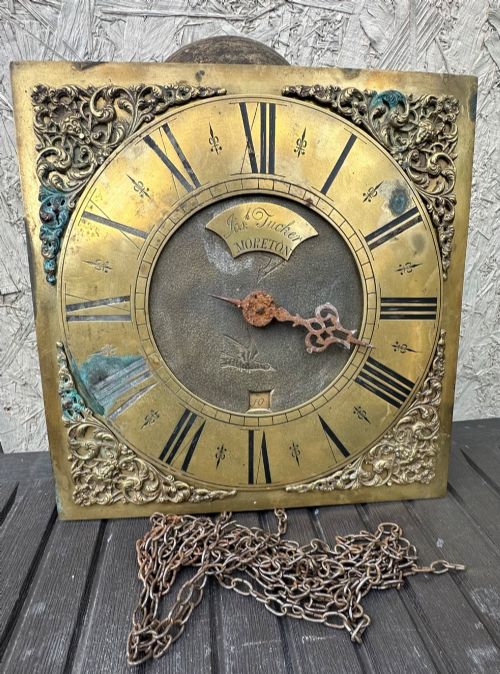
Brass forms the foundational material for visible dials, bezels and internal movements, often paired with steel components and glass viewing covers. Cases rely upon sturdy timbers including oak, mahogany, walnut and ebonised wood.
Cabinetmakers constructed tall longcase bodies using local hardwoods, occasionally applying marquetry, chinoiserie or burr walnut veneers. Dial faces feature engraved brass, painted enamel or wooden convex surfaces matched to fusee or pendulum driven movements.
Early Brass Clock Retail Price Guide 2026
Typical asking prices for early brass clock among the pieces listed under this phrase on Sellingantiques today, from the lower quarter to the upper quarter. They describe what is for sale here now, not the wider market.
Listings feature brass, glass, mahogany, oak, steel, ebonised wood, enamel, and walnut across centuries of clockmaking.
Variations in quality
Quality rests upon the precision of the brass movement and the integrity of the cabinetwork. Fine examples exhibit crisp engraving on the dial, original case timbers, and refined proportions suited to their period of origin.
Henri Jacot·Walker and Hall·Benj Reeves Lamberhurst·John Waller·Richard Rooker·Paul Garnier
The Early Brass Clock Glossary
- Fusee
- A conical pulley used in spring-driven clocks to maintain an even pull as the mainspring unwinds. This device helps the clock maintain consistent timekeeping throughout its run.
- Grandfather clock
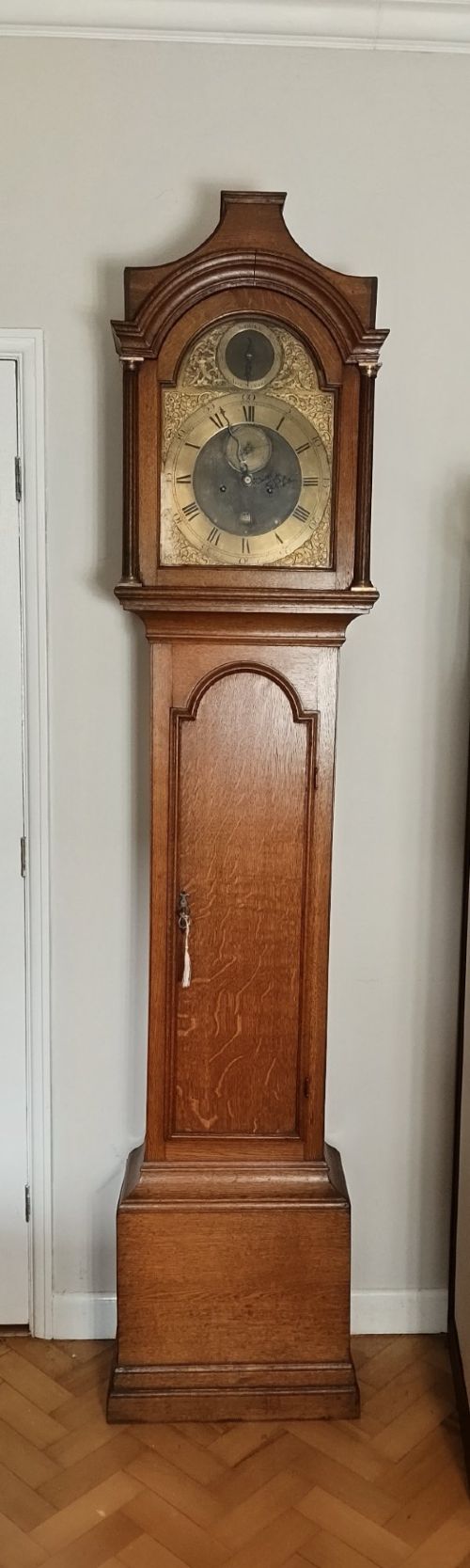
- A tall freestanding weight-driven timekeeper housed in a long wooden case. These floor-standing pieces protect the pendulum and weights while serving as prominent furniture.
- Dial clock
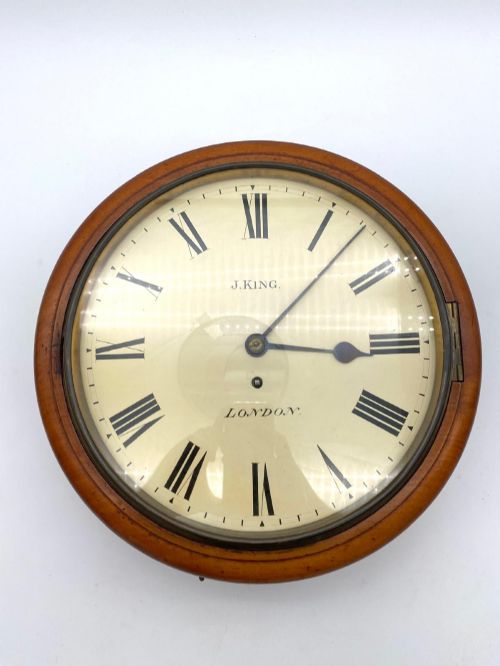
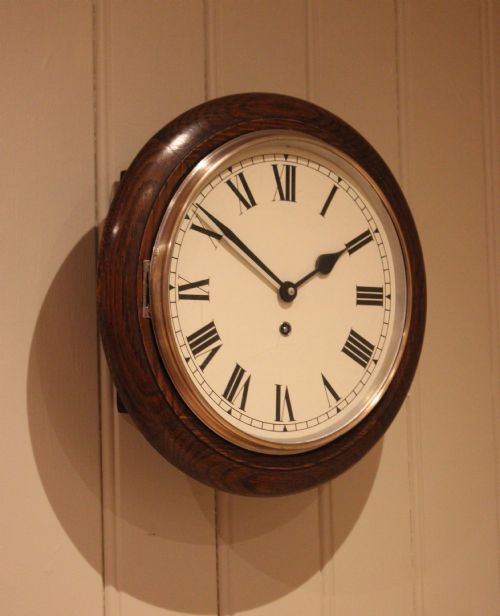
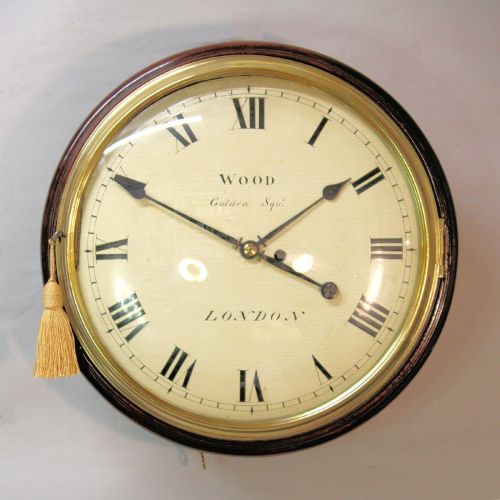
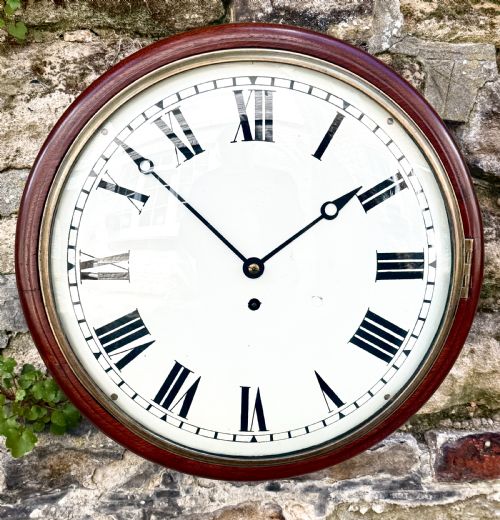
- A wall-mounted timekeeper featuring a prominent circular face enclosed by a wooden bezel and glass door. These were utilised extensively in public buildings, railway stations and offices.
- Bracket clock
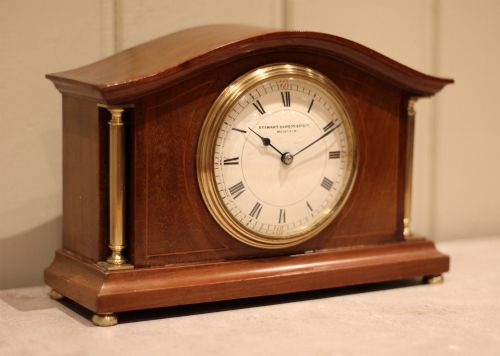
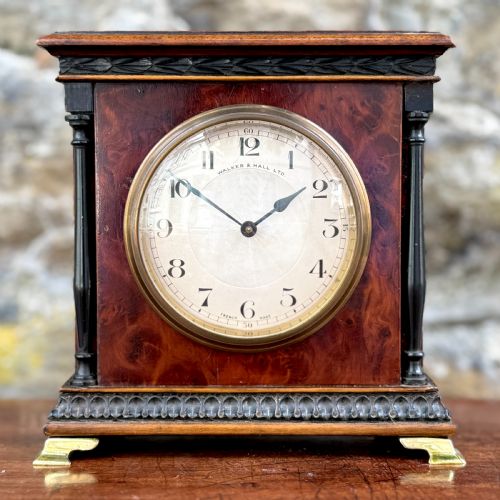
- A portable spring-driven timepiece originally designed to sit on a wall bracket. Later versions functioned as mantel clocks resting directly on shelves or furniture.
- Carriage clock
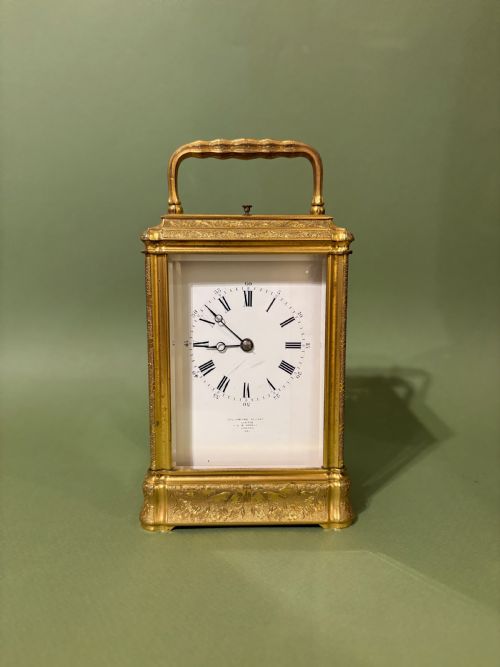
- A small, portable spring-driven timepiece developed for travel. These usually feature glass panels within a brass or gilt engraved case.
Early Brass Clock: Frequently Asked Questions
How do I wind an early brass clock?
Winding requires a matching key inserted into the winding holes on the dial face. Care must be taken not to overwind the mainspring.
Weight-driven longcase clocks involve pulling the cords or chains to raise the weights gently back up the trunk.
Where should I place a fusee clock?
Fusee dial clocks need a stable wall mounting that will not suffer from heavy vibrations or passing traffic. Secure fixing prevents the pendulum or balance from stalling.
Keep the timber away from direct heat sources and strong sunlight to protect the mahogany or oak case from drying out.
How do I date an antique clock?
Dating relies upon stylistic clues within the dial design, case timber, and signature engravings. Lettering styles and ornamentation change visibly across the Georgian and Victorian eras.
Maker signatures inscribed on the brass dial provide a direct reference point for historical records.
What is the difference between an 8 day and a 30 hour clock?
An eight-day movement requires winding roughly once a week using two or more trains for time and striking. These utilised heavier weights or double fusee systems.
Thirty-hour movements need daily attention and rely on simpler single-train mechanisms driven by lighter weights.