



Early 20th Century Street Scene
An early 20th century street scene captures the movement of daily life through oils and watercolours.
Early 20th Century Street Scene
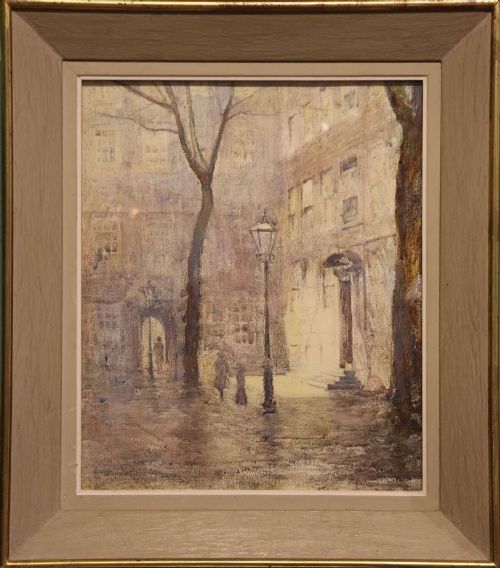
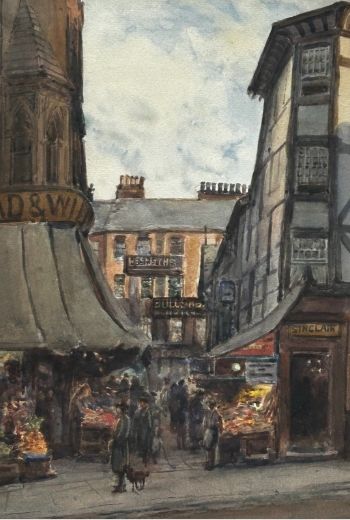
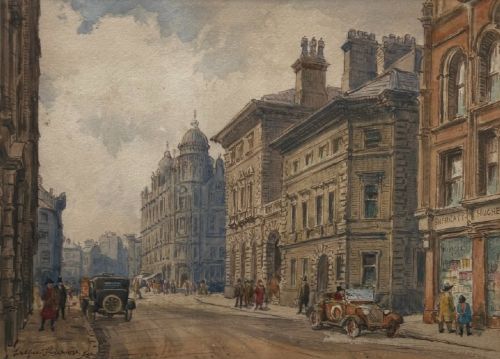
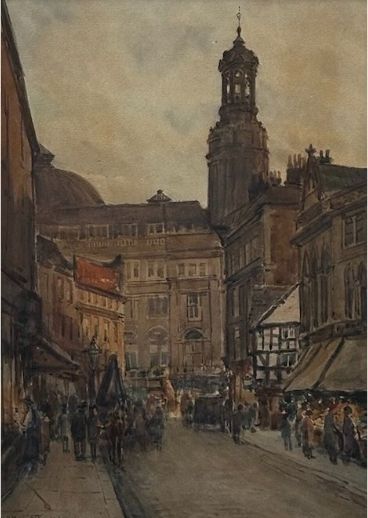
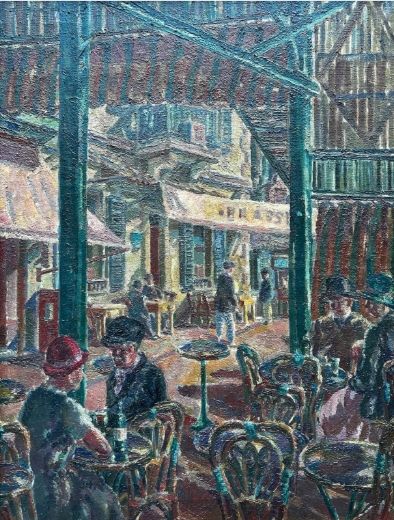
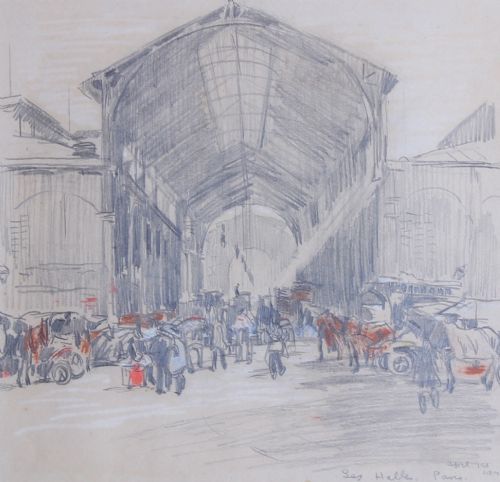
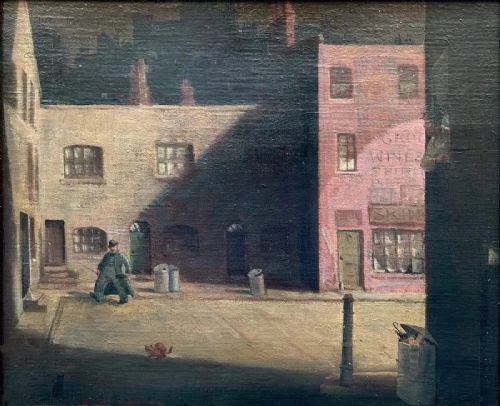
An early 20th century street scene presents urban and rural vistas across Britain and Europe, recording architectural details and everyday figures in civic spaces. These works document historic cityscapes, market places, and French school café terraces from the opening decades of the nineteen hundreds.
You are most likely to meet original watercolours and oil paintings on this page, executed on paper, canvas, or board. The selections encompass British Impressionism, Post-Impressionism, and Edwardian styles depicting locales from London and Manchester to Paris and Whitby.
How they were made
Artists utilised traditional media such as watercolour, oil paint, pastel, and ink on paper, canvas, or board. Many works combine mixed media or pencil underdrawings to establish perspective before applying colour.
Finished pieces are housed behind glass within wood frames, preserving delicate watercolours and pastels while heavier oil paintings on canvas or board remain exposed.
Early 20th Century Street Scene Retail Price Guide 2026
Typical asking prices for early 20th century street scene among the pieces listed under this phrase on Sellingantiques today, from the lower quarter to the upper quarter. They describe what is for sale here now, not the wider market.
What varies in quality
The degree of observation in capturing bustling crowds and changing light conditions separates individual works. Stronger examples demonstrate confident handling of perspective and atmosphere within civic settings.
Condition of the support and medium dictates preservation, with well-kept paper, canvas, and original wood framing maintaining the integrity of the composition.
J. F. Barry Pittar·Francis Browne Tighe·Wilfried Rene Wood·Fred Lawson·Victor Gabriel Gilbert·Rowland Henry Hill·Cuthbert Crossley·Victor Valery
The Early 20th Century Street Scene Glossary
- Watercolour
- A painting method where fine pigment is suspended in water-based solution on paper. This medium allows for transparent washes of colour that capture light effectively.
- Post-Impressionism
- An art movement extending beyond impressionism that prioritised emotional response and symbolic content. Artists used distinct brushwork and bold forms.
- Mixed media
- An artwork combining two or more artistic materials or mediums. Creators often pair ink and watercolour to define urban details.
- Pastel
- A dry drawing medium composed of powdered pigment and a binder. It produces velvety textures suited to atmospheric cityscapes.
- Canvas
- A heavy woven fabric stretched across a wooden support to receive oil paint. It provides a durable and textured surface for large compositions.
Early 20th Century Street Scene: Frequently Asked Questions
What subjects do these street scenes show?
These works depict historic cityscapes, market places, and cathedral squares across Britain and France. Common subjects include busy urban centres, old millgates, and Parisian café terraces.
Artists recorded the architecture and human activity of the period, capturing moments of daily life in public spaces during the early decades of the twentieth century.
How do watercolours differ from oil paintings here?
Watercolours utilise transparent pigments applied to paper supports, often requiring protective wood frames with glass. They offer delicate lines and luminous washes.
Oil paintings employ thick pigments bound in oil on canvas or board, presenting richer textures and bolder colour applications that do not require glass.
Where were these urban views painted?
The locations span British cities such as London, Manchester, St. Ives, and Whitby, alongside continental European views in France and the Netherlands.
Local landmarks, historic courts, and bustling market squares form the primary settings recorded by the various artists.
How should I frame and display these artworks?
Works on paper require framing behind glass with suitable mounts to prevent direct contact with the surface. This protects delicate watercolours, pastels, and drawings from atmospheric moisture.
Paintings on canvas or board generally hang without glass, allowing the texture of the oil paint and support to remain visible in ambient lighting.