





Early 18th Century Highboy
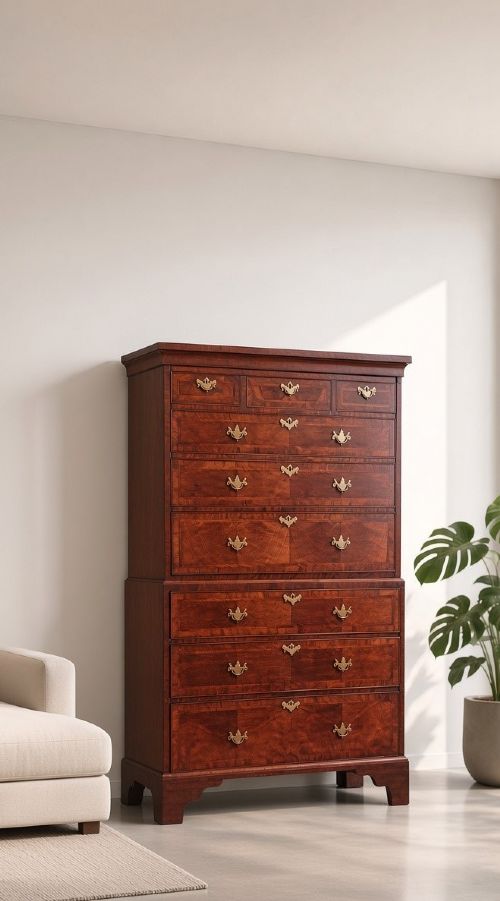
An early 18th century highboy is a towering, two-tiered storage piece offering exceptional presence and compartmentalised utility for any room.
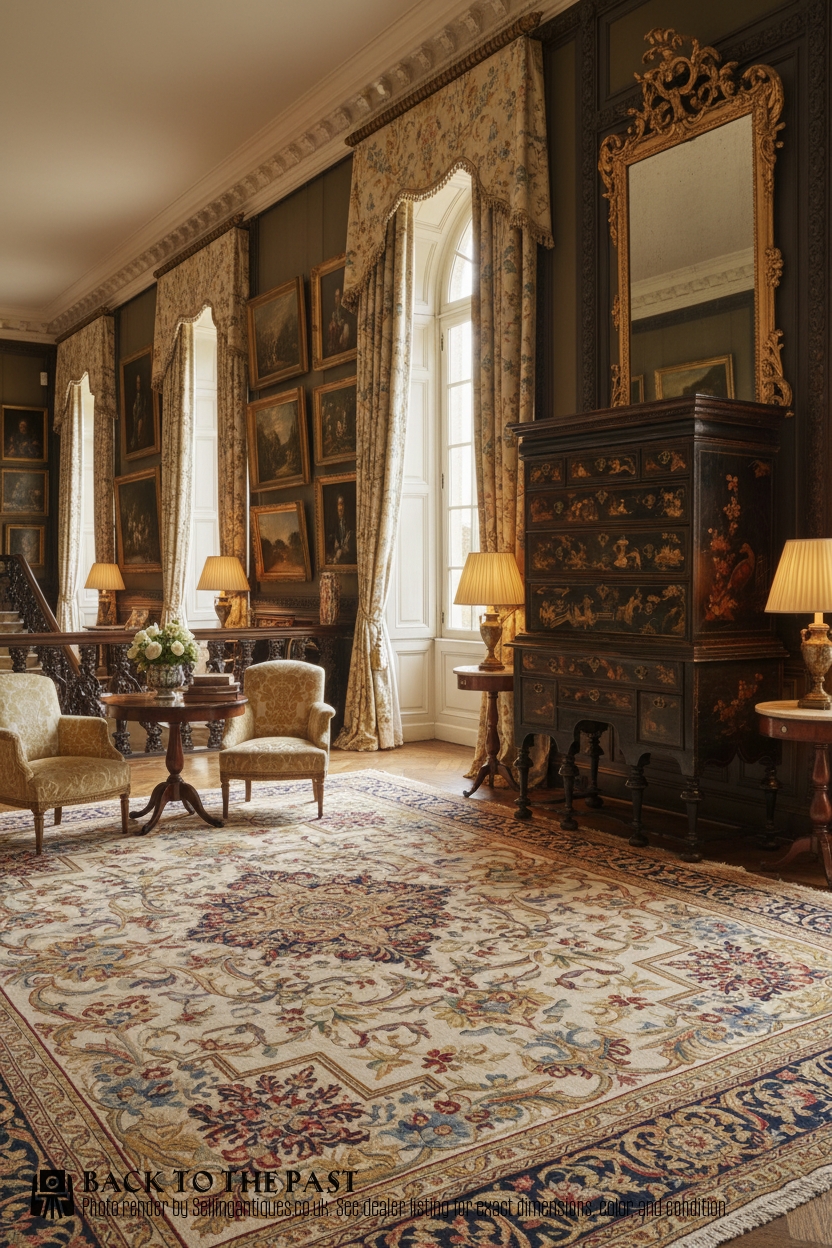
Early 18th Century Highboy
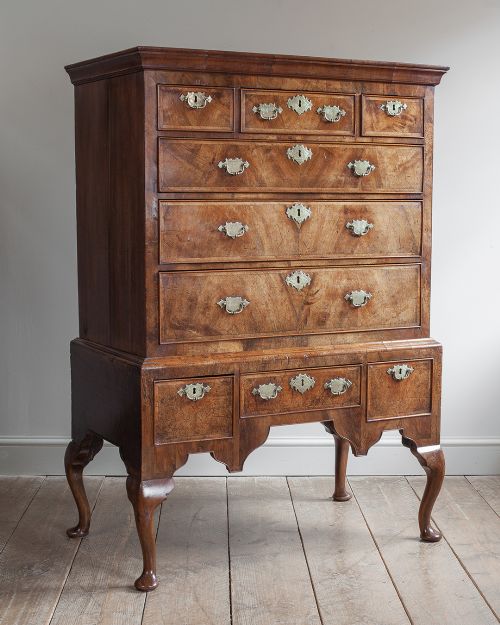
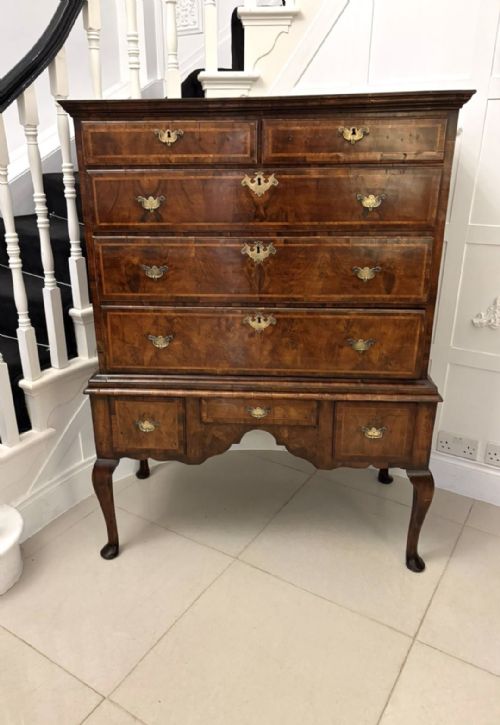
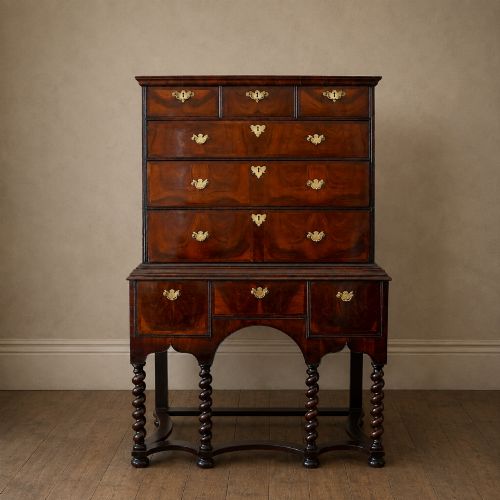
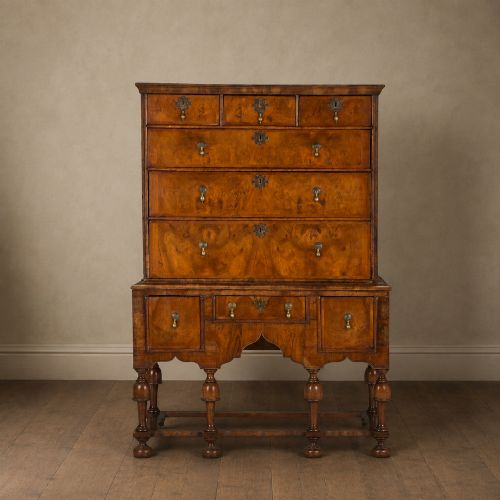
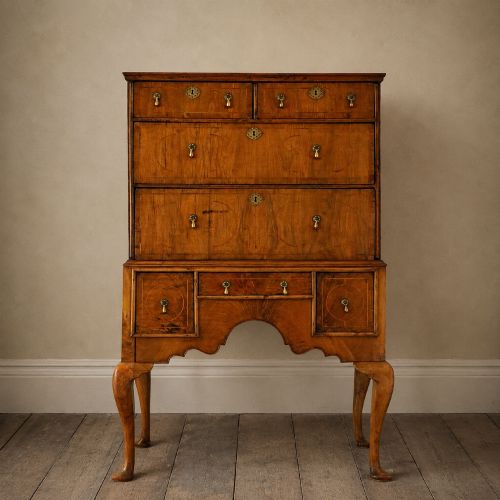
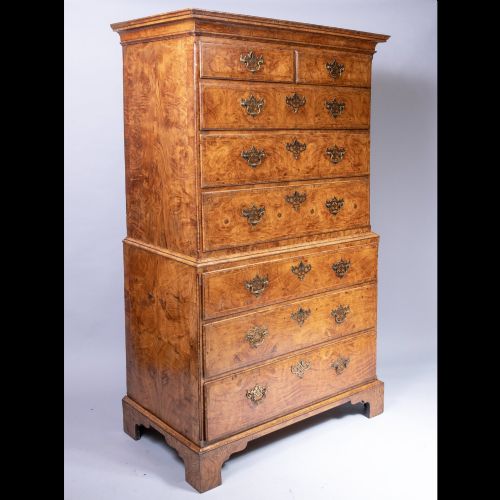
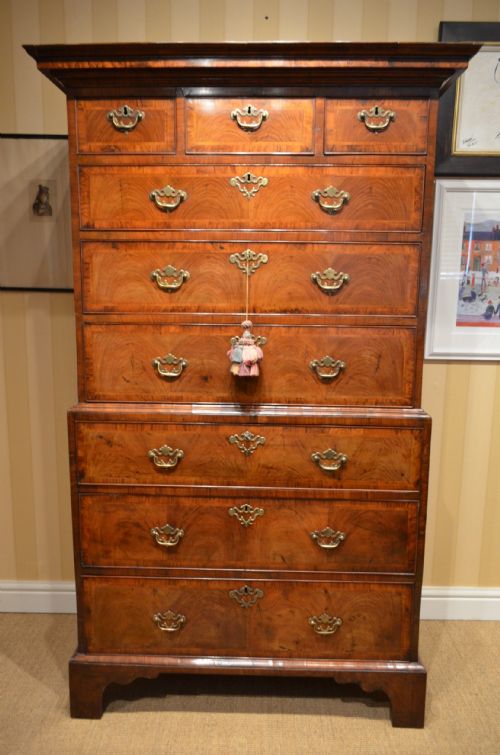
An early 18th century highboy typically manifests as a chest on stand or chest on chest, combining a lower supporting frame with upper drawers. These tall forms provided crucial vertical storage in domestic interiors during the Georgian, Queen Anne, and William and Mary periods.
The version most frequently met on this page is the walnut chest on stand, often featuring cabriole legs and crossbanded drawer fronts. Alongside these, examples executed in oak, elm, and japanned lacquer appear across the 18th century timeline.
Object variations include tallboys, cabinets on chests, and simpler chests of drawers elevated on stands. Each configuration reflects the evolution of domestic storage needs from roughly 1700 through to the middle of the century.
Materials and Construction
Cabinetmakers constructed these pieces primarily using English walnut and oak, frequently incorporating burr walnut veneers, elm, and pine for secondary elements. Surfaces often display decorative crossbanding, while japanned lacquer techniques introduce Chinoiserie ornamentation to select items.
Structural integrity relied on pegged joinery and solid timber frames, supporting heavy upper drawers upon dedicated stands or lower chests. Brass drop handles and escutcheons completed the construction, fastened securely to the drawer faces.
The inventory records cabinet on chest configurations alongside traditional chests on stands and tallboys.
Factors of Quality
The standard of timber selection heavily dictates distinction, particularly where finely figured burr walnut or crisp crossbanding is employed. Superior examples maintain original surface patination and cohesive structural elements without intrusive later alterations.
Refinement in leg carving, such as the shaping of cabriole supports, separates standard cabinet work from exceptional pieces. The harmony between upper and lower sections, especially on associated stands, remains central to the integrity of the form.
The Early 18th Century Highboy Glossary
- Chest on stand
- A two-part furniture form comprising an upper section of drawers sitting upon a separate or integrated lower frame with legs. This configuration elevated storage off damp floors.
- Cabriole leg
- A furniture leg that curves outward at the knee and tapers inward to an ankle, characteristic of early 18th century design. It derived from animal forms popularised during the period.
- Crossbanding
- A narrow strip of veneer laid around the border of a drawer front or panel with the grain running perpendicular to the centre. This technique created a neat decorative frame.
- Japanned
- European imitation of East Asian lacquerwork, created using layers of varnish and metallic dust decorated with raised motifs. It was applied to fashionable Chinoiserie pieces.
- Escutcheon
- A protective metal plate surrounding a keyhole, usually cast in brass. It prevented the surrounding wood from wearing down through repeated use of the key.
Early 18th Century Highboy: Frequently Asked Questions
What is a highboy called historically?
In British cabinet-making traditions, these forms are typically documented as chests on stands or chests on chests rather than the American term highboy. The terminology reflects the distinct upper and lower sections used for linen and apparel storage.
Craftsmen and merchants of the period catalogued them according to their configuration, separating tall cabinet pieces from standard drawer chests.
How do I tell Queen Anne from George I pieces?
Queen Anne pieces frequently display softer lines and prominent cabriole legs, while early George I items often introduce more pronounced architectural cornices and banded veneers. The transition between reigns involved subtle shifts in proportion rather than sudden stylistic breaks.
Examining the secondary woods and handle mounts helps clarify the specific decade of manufacture within the broader early 18th century span.
Were stands always made with the upper chest?
Certain examples pair an upper chest with an associated stand from a similar period rather than an original unified construction. Dealers note these combinations when the timber and patination align closely with the upper drawers.
Such pairings occurred historically as owners updated or adapted furniture to suit changing domestic interiors.
How do I care for walnut veneer?
Walnut veneer requires stable indoor humidity and protection from direct sunlight to prevent the thin surface timber from drying or lifting. Gentle dusting with a dry cloth preserves the original finish without stripping the historical patina.
Avoid placing these items near modern heating vents or damp exterior walls to safeguard the old glues and structural joints.