





Dutch Style Brass Pendant
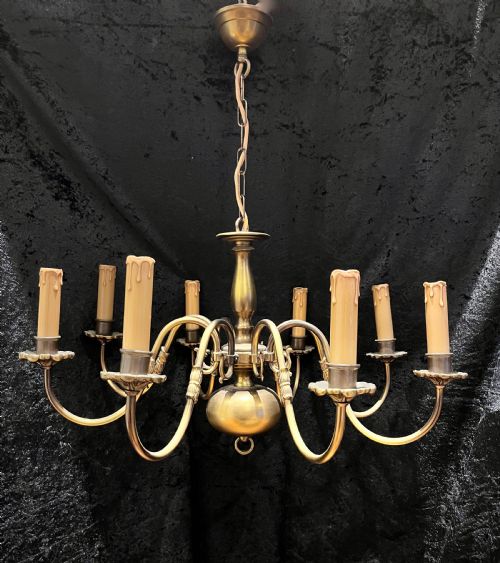
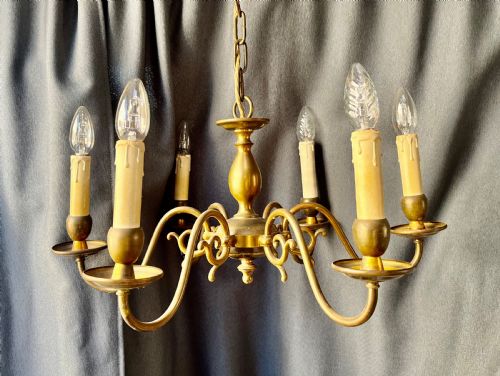
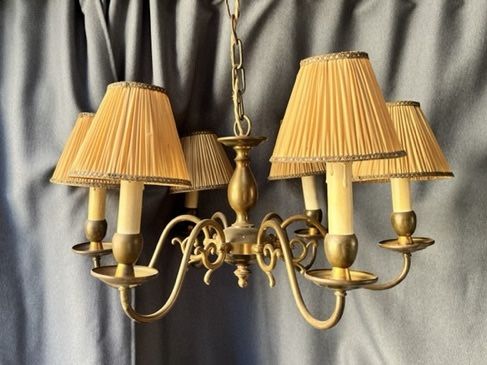
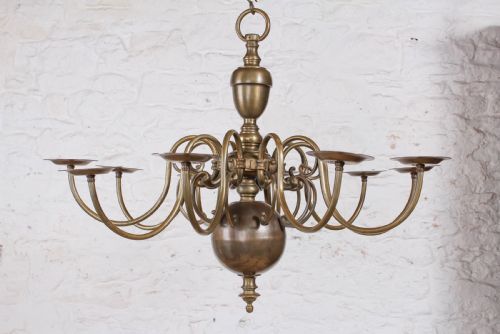
These dutch style brass pendant chandeliers bring weight and warm reflection to a room, cast in solid metal through centuries of revival design.
Dutch Style Brass Pendant
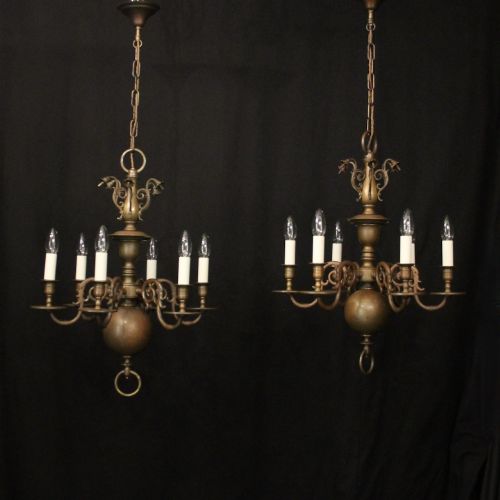
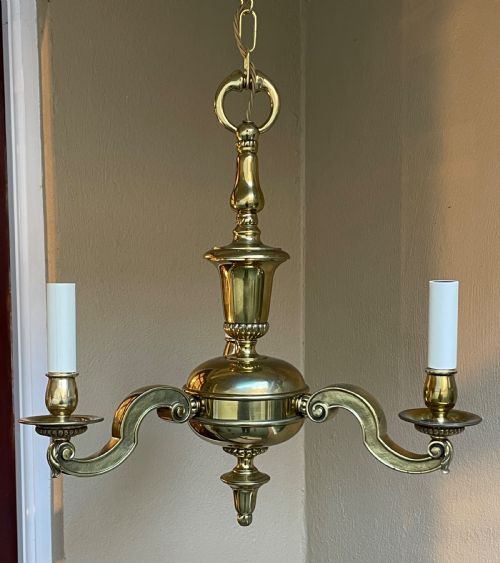
A dutch style brass pendant typically presents as a multi-branched chandelier hanging from a central stem, drawing on Baroque and Flemish traditions. The examples available range from compact single-tier fixtures of seventeen inches to large two-tier designs spanning thirty inches across.
The pieces on this page span several eras from the eighteenth century to the early twentieth century, including Edwardian interpretations and revival works. Buyers frequently encounter solid brass and cast bronze multi-arm configurations designed for overhead illumination.
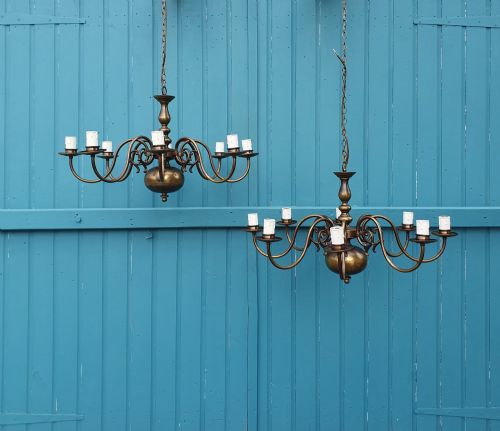
Form follows historical precedent closely, with curved arms radiating outward from central globes or baluster stems. These ceiling lights serve as central focal points in high-ceilinged spaces and traditional interiors.
Materials and construction methods
Metalworking relies heavily on cast brass, solid brass, and bronze, often shaped into structural branches and central balusters. Artisans utilised copper for specific contrasting elements or secondary components within the chandelier body.
Casting allowed workshops to produce robust multi-arm frames capable of supporting numerous lights without bending. Silver plate occasionally appears over the base metal surface, offering a brighter metallic finish than standard polished brass.
Listings span from the 18th century through the Edwardian period and the 1930s, utilising solid brass, bronze, and copper.
Distinguishing quality across pieces
Quality reveals itself in the crispness of the cast metal details and the overall balance of the radiating branches. Heavier solid brass construction provides greater structural integrity than thinner sheet metal assemblies.
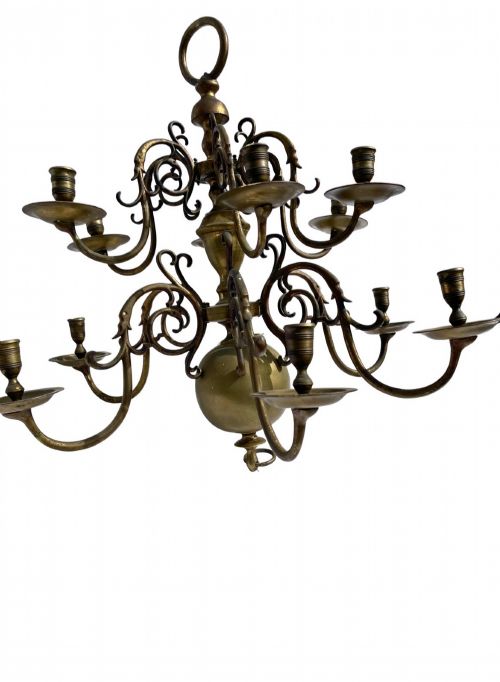
The complexity of the arm configuration, such as moving from simple three-branch formats to elaborate twelve-branch two-tier structures, dictates the visual impact. The purity of the metal alloy and the depth of natural patination accumulated over time also separate standard examples from finer works.
The Dutch Style Brass Pendant Glossary
- Baluster
- A moulded shaft or column supporting the central body of the chandelier. This vertical element anchors the radiating arms.
- Cast brass
- Molten metal poured into moulds to create solid decorative and structural components. This technique allows for complex curves and repeating motifs.
- Flemish Baroque
- An ornate artistic style originating in Flanders during the seventeenth century. It heavily influences the scrollwork and bulbous profiles seen in these pendants.
- Two tier
- A chandelier structure featuring two distinct levels of branching arms arranged vertically. This configuration accommodates a higher count of light sources.
Dutch Style Brass Pendant: Frequently Asked Questions
Can these chandeliers be wired for modern ceilings?
Most antique fixtures accept modern electrical wiring through their central hollow stems during professional installation. Electricians can adapt older fittings to meet current safety standards.
Ensure your ceiling can support the weight of solid metal and bronze construction before hanging. Professional installation is strongly recommended for heavy multi-arm fixtures.
What is the difference between Dutch and Flemish styles?
Dutch styles typically emphasise restrained geometric balance and polished brass surfaces. Flemish designs often feature more robust scrolling elements and cast bronze details.
Both traditions share roots in seventeenth-century lighting design, making them visually compatible in period interiors. Revival pieces from the Edwardian era often blend these two regional characteristics.
How do I determine the period of a brass pendant?
Examine the casting quality, fastening methods, and wear patterns on the metal surface. Eighteenth-century pieces display different hand-finishing marks compared to early twentieth-century production.
Reference the stylistic cues of the specific revival era, such as Edwardian interpretations of Baroque forms. Comparing the arm joints and mounting hardware provides further clues to age.