



Dutch Mahogany Commode
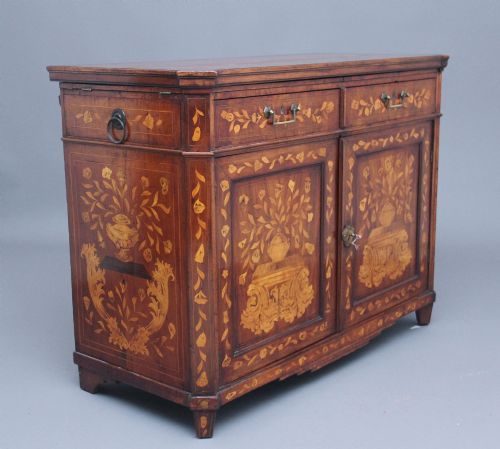
A dutch mahogany commode is a substantial piece of continental storage furniture, combining rich timber with elaborate floral marquetry.
Dutch Mahogany Commode
When you search for a dutch mahogany commode, you encounter a variety of storage forms from the eighteenth and nineteenth centuries. These pieces span periods such as the eighteenth century, the nineteenth century, and the Edwardian era, alongside styles like Dutch baroque, neoclassical, and rococo.
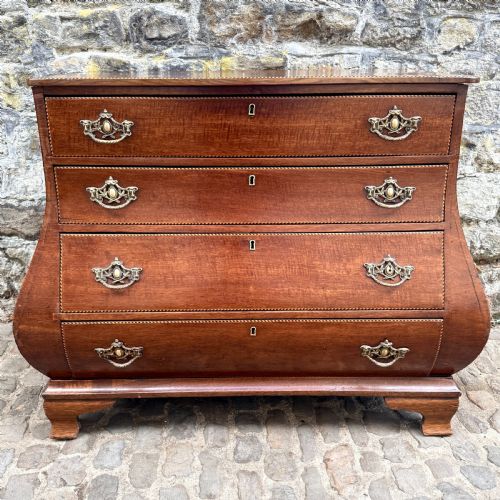
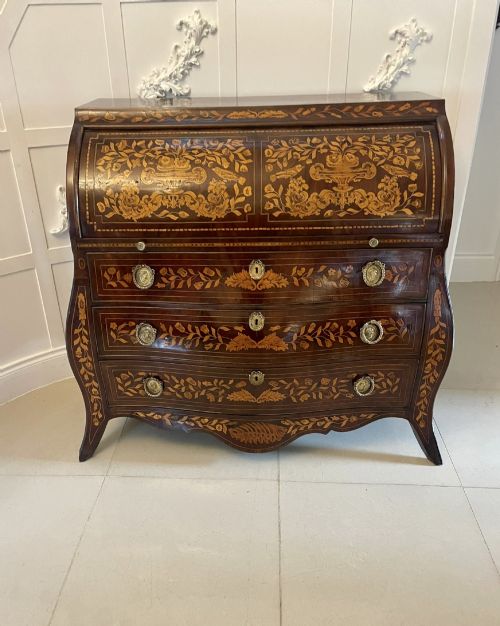
The objects appearing on this page take the form of chests of drawers, bombe chests, and bureaux. Mahogany serves as the primary timber, often enhanced with marquetry inlay in contrasting woods.
How they were made
Cabinet makers constructed these commodes using a foundation of oak or fruitwood, veneered with mahogany. Surfaces frequently display intricate floral marquetry using boxwood and other light timbers to create contrasting pictorial designs.
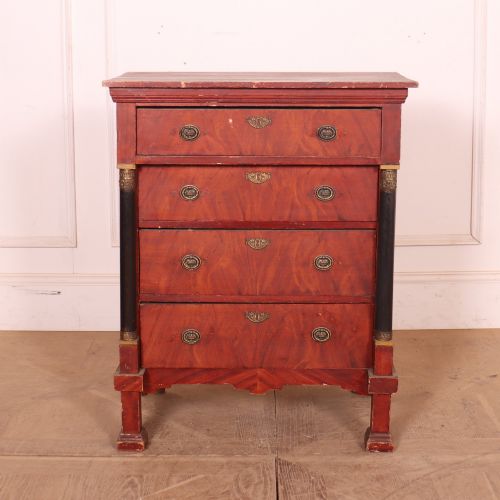
Hardware includes brass handles and escutcheons fitted to the drawer fronts. Some examples utilise ebonised wood details alongside the principal mahogany surfaces.
Dutch Mahogany Commode Retail Price Guide 2026
Typical asking prices for dutch mahogany commode among the pieces listed under this phrase on Sellingantiques today, from the lower quarter to the upper quarter. They describe what is for sale here now, not the wider market.
Floral marquetry panels often hide tiny wooden tulips among the leaves, celebrating Dutch horticulture in veneer.
What varies in quality
The refinement of the marquetry work dictates much of the distinction between examples. Finer commodes exhibit tightly cut floral and botanical inlay with crisp shading, whereas simpler versions rely on plain mahogany surfaces.
Structural form also marks a difference in execution, moving from straight-fronted chests to swelling bombe profiles and block fronts. The handling of proportions on neat-sized pieces determines their visual balance.
The Dutch Mahogany Commode Glossary
- Bombe
- A bulging or swelling contour found on the front and sides of certain chests and commodes. This curved profile requires advanced woodworking skill.
- Marquetry
- Decorative veneer work forming pictures or patterns using various coloured woods. Craftsmen assemble thin pieces of timber like boxwood and fruitwood into intricate designs.
- Block front
- A piece of furniture where the front surface is divided into three vertical sections, with the outer sections projecting forward and the central section recessed. This treatment gives a robust appearance.
- Credenza
- A sideboard or cabinet form used for storage and display. These pieces appear in eighteenth-century continental cabinetry.
- Ebonised
- Wood treated to imitate ebony, producing a dense black finish. It provides sharp contrast against lighter mahogany and marquetry.
Dutch Mahogany Commode: Frequently Asked Questions
How do I date a dutch commode?
Dating relies on stylistic shifts visible across the eighteenth and nineteenth centuries. Earlier examples display baroque and rococo influences, while later nineteenth-century pieces often reflect empire or revival styles.
Timber choice and construction methods also help establish age. Secondary woods like oak and the style of brass mounts provide further clues to the period.
What woods were used in these pieces?
Mahogany serves as the main surface timber for these commodes. Cabinet makers paired it with secondary woods such as oak and fruitwood for internal construction.
Inlay work incorporates boxwood and other contrasting timbers to create floral designs. Ebonised wood occasionally appears for decorative accenting.
Where were these commodes made?
These pieces originate from workshops in the Netherlands, reflecting regional cabinet making traditions. Makers employed distinct regional forms including bureau desks and chests of drawers.
Similar stylistic influences spread across continental Europe during the eighteenth and nineteenth centuries. The resulting furniture displays sophisticated veneering techniques.