


Dutch Impressionist Landscape Art
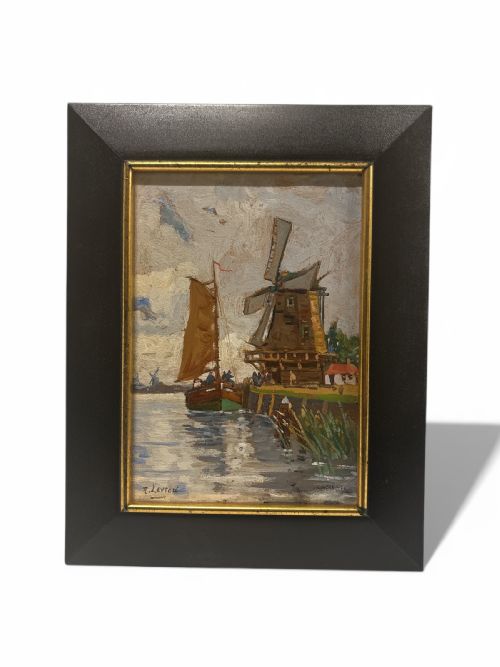
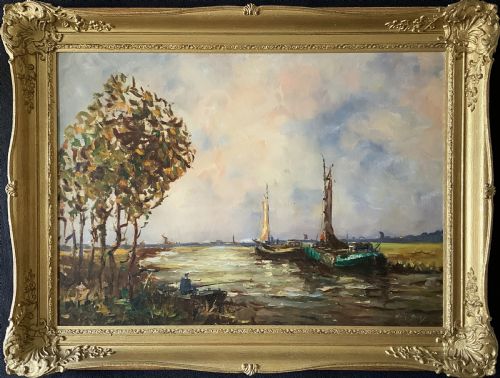
Dutch impressionist landscape art brings bright canvases and watercolours into the room, capturing rural canals, windmills, and sheep grazers with loose brushwork.
Dutch Impressionist Landscape Art
When you search for dutch impressionist landscape art, you encounter oil paintings, watercolours, and panel works depicting canals, rivers, and rural village scenes. These pieces capture light and atmosphere through visible brushstrokes and painterly techniques.
The selection ranges from nineteenth-century watercolours to mid-century oil paintings on canvas and wood. Many works focus on traditional Dutch motifs such as windmills, barges, and grazing sheep along waterways.
You are most likely to meet early twentieth-century examples alongside works dated around nineteen-fifty. These pieces vary from intimate watercolour sketches to large oil paintings framed in gesso and gold leaf.
Judging quality and execution
Quality rests on the confidence of the brushwork and the artist's handling of light across water and open fields. Stronger pieces display a deliberate rhythm in their strokes rather than timid blending.
The integration of the painted surface with the original frame contributes to the overall integrity of the piece. Works that retain their period gesso and gold leaf frames preserve a more complete historical context.
Listings span periods from the nineteenth century through the nineteen-fifties, featuring canvas, wood, paper, and gold leaf.
Willem Bos·Willem Anton Alexander Knip·Florence Hess·Job de Vogel·John D Walker·Fred Mayor·Hendrik Yan Wolter·Frank Myers Boggs·Anthonij Anton Mauve·David Adolph Constant Artz·Kershaw Schofield·Christiaan Pieter Snyders·R Leyton
The Dutch Impressionist Landscape Art Glossary
- Impressionism
- A style of painting that focuses on capturing the visual impression of a moment, shifting away from detailed realism to emphasise light and changing qualities of colour. This approach relies on visible brushstrokes.
- Gesso
- A plaster-like mixture applied to wooden panels or frames as a base for painting or gilding. It provides a smooth surface for subsequent layers.
- Watercolour
- A paint wherein colour pigments are suspended in a water-soluble vehicle, typically applied to paper. It creates luminous, transparent washes.
- Canvas
- A closely woven fabric used as a surface for oil paintings, usually stretched tightly over a wooden frame. It offers flexibility and texture.
- Panel
- A flat piece of wood used as a rigid support for oil or panel paintings. Artists favoured this stable surface for smaller works.
Dutch Impressionist Landscape Art: Frequently Asked Questions
How do I date these paintings?
Dating relies on stylistic clues, framing materials, and recorded signatures or dates left by the artist. Mid-century works often show different canvas preparations compared to nineteenth-century examples.
Examining the reverse of the canvas or panel frequently reveals labels, inscriptions, or stamps that help narrow down the period of creation.
Where should I hang these artworks?
These landscapes suit rooms with natural light that complements the impressionist palette and gold leaf frames. Placing them away from direct sunlight protects the oil paint and paper from fading.
Pairing a canal scene or riverscape with simple interior decor allows the varied brushwork and colour to remain the focal point.
Are watercolours fragile?
Watercolour paintings on paper require protection behind glass to prevent atmospheric damage and moisture absorption. They are more sensitive to direct light than oil paintings on canvas.
Keeping them in stable environmental conditions ensures the paper and pigments survive without deterioration.
What subjects are most common?
Canal views, riverscapes, windmills, and agricultural scenes featuring sheep and shepherds appear frequently across the works. These rural and water-based motifs reflect the traditional landscape interests of the period.
Artists often returned to specific Dutch and Flemish locations to study changing light conditions on the water.