




Dutch Display Furniture
Dutch display furniture brings together centuries of skilled cabinet-making, floral marquetry and generous proportions to showcase prized possessions.
Dutch Display Furniture
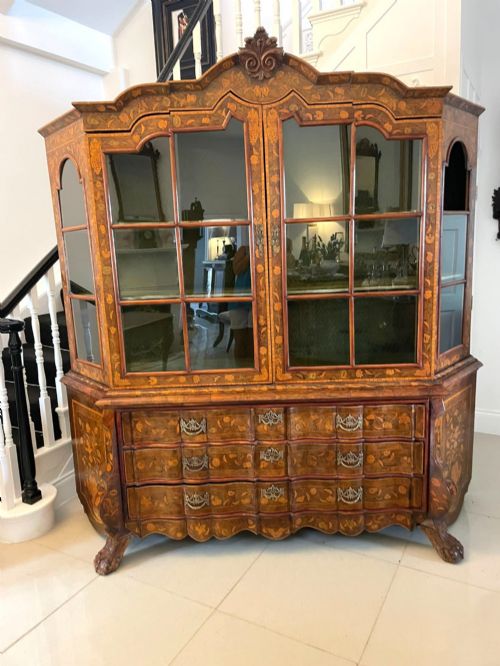
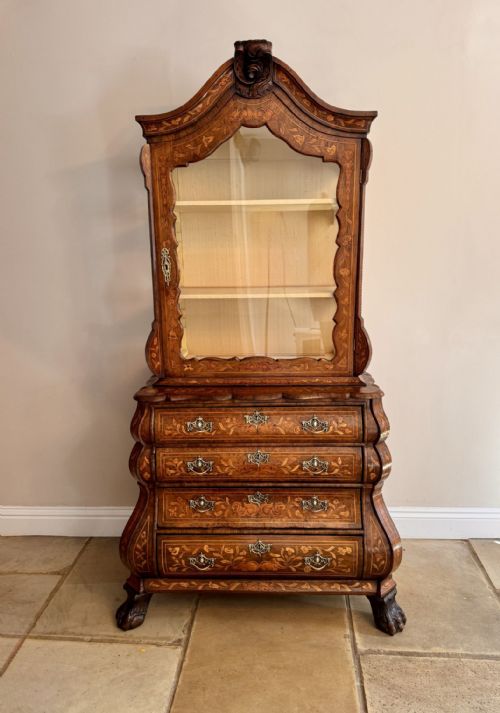
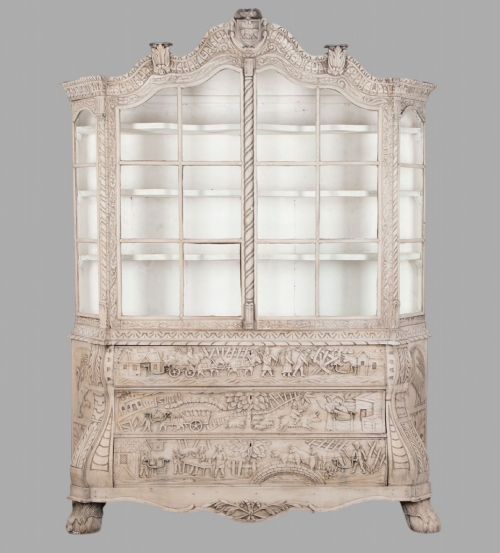
Dutch display furniture encompasses cabinets, vitrines and cupboards designed to exhibit valued items behind glass or upon open shelves. When you explore this selection, you encounter pieces intended for prominent domestic placement, often combining storage below with display space above.
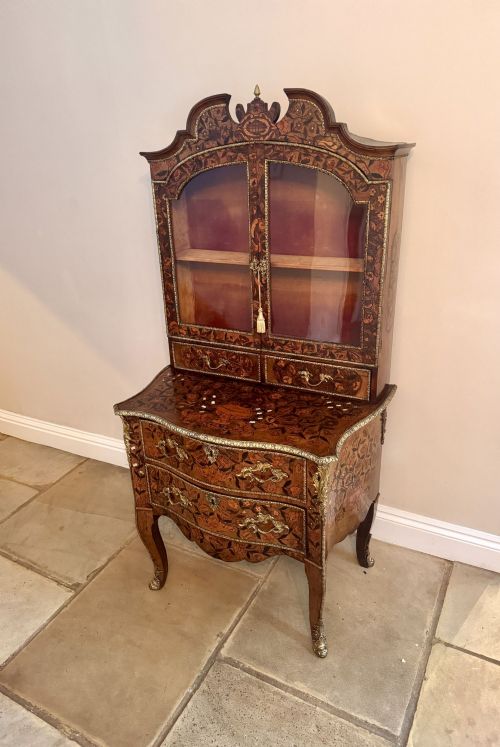
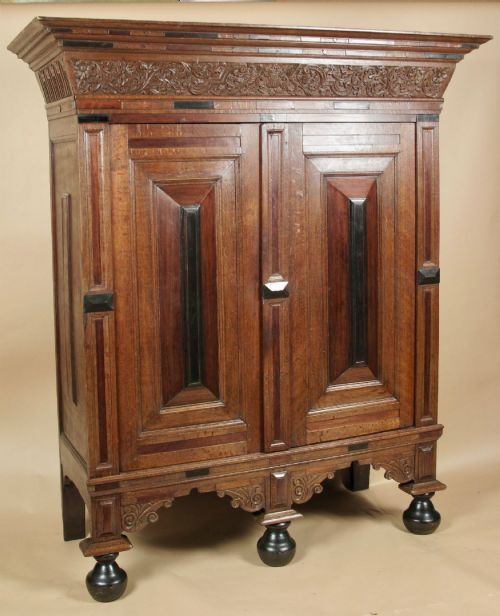
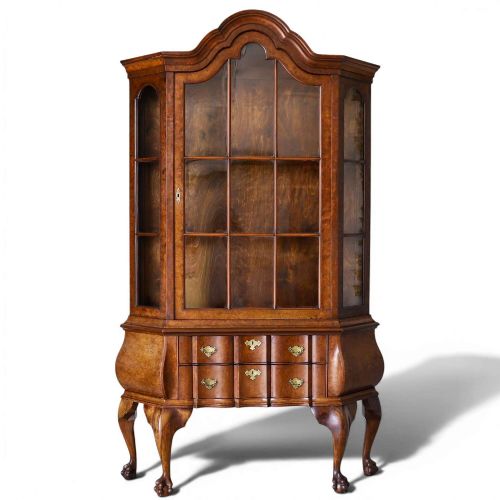
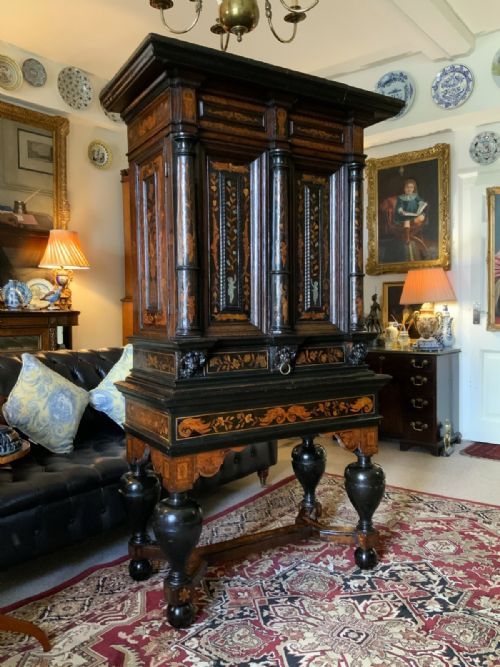
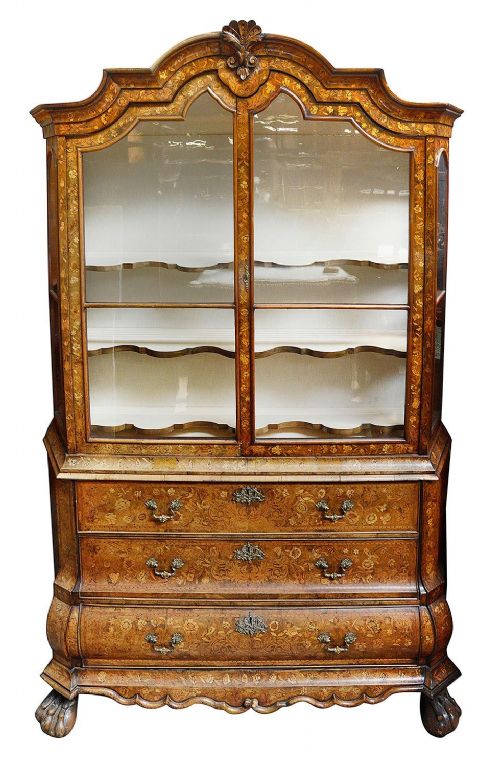
The objects span from the seventeenth century through to the twentieth century, with eighteenth-century examples appearing frequently. These pieces take various forms, including bombé chests with display cabinets, wall cabinets and cabinets on stands, reflecting evolving interior fashions.
Regional characteristics and historical periods shape these items, drawing on Dutch Baroque, Rococo and revival styles. Walnut, oak and fruitwood form the primary bodies, frequently enriched with elaborate marquetry depicting floral motifs.
How these pieces were made
Cabinet-makers constructed carcass frames from solid timbers like oak or walnut, applying fine veneers of burr walnut, fruitwood or satinwood to visible surfaces. Marquetry panels demanded immense precision, cutting floral designs from diverse woods and occasional pewter to fit flush within dark grounds.
Curved bombé profiles required steaming and shaping solid timber or building up laminated cores to achieve the characteristic swelling front and sides. Glazing bars in upper cabinets were assembled by hand to support individual panes of glass securely within the door frames.
Dutch Display Furniture Retail Price Guide 2026
Typical asking prices for dutch display furniture among the pieces listed under this phrase on Sellingantiques today, from the lower quarter to the upper quarter. They describe what is for sale here now, not the wider market.
The listings include seventeenth-century examples featuring pewter inlay alongside eighteenth-century marquetry cabinets and twentieth-century oak pieces.
What varies in quality
The refinement of the marquetry dictates much of the visual success, separating lively, detailed floral arrangements from stiff or repetitive patterns. Natural fading and the depth of the timber patina also influence the overall presence of a cabinet.
Structural harmony defines superior examples, particularly in how bombé curves transition into feet and cornices. Original hardware, glass panes and well-fitted interior shelving retain the integrity of the piece more effectively than later replacements.
The Dutch Display Furniture Glossary
- Bombé
- A swelling or bulging contour found on the lower sections of chests and cabinets, requiring advanced woodworking skill to execute properly.
- Marquetry
- The art of applying pieces of veneer to a structure to form decorative patterns, frequently depicting floral sprays in these collections.
- Vitrine
- A glass-fronted display cabinet intended for the exhibition of porcelain, glassware or curiosities.
- Kussenkast
- A heavy seventeenth-century cupboard style featuring cushion-moulded panels on the doors.
- Patina
- The surface sheen and mellowing developed by wood over long periods of handling, exposure and polishing.
Dutch Display Furniture: Frequently Asked Questions
What rooms suit Dutch display furniture best?
These large cabinets suit dining rooms, living spaces or grand halls where their substantial proportions and glass fronts can be appreciated. They provide practical storage while functioning as focal points for a room.
Placing them away from direct sunlight protects delicate veneers and marquetry inlay from fading over time.
How do I care for walnut veneer and marquetry?
Routine dusting with a soft, dry cloth preserves the finish without introducing moisture that could harm old adhesives. Occasional application of appropriate wax feeds the timber and maintains the surface sheen.
Keeping pieces away from radiators prevents the wood from drying out and the veneer from lifting.
How can I tell the period of a cabinet?
Construction methods, timber choices and stylistic motifs offer clues to the era of manufacture, moving from seventeenth-century oak and ebony to eighteenth-century walnut marquetry. Revival pieces from the nineteenth and twentieth centuries often combine earlier forms with machine-cut veneers.
Examining internal timber and backboards reveals tool marks and construction details consistent with specific centuries.