



Dutch Commode Cabinet
A dutch commode cabinet brings substantial storage and intricate floral marquetry to a room, offering eighteenth and nineteenth century craftsmanship in fruitwood, walnut, and mahogany.
Dutch Commode Cabinet
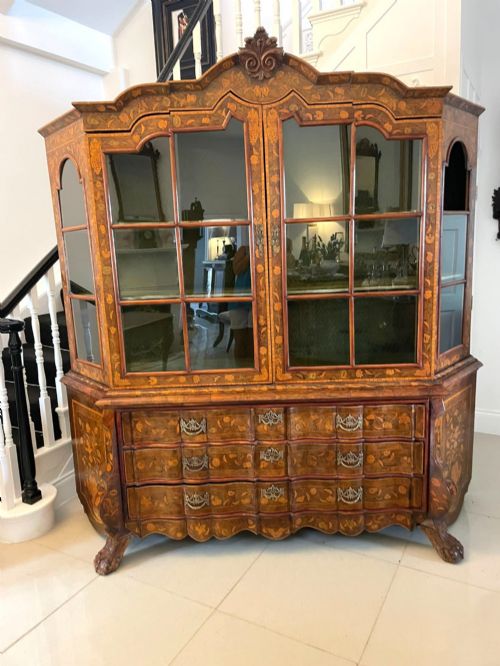
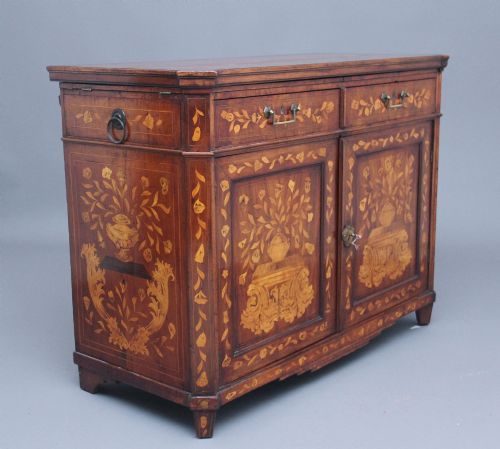
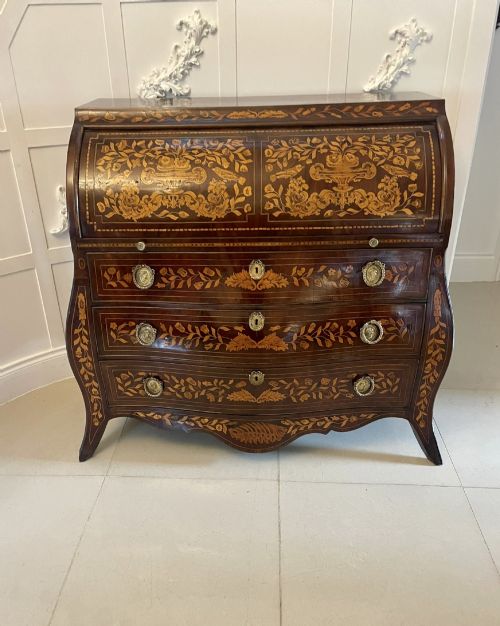
A dutch commode cabinet combines generous storage with ornamental wood inlay, appearing across eighteenth and nineteenth century periods. These pieces take various forms including chests of drawers, bombe commodes, tallboys, and display cabinets.
The versions most commonly met on this page feature floral marquetry executed in contrasting timbers upon mahogany, walnut, or fruitwood carcases. Bureau and cupboard variants also surface alongside marble top commodes.
Makers working within these styles utilise continental rococo, neoclassical, and baroque design vocabularies. Provincial pieces and painted pine cupboards occasionally supplement the dominant marquetry and burr walnut examples.
Materials and Construction
Craftsmen construct these cabinets using structural timbers like oak, pine, and mahogany for the underlying carcase. Surfaces receive veneers and detailed floral marquetry inlay utilising fruitwood, boxwood, and burr walnut.
Metalwork hardware such as brass handles and escutcheons accent the drawer fronts and doors. Certain pieces incorporate marble tops alongside glazed sections for display cabinets.
Dutch Commode Cabinet Retail Price Guide 2026
Typical asking prices for dutch commode cabinet among the pieces listed under this phrase on Sellingantiques today, from the lower quarter to the upper quarter. They describe what is for sale here now, not the wider market.
Object forms on this page range from cylinder bureaux and tallboys to marble top commodes and glazed display cabinets.
Distinctions in Quality
Quality rests upon the complexity and precision of the floral marquetry inlay across the drawer fronts and sides. Elaborate bombe shaping and the selection of figured burr walnut or fruitwood veneers distinguish finer examples from plain provincial furniture.
The integrity of the original timber carcase and the retention of period brass mounts dictate the overall standard. Pieces requiring extensive restoration differ markedly from those preserving their original polished surfaces.
The Dutch Commode Cabinet Glossary
- Marquetry
- Decorative patterns formed by fitting together small pieces of veneer into the wood surface. This technique creates elaborate floral designs across drawer fronts.
- Bombe
- A swollen or bulging contour characteristic of continental rococo furniture. This curved profile requires skilled woodworking to achieve.
- Burr Walnut
- Timber taken from the abnormal growth of a walnut tree, producing highly figured grain patterns. Cabinetmakers prize this wood for decorative veneering.
- Tallboy
- A tall chest of drawers standing higher than a standard chest, often combining multiple drawers. These pieces maximise vertical storage space.
- Credenza
- A sideboard or cabinet form used for storage and display. Examples appear in eighteenth century inlaid formats.
Dutch Commode Cabinet: Frequently Asked Questions
Where were these cabinets placed in a home?
These pieces served practical storage and display functions in principal rooms, holding household linens, papers, or prized objects.
Larger display cabinets and tallboys stood in parlours or reception spaces, while smaller commodes fitted into bedrooms and private chambers.
What woods were used for the marquetry?
CRAFTSMEN employed contrasting timbers such as fruitwood and boxwood to render floral motifs against darker walnut or mahogany backgrounds.
These natural wood colours created pictorial depth without relying on applied paint.
How do I distinguish eighteenth and nineteenth century pieces?
Eighteenth century examples frequently display baroque, neoclassical, or rococo proportions with spirited marquetry and robust carcase construction.
Nineteenth century iterations often continue these traditions or introduce neat-sized formats and travelling cabinet variants.