



Duet Music Seat
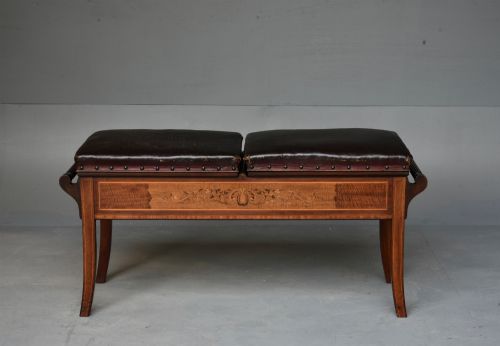
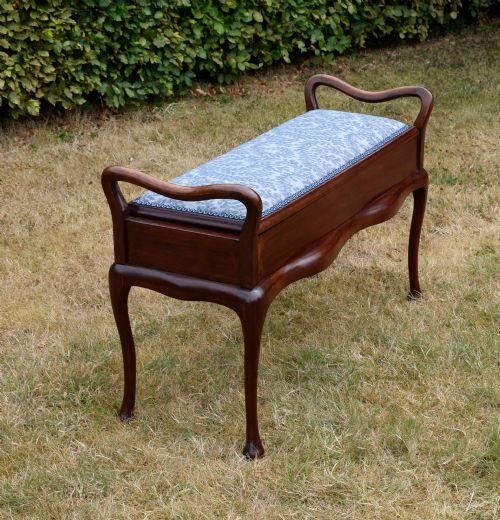
A duet music seat offers shared bench space at the keyboard, combining sturdy timber frames with upholstered comfort for two players.
Duet Music Seat
When you search for a duet music seat, you encounter long timber benches built to accommodate two musicians side by side at a piano or recital instrument. These pieces surface most frequently in mahogany, with Edwardian and Victorian examples forming the backbone of the selection.
How they were made
Cabinetmakers constructed the primary frames of these seats using dense hardwoods such as mahogany and rosewood, occasionally employing walnut and giltwood for specific revival styles. These timbers provided the structural rigidity necessary to support the weight of two seated players over decades of daily practice.
Workshops finished the seating areas with traditional upholstery fabrics, velvet, and intricate inlay work, securing the components with brass and metal hardware. Hinged mechanisms allowed the seat lid to lift smoothly, revealing a compartment designed for sheet music storage.
Duet Music Seat Retail Price Guide 2026
Typical asking prices for duet music seat among the pieces listed under this phrase on Sellingantiques today, from the lower quarter to the upper quarter. They describe what is for sale here now, not the wider market.
Several Victorian duet seats double as secret sheet music vaults, hiding decades of forgotten scales beneath their hinged cushions.
What varies in quality
The distinction between standard utility pieces and finer examples rests in the depth of timber selection and the precision of decorative flourishes. Superior pieces display carefully matched mahogany grain, refined upholstery choices, and delicate inlaid detailing rather than plain, unadorned surfaces.
Makers who invested time in robust joinery and reliable internal hinges produced seats that endure structurally while retaining their aesthetic appeal. The presence of documented cabinetmaker signatures or distinctive revival styling also elevates the standing of an individual bench.
Charles Nosotti
The Duet Music Seat Glossary
- Duet music seat
- A wide bench designed for two people to sit together while playing a piano or keyboard instrument. These seats often feature hinged lids that open to reveal storage compartments for scores.
- Hinged seat
- A movable top attached with metal or brass fixings that lifts to provide access to the interior cavity. This feature kept sheet music organised close to the instrument.
- Inlaid mahogany
- Timber decorated by embedding contrasting strips of wood into the primary surface to create geometric or floral patterns. This decorative technique was popular during the Edwardian period.
- Recital bench
- An alternative term for a music seating piece used in performance spaces and domestic drawing rooms alike. They share the same sturdy construction as standard piano stools.
- Upholstery fabric
- The textile covering applied over padding to create a comfortable surface for the sitter. Materials range from simple woven fabrics to plush velvets.
Duet Music Seat: Frequently Asked Questions
What is a duet music seat?
A duet music seat is a broad wooden bench built specifically to accommodate two players side by side at a piano. They combine solid timber frames with cushioned surfaces for long practice sessions.
Many examples include internal compartments accessed by lifting the hinged top, providing convenient storage for sheet music and folios.
How do I date a duet music seat?
Dating relies on examining the timber, the style of the legs, and any decorative inlay work present on the frame. Victorian pieces often show heavier proportions, while Edwardian versions lean towards lighter mahogany with delicate stringing.
Art Deco examples introduce geometric lines and distinct twentieth-century materials that separate them from earlier nineteenth-century forms.
Were these seats only used for pianos?
While primarily designed for musical performance, these versatile benches frequently served as window seats and ottoman furniture in period homes. Their practical proportions made them useful in hallways and bedrooms as well as music rooms.
Their dual function as storage chests added to their utility in nineteenth and early twentieth-century domestic interiors.
How do I care for the upholstery?
Preserving the fabric involves regular gentle dusting and avoiding direct sunlight that can fade delicate velvet or woven textiles. Keeping the room at a stable humidity level prevents the timber frame from drying out.
Checking the brass and metal hinges periodically ensures the lid operates smoothly without straining the surrounding wood joints.