



Drum Mustard Pot
A drum mustard pot brings crisp proportion and bright silver to the dining table.
Drum Mustard Pot
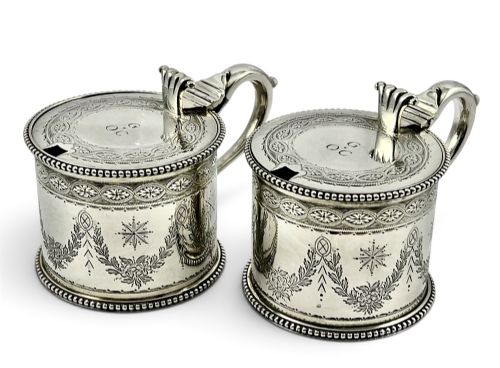
A drum mustard pot is a compact cylindrical condiment vessel designed to hold prepared mustard on the dining table during formal and informal meals. These table wares date from the Georgian, Regency, William IV, and Victorian periods, alongside Edwardian revivals.
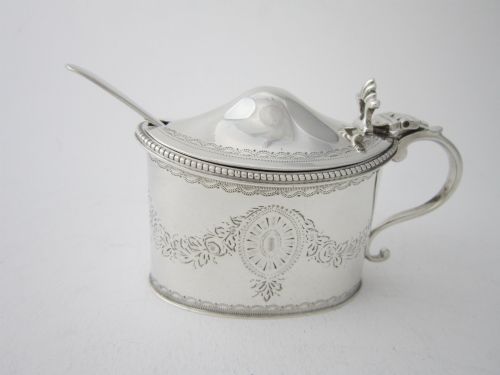
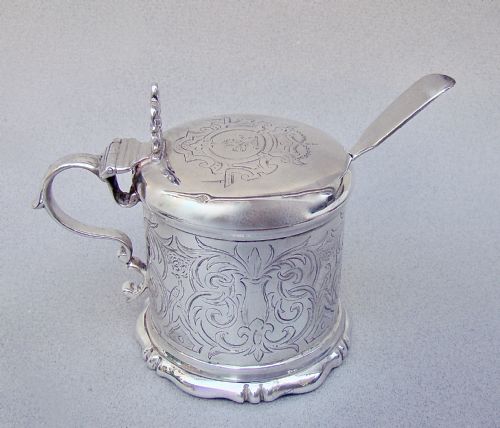
The standard form seen on this page is a straight-sided circular vessel raised on a flat base, frequently fitted with a hinged lid and a scroll handle. Most examples are executed in sterling silver, often housing a removable liner.
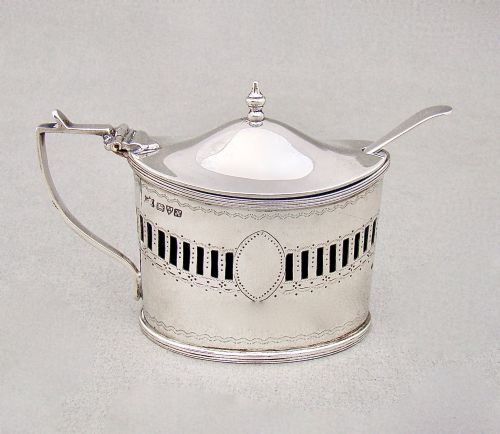
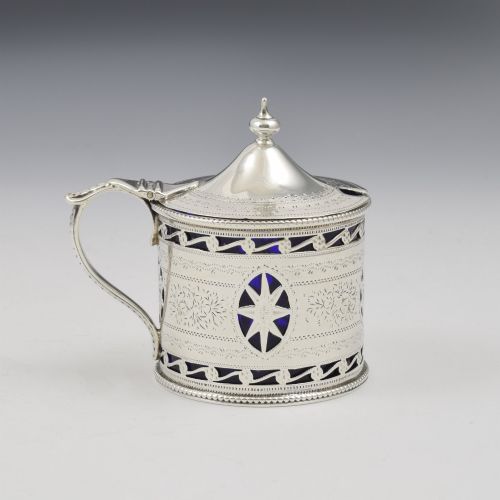
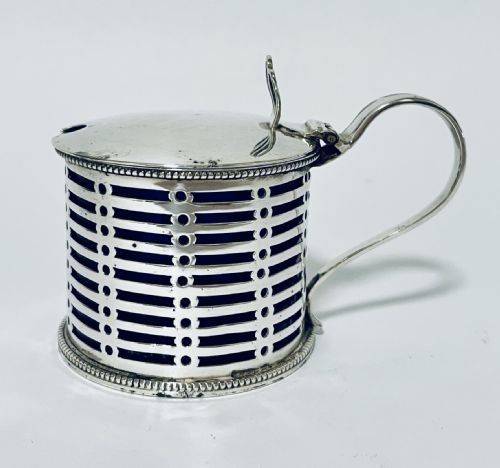
Buyers seeking this phrase encounter both plain polished metal cylinders and pierced openwork designs that reveal the coloured interior lining. They range from eighteenth-century George III pieces to early twentieth-century George V examples.
How they were made
Silversmiths constructed these pots using sterling silver, shaping the cylindrical body from sheet metal joined with a vertical seam. Lids were hinged and often surmounted by a small finial, while handles were cast and soldered to the side of the drum.
Pierced examples required careful hand-sawing or piercing of the silver wall to create intricate geometric or floral lattice patterns. These openwork bodies were then fitted with a contrasting insert to hold the condiment securely.
Drum Mustard Pot Retail Price Guide 2026
Typical asking prices for drum mustard pot among the pieces listed under this phrase on Sellingantiques today, from the lower quarter to the upper quarter. They describe what is for sale here now, not the wider market.
Listings span from George III examples made around seventeen-fifty up to George V pieces from nineteen-twenty.
What varies in quality
Quality rests in the weight of the sterling silver and the crispness of any pierced ornamentation. Thicker metal provides structural rigidity to the cylindrical wall, preventing distortion around the hinge and rim over generations of use.
The refinement of the maker's hand shows in the smooth action of the hinged lid and the precise fit of the glass liner. Pieces bearing clear hallmarks and well-executed maker marks demonstrate superior workshop standards.
Alfred Marston·Nathan and Hayes·Charles and George Fox·Charles Stuart Harris
The Drum Mustard Pot Glossary
- Drum
- A cylindrical container shape resembling a musical drum, with straight vertical sides and a flat top and bottom. This form provides a stable footprint for table wares.
- Pierced
- Ornamental work created by cutting patterns through the silver sheet to reveal the interior. This technique lightened the visual weight of the vessel.
- Liner
- A removable insert, often made of cobalt glass, placed inside a pierced silver pot to contain the mustard. It protected the metal from corrosion by acidic condiments.
- Sterling silver
- An alloy consisting of pure silver and other metals, typically copper, standardised for durability and lustre. It serves as the primary material for these condiment pots.
Drum Mustard Pot: Frequently Asked Questions
What is a drum mustard pot?
A drum mustard pot is a small cylindrical container used for serving prepared mustard at the dining table. These silver vessels typically feature a hinged lid and a fitted handle.
They emerged as distinct tableware items during the Georgian period and remained popular through the Victorian era and into the twentieth century.
How were they used?
These pots sat upon dining tables alongside other condiment vessels to hold table mustard for guests. A small spoon was used to transfer the condiment from the pot to the plate.
The inclusion of a glass liner protected the silver body from the corrosive properties of mustard.
Do they always need a liner?
Pots featuring pierced or openwork silver walls require a glass liner to contain the mustard safely. Solid-walled drum pots can hold condiments directly without an insert.
Cobalt blue glass liners are common and provide a striking visual contrast through the pierced silver lattice.
How do I date a silver mustard pot?
Dating relies upon the hallmarks stamped into the silver, which record the assay office, date letter, and maker's mark. Stylistic details such as Georgian simplicity or Victorian ornamentation also offer chronological clues.
Consulting the specific assay marks provides the exact year of manufacture for pieces bearing legible stamps.