
Drop Crystal Ceiling Fixture
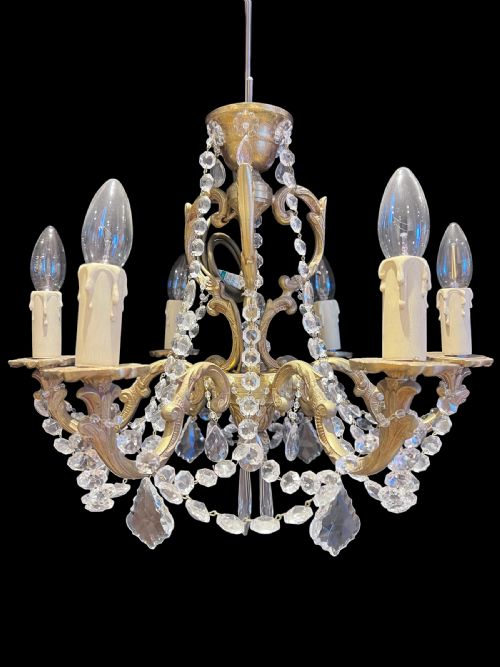
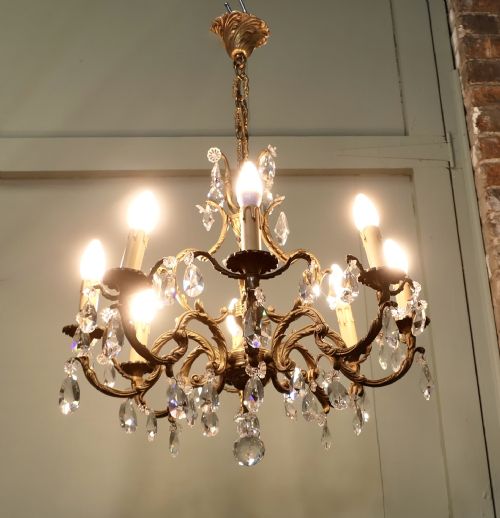
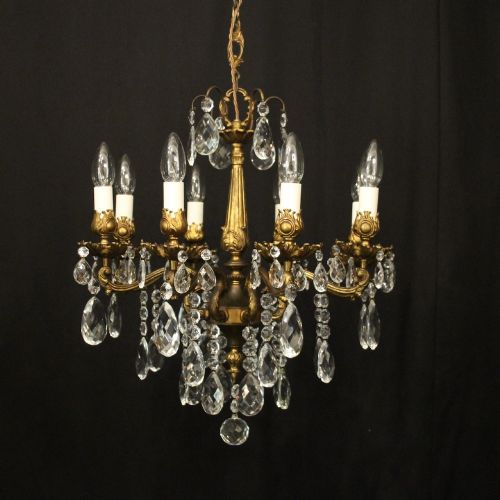
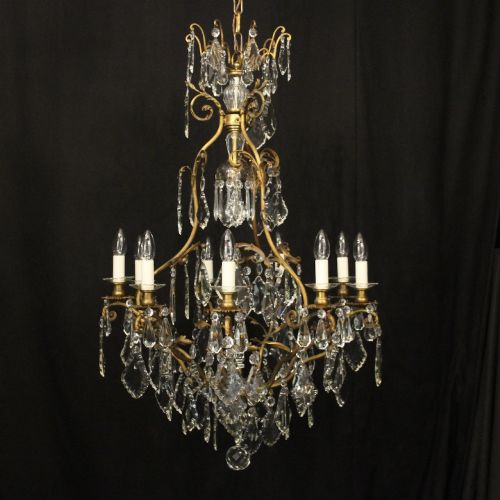
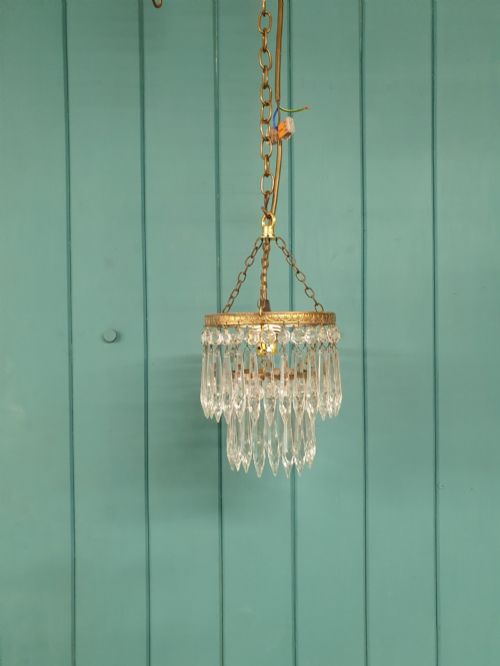
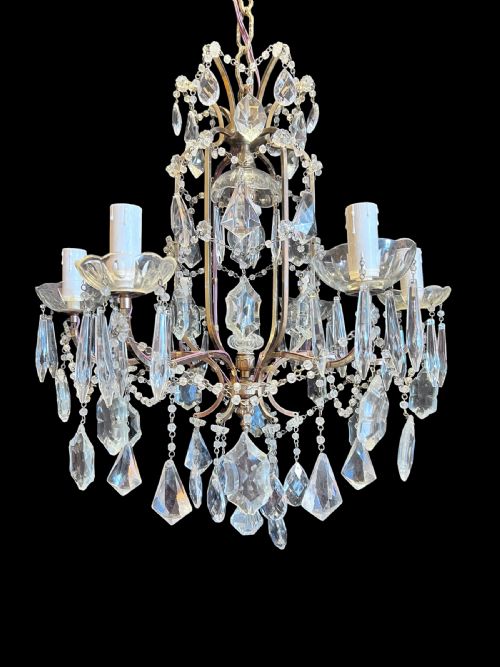
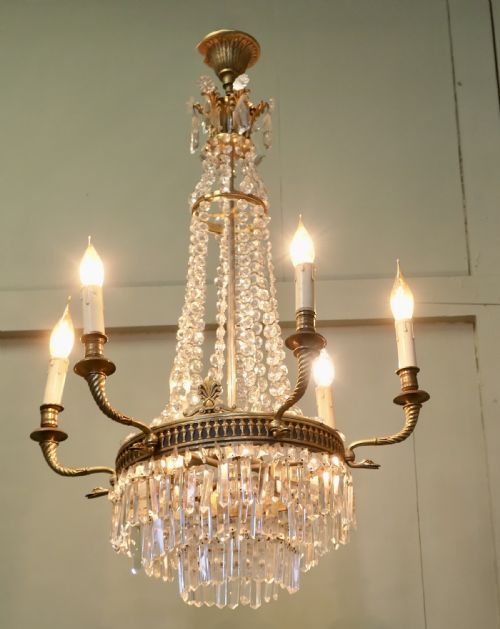
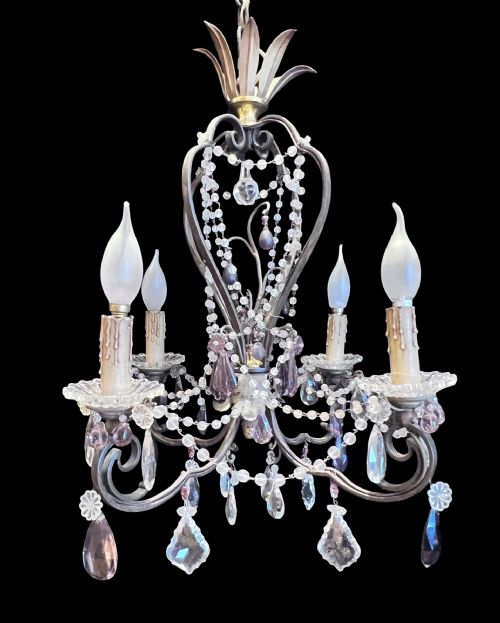
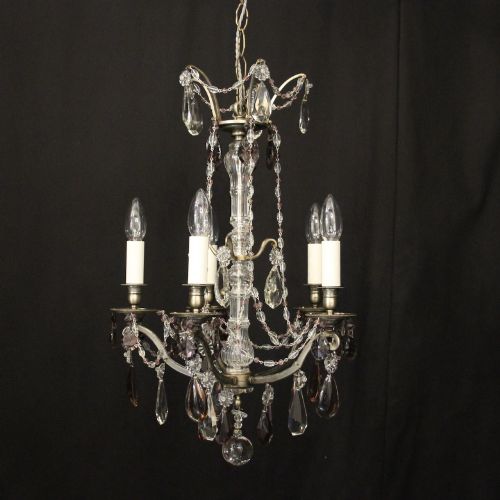
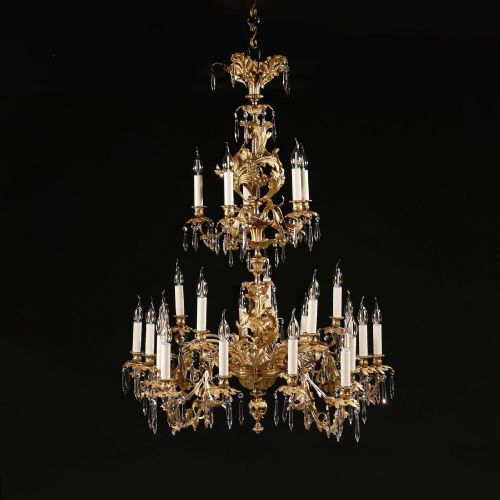
A drop crystal ceiling fixture brings theatrical reflection and structured sparkle into a room through tiered glass drops and metal framing.
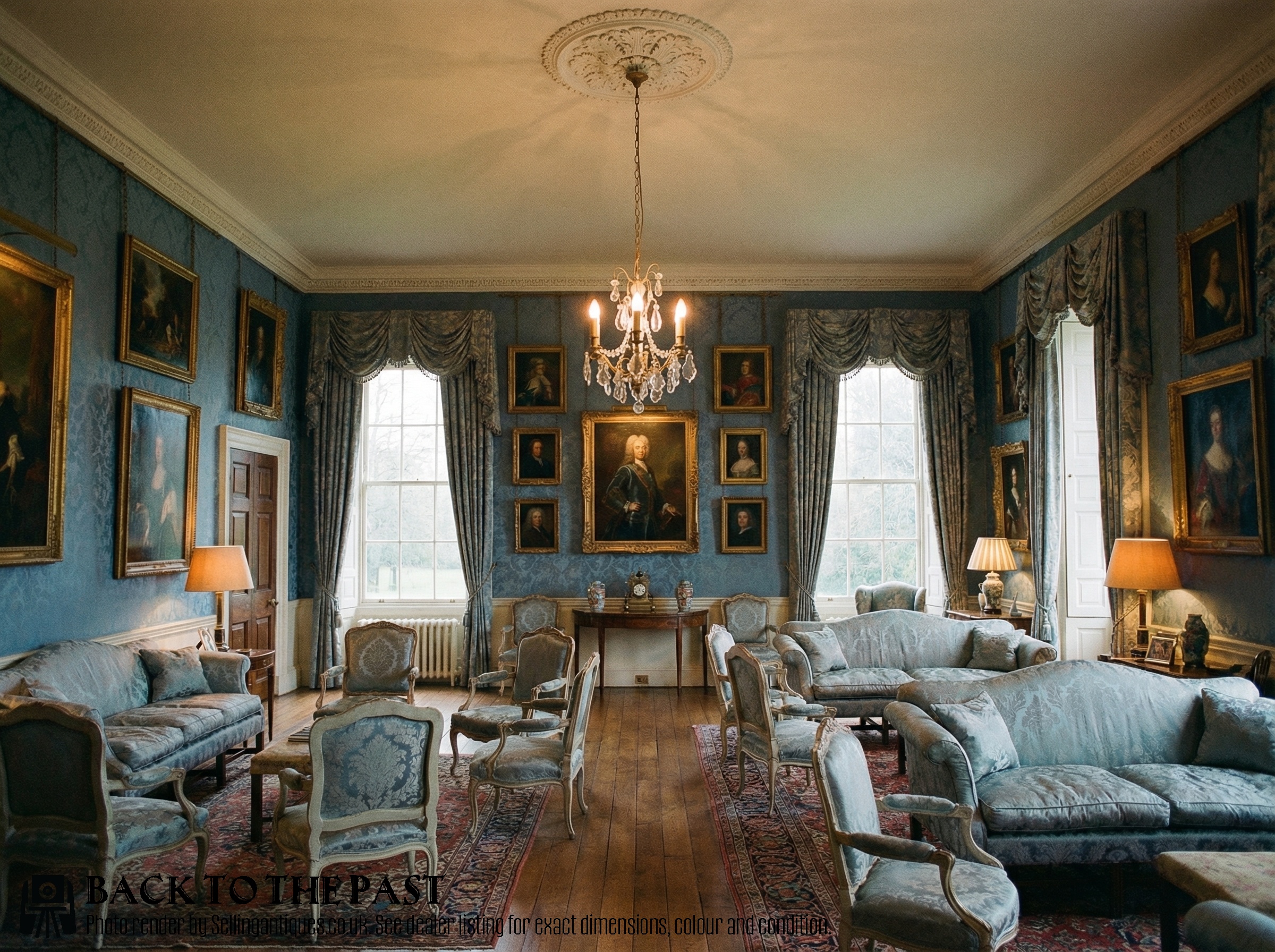
Drop Crystal Ceiling Fixture
A drop crystal ceiling fixture is a suspended lighting piece designed to refract illumination downward through structured formations of glass and crystal. When you search for a drop crystal ceiling fixture, you encounter examples originating from the nineteenth century through the 1930s, encompassing Edwardian designs alongside continental interpretations.
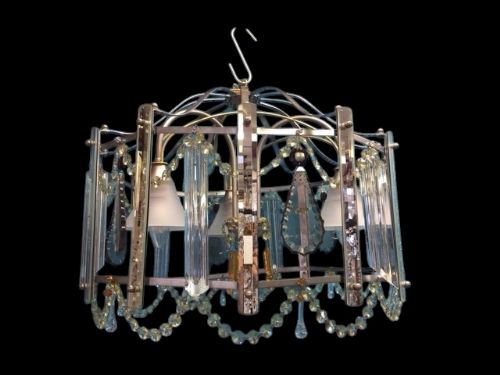
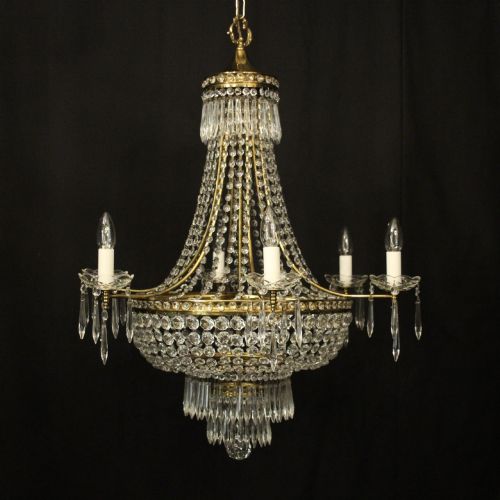
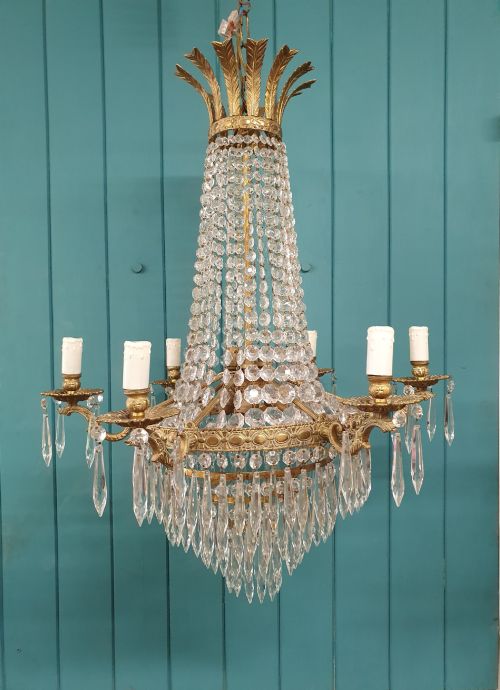
The selections on this page demonstrate distinct regional interpretations, predominantly featuring French and Italian craftsmanship. Forms range from compact single-light examples and basket shapes to multi-tiered tent and waterfall configurations holding up to twenty-five lights.
Period aesthetics span from classical French Empire and Rococo revivals to Florentine Baroque and Edwardian simplicity. These fixtures utilise frameworks of brass, gilt bronze, gilt metal, wrought iron, and toleware to support arrangements of cut glass, amethyst, turquoise, and coloured crystals.
Materials and construction methods
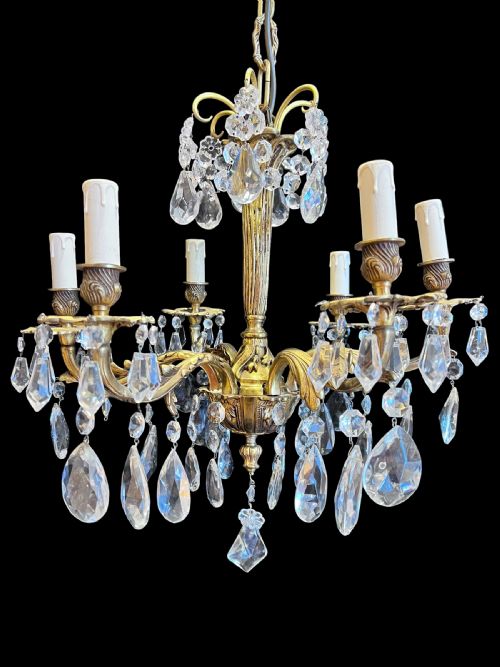
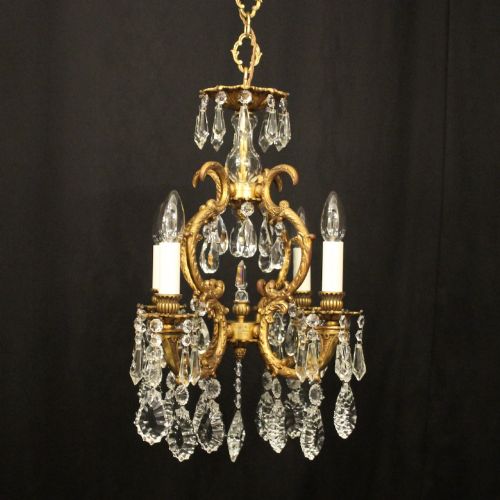
Metal frames form the structural core of each piece, utilising cast and gilded brass, bronze, spelter, or wrought iron to create sturdy armatures and decorative coronas. These frameworks are shaped into cages, tent tops, and scrolling arms designed to distribute weight evenly across the ceiling mount.
Glass and crystal components are integrated through meticulous hand-cutting and polishing, producing prisms, spikes, beads, and lustres that catch and disperse light. Metal pins and wire fasten these crystal elements to the frames, creating the characteristic draped swags and cascading waterfall tiers.
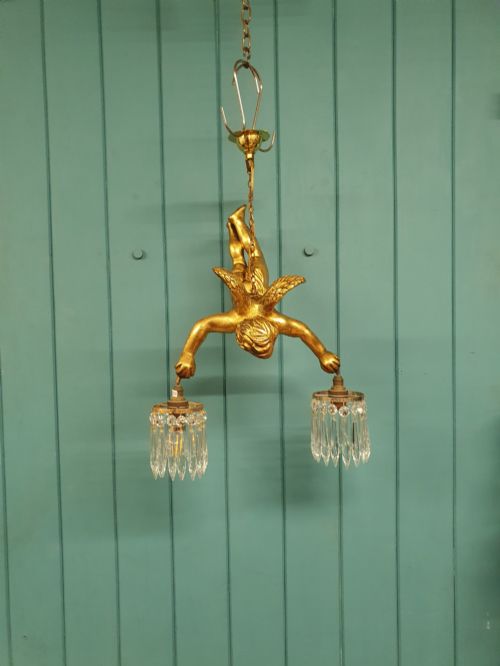
A flying cherub occasionally presides over the glass spikes, ensuring the ceiling lighting watches over the room with winged enthusiasm.
Elements of distinction
The refinement of the cast metalwork and the precision of the crystal cutting determine the optical brilliance of the piece. Finer examples display crisper chasing on gilt bronze mounts and sharper facets on cut glass drops, which increases light refraction.
Complexity of construction also separates basic configurations from elaborate designs. Multi-tiered tent and waterfall arrangements with integrated coloured crystals, leaf decorations, or specialised prisms require advanced assembly and greater artisanal skill.
The Drop Crystal Ceiling Fixture Glossary
- Tent and waterfall
- A style featuring an upper conical section of glass beads cascading down to a wider lower tier of drops. This configuration directs light across multiple reflective planes.
- Cut glass
- Glass shaped by grinding and polishing wheels to create sharp facets. These facets enhance the brilliance of the fixture by multiplying light reflection.
- Gilt bronze
- Bronze coated with a thin layer of gold or gold-coloured alloy. This technique provides a durable, lustrous finish to the metal armature.
- Lustre
- A pendant drop of cut glass hung from the arms or rim of a chandelier. Lustres swing gently to catch ambient room light.
- Spike chandelier
- A design characterised by upright central crystal spikes or spears protruding from the upper framework. This profile adds verticality to smaller ceiling fixtures.
Drop Crystal Ceiling Fixture: Frequently Asked Questions
How do I hang a heavy antique chandelier?
Suspension requires securing the fixture directly into ceiling joists or structural timber using a rated metal hook and box. Professional electrical installation ensures the weight is properly supported independently of the electrical wiring.
Heavier multi-light configurations demand reinforced ceiling brackets to handle the combined load of the metal frame and dense crystal dressings safely.
What rooms suit a drop crystal ceiling fixture?
These fixtures suit hallways, dining rooms, and reception spaces where ceiling height permits the downward drop of crystal elements. Smaller basket or bag formats fit compact landings or bedrooms.
Larger tent and waterfall configurations require generous vertical clearance to display their tiered proportions without dominating the surrounding furniture.
How should I clean antique glass crystals?
Cleaning involves wiping individual crystal drops with a mild solution of warm water and gentle dish soap using a soft cloth. Leaving the crystals attached to the frame while cleaning prevents damage to the delicate wire fixings.
Dry the glass thoroughly with a lint-free cloth to restore maximum sparkle and prevent water spots from forming on the cut facets.
How do I identify Edwardian lighting designs?
Edwardian pieces often feature lighter brass frameworks, smaller dimensions, and restrained ornamentation compared to ornate nineteenth-century models. They frequently incorporate simple cut glass crystal spikes, coffin prisms, or bag formations.
These fixtures reflect an early twentieth-century preference for refined elegance and brighter, more open geometric arrangements over dense Victorian massing.