

Drip Tray Umbrella Holder
These drip tray umbrella holder designs organise hallway clutter with utilitarian practicality, using metal and timber frames to catch wet winter weather.

Drip Tray Umbrella Holder
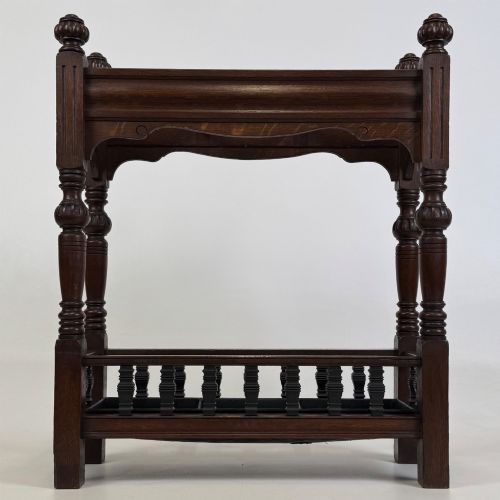
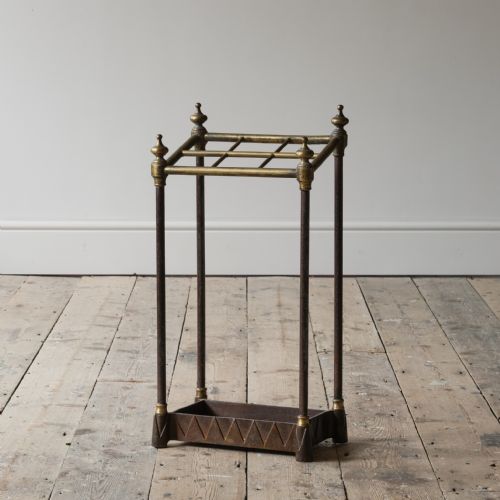
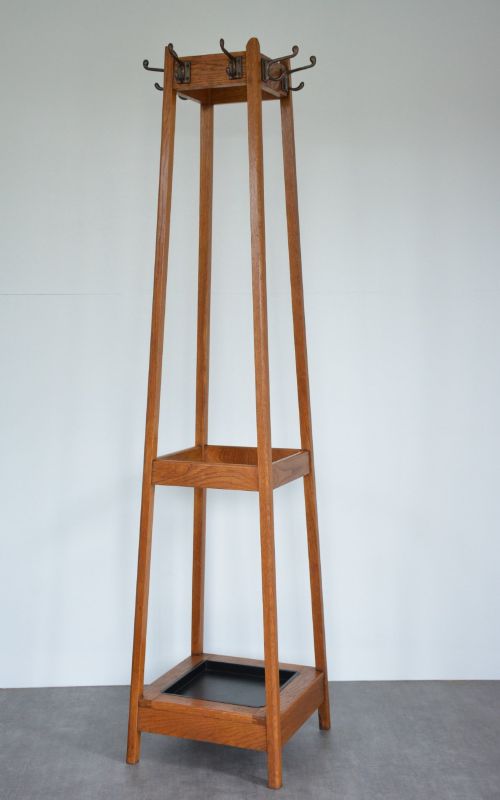
When searching for a drip tray umbrella holder, a buyer examines hall furniture designed to store walking sticks, canes and wet umbrellas in Victorian, Edwardian and early twentieth century hallways. The pieces range from dedicated standalone vessels to integrated coat stands and hall trees fitted with built-in receptacles.
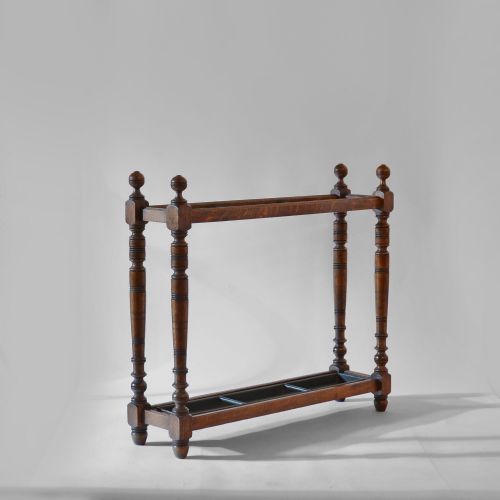
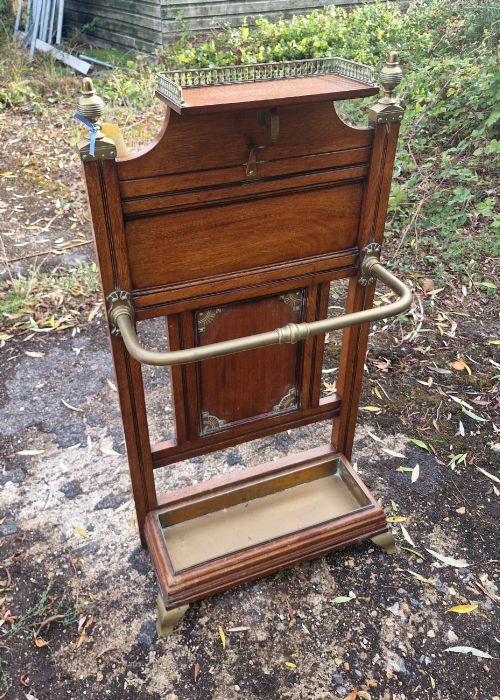
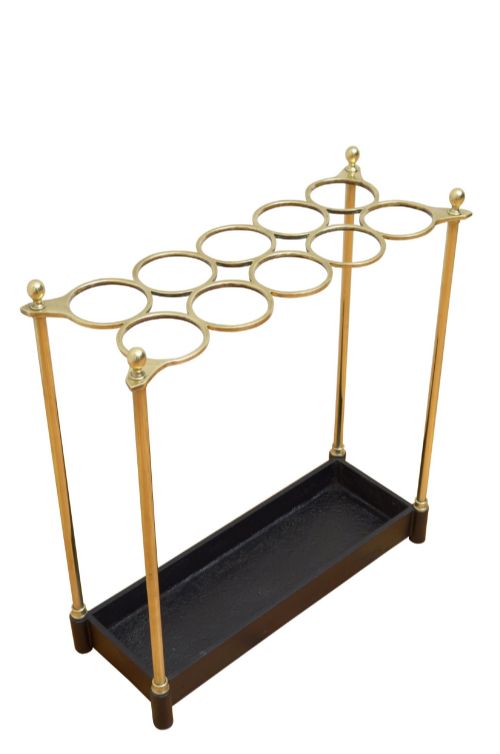
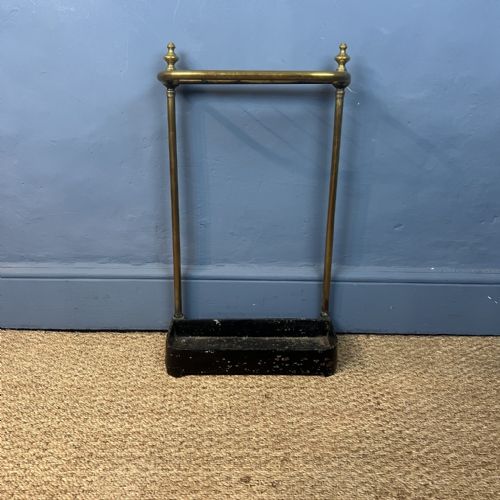
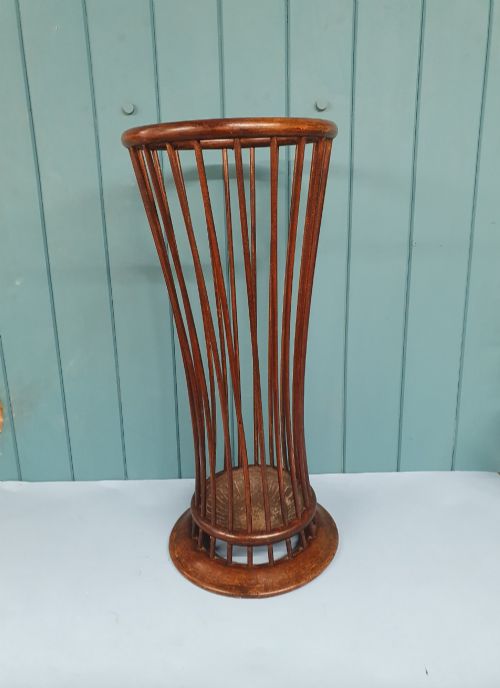
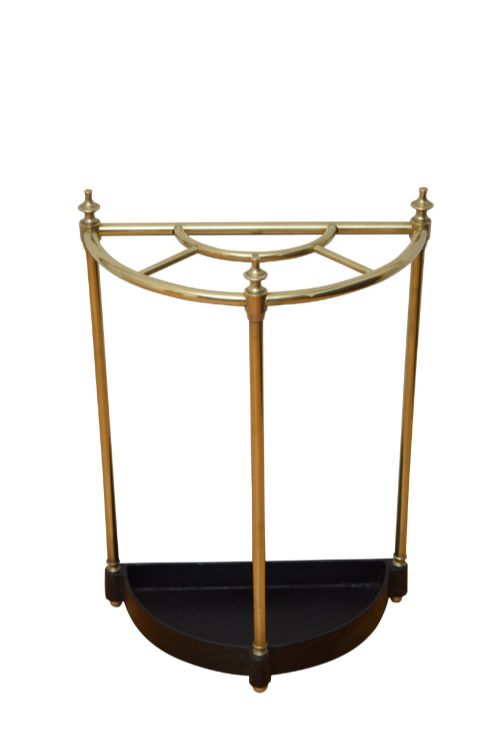
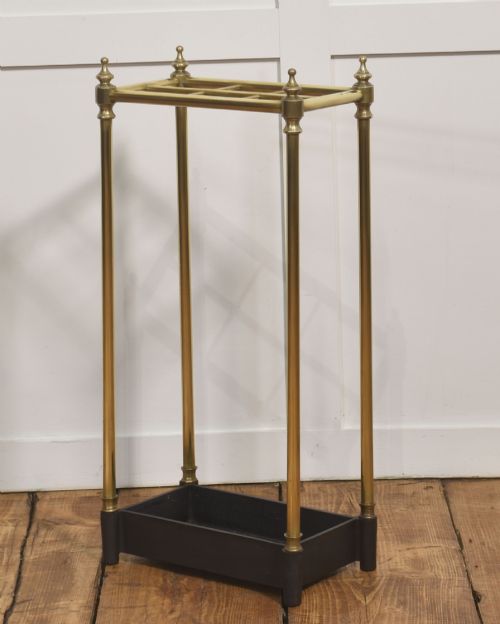
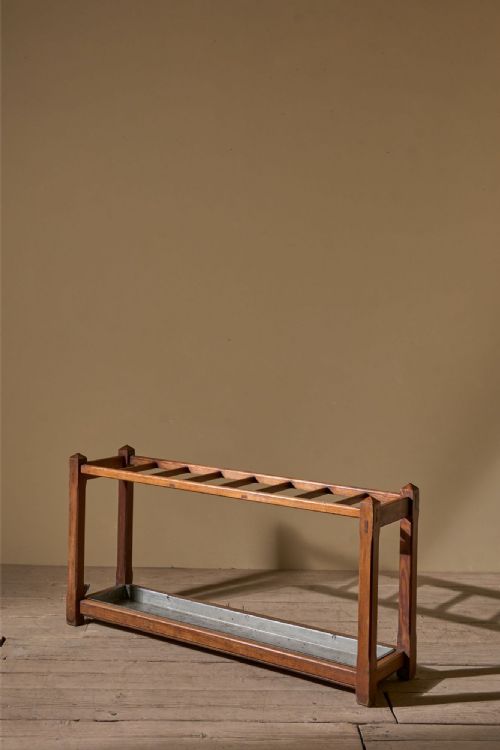
The most common formats met on this page are heavy cast iron and polished brass frames, alongside golden oak or pitch pine examples dating from the nineteenth and early twentieth centuries. These encompass semi-lune wall-hugging shapes, corner designs and larger upright stands constructed for domestic entryways.
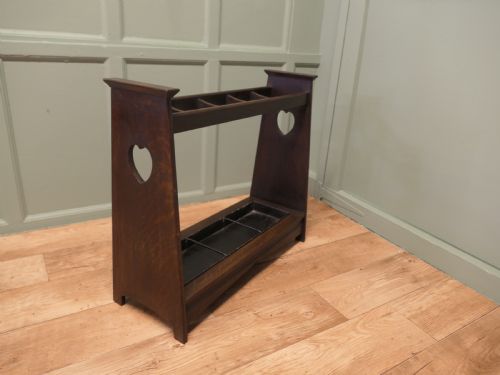
Makers and designers from the Arts and Crafts movement, such as Liberty and Heal's, produced timber variations, while heavy industrial casting firms supplied durable metal models. Each version serves the practical purpose of keeping wet flooring safe while housing wet weather gear near the front door.
Factors that define quality
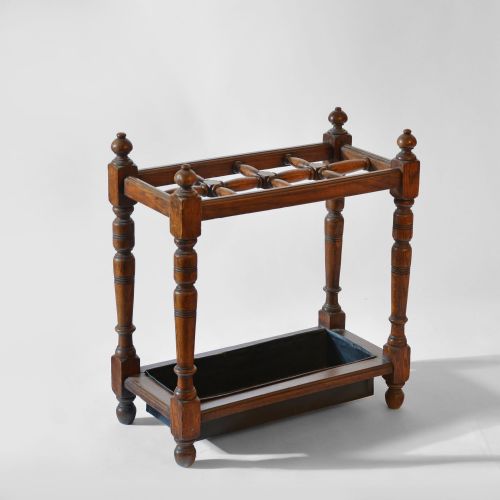
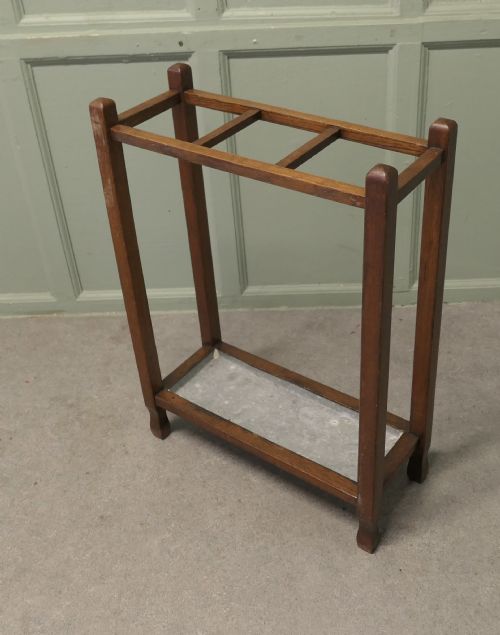
Quality separates through the integrity of the original construction and the survival of matching functional components, notably the presence of the original metal drip tray. Stands retaining their factory-fitted zinc or iron trays demonstrate superior completeness compared to those altered or supplemented later.
The refinement of the casting work in iron and brass models distinguishes standard production from finer foundry output, while in timber pieces, the selection of figured oak, pitch pine or mahogany and the tightness of the joinery set the standard.
Listings demonstrate a strong divide between heavy cast iron and polished brass foundry pieces and solid oak or pine country house joinery.
Coalbrookdale·Thonet·Heals of London·Liberty
The Drip Tray Umbrella Holder Glossary
- Demi-lune
- A half-moon shape designed to sit flush against a hallway wall. This curved form saves floor space in narrow entrance passages.
- Drip tray
- A removable metal basin located at the base of the stand. It catches water dripping from wet umbrellas to protect wooden floors.
- Cast iron
- An iron-carbon alloy poured into moulds to create rigid frames. It provides the heavy weight necessary to prevent tipping when laden with walking sticks.
- Bun feet
- Small, rounded spherical feet elevating the base of the stand off the floor. They prevent moisture transfer between the damp ground and the timber or metal structure.
- Arts and Crafts
- A design movement prioritising simple construction and visible material honesty. Pieces from this tradition often display honest oak joinery and hand-hammered metal details.
Drip Tray Umbrella Holder: Frequently Asked Questions
What is a drip tray umbrella holder?
A drip tray umbrella holder is a hall furnishing designed to store wet umbrellas and walking sticks upright while containing water runoff in a dedicated base pan. These functional pieces keep entranceways tidy and protect interior floors from moisture.
They appear in various formats including wall-hugging semi-lune shapes, heavy cast iron frames, and tall oak hall trees equipped with integrated coat hooks.
How do I maintain an antique metal stand?
Maintaining a metal umbrella stand involves keeping the internal drip tray clean and dry to prevent rust accumulation from standing water. Regular dusting preserves the surface finish of cast iron and polished brass.
Avoid harsh chemical cleaning agents that strip historical patina, opting instead for gentle dry cloths to care for the aged metal surfaces.
Where should I place an umbrella holder?
These holders belong in entryways, porches or hallways where people enter homes with wet weather gear. Placing them near the front door ensures umbrellas are stowed immediately upon arrival.
Corner and demi-lune designs work particularly well in narrow corridors because they maximise storage capacity without obstructing walking paths.
How do I date an oak umbrella stand?
Dating an oak stand involves examining the construction methods, timber selection, and stylistic cues such as Arts and Crafts influences or Edwardian proportions. Pieces from the nineteenth century often feature heavier hand-finished joinery, whereas later twentieth century examples may show more industrial production methods.
The presence of original hardware, like fitted zinc drip trays or specific foundry marks, also helps narrow down the period of manufacture.