

Drinks Serving Tray
A drinks serving tray brings order to hospitality, offering a stable surface for glassware and decanters across centuries of dining.
Drinks Serving Tray
A drinks serving tray encompasses flat carrying platters, salvers, gallery trays with raised borders, and folding butler's trays paired with stands. These pieces emerge in styles ranging from Georgian austerity through Edwardian refinement to Mid-Century Modernism.
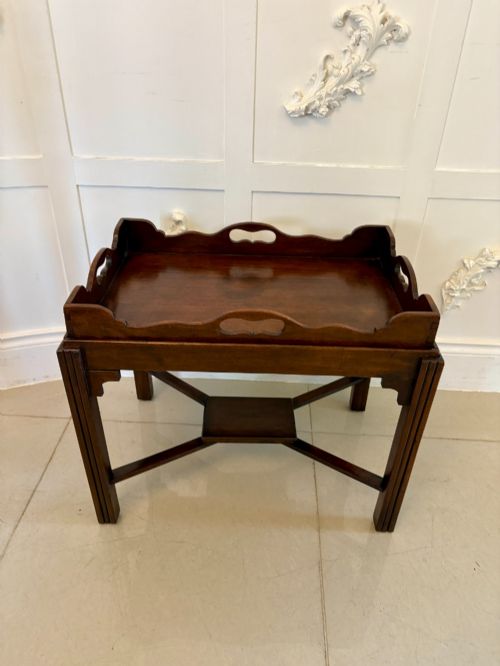
The most frequent examples encountered on this page date from the Victorian and Edwardian periods, constructed in mahogany, silver plate, or oak. Form follows function, shifting from portable tea trays to standing tray tables and tea trolleys designed for entertaining.
Materials and Construction
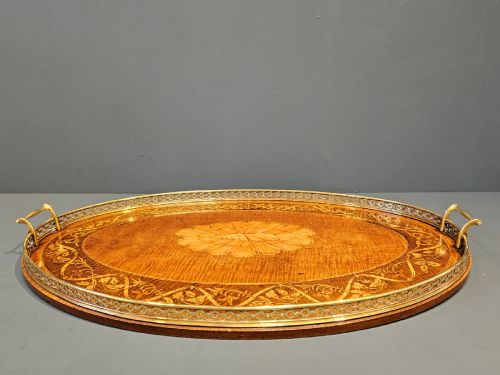
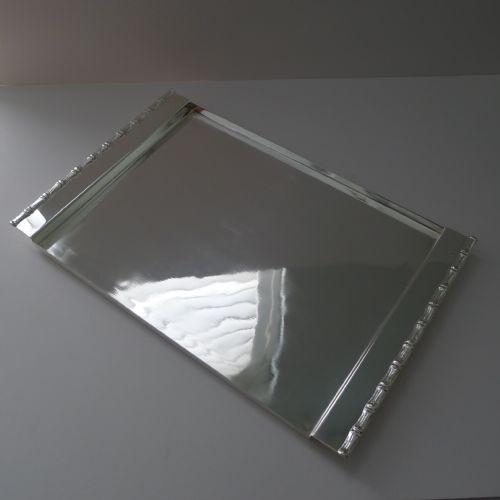
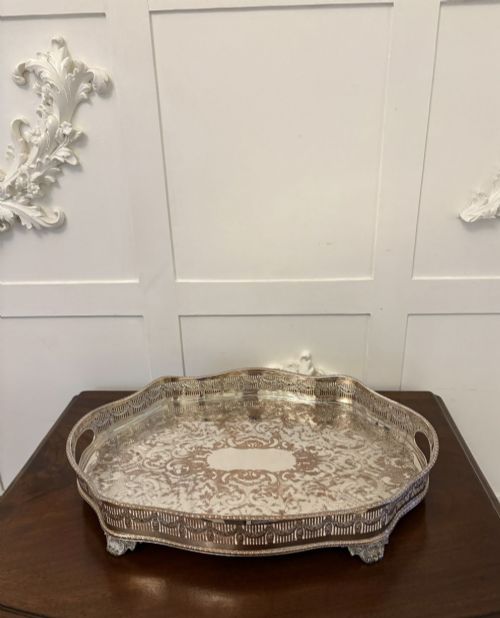
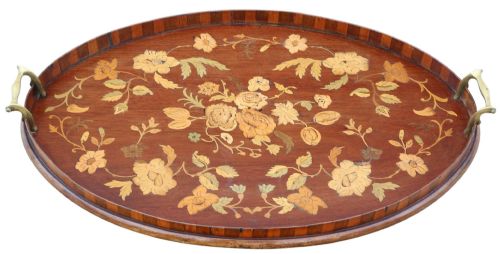
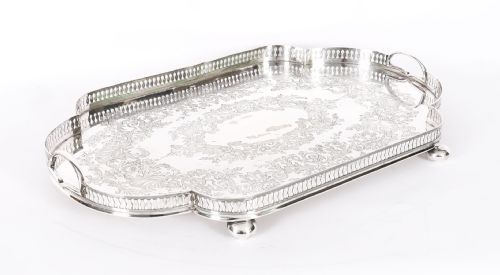
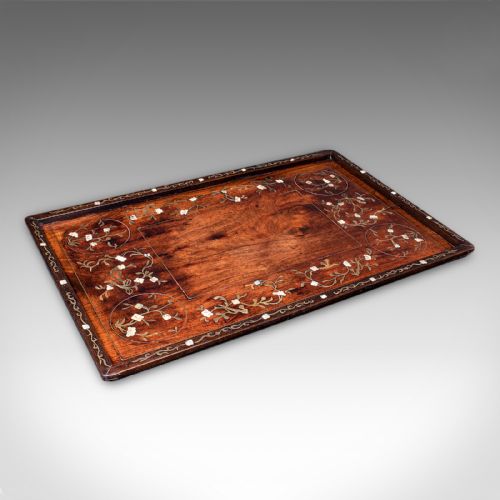
Makers utilised timber solids and veneers including mahogany, satinwood, walnut, and oak, often applying marquetry or shell inlay to create decorative surfaces. Metal examples rely on brass, copper, and electroplated nickel silver or standard silver plate, sometimes pierced to form intricate galleries.
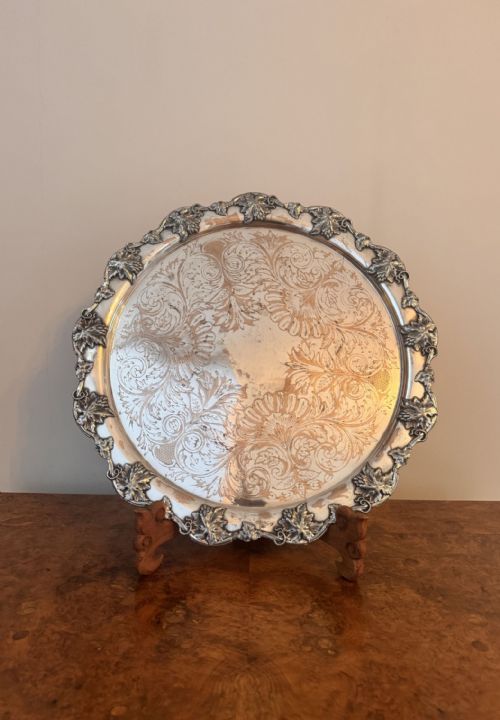
Joinery techniques on wooden trays include coopered staves, dovetailed corners, and raised handles, while metal pieces feature applied cast mounts, engraved floral motifs, and soldered rims.
The inventory combines portable serving trays, removable tray tables, and multi-tiered tea trolleys suited for hospitality.
Evaluating Craftsmanship
Quality rests upon the crispness of the hand-engraving, the depth of the plating over copper or base metal, and the precision of inlaid wood marquetry. Superior examples display balanced proportions and robust handles securely attached to the main body.
Lesser pieces show thin or worn plating revealing base metal, clumsy joins in the woodwork, and faded or loose inlay work that lacks the definition found in master workshops.
Keith Murray For Mappin & Webb·James Deakin·William Hutton And Sons·Christofle·Edwards And Roberts·Daniel And Arter
The Drinks Serving Tray Glossary
- Salver
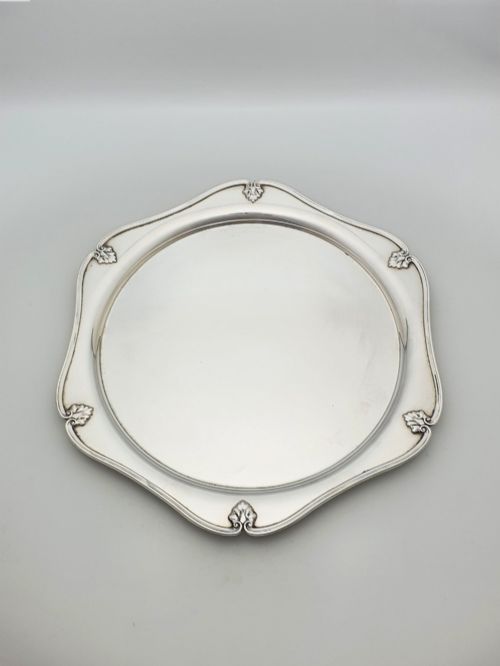
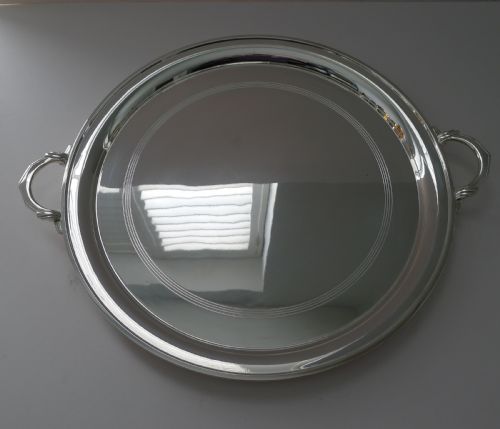
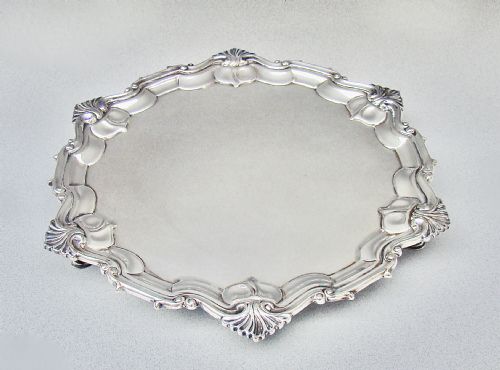
- A flat metal tray, usually circular and supported on small feet, traditionally used for presenting letters or glasses.
- Gallery tray
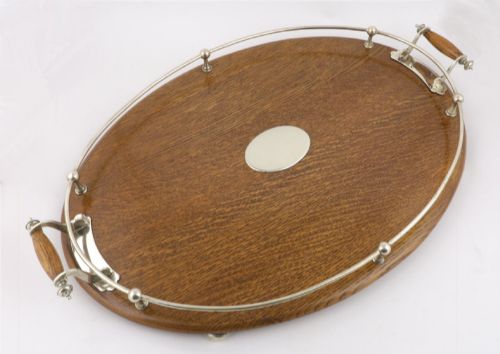
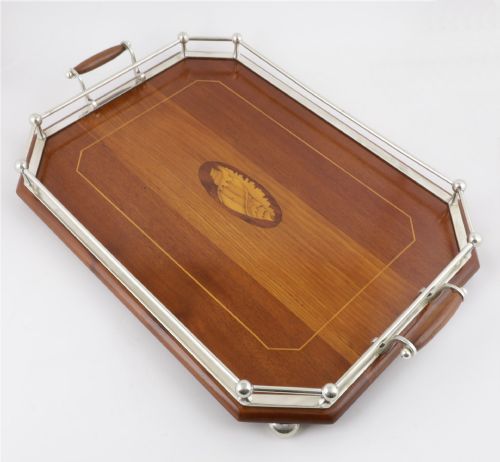
- A tray featuring a pierced or solid raised metal or wooden border around the perimeter to secure items during transit.
- Butler's tray
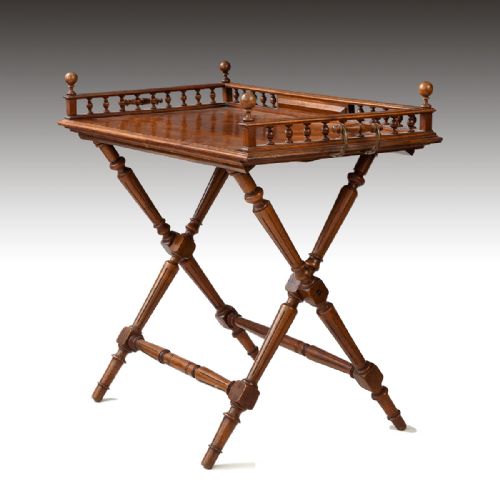
- A removable wooden tray with hinged or fixed sides, designed to rest upon a folding X-frame stand.
- EPNS
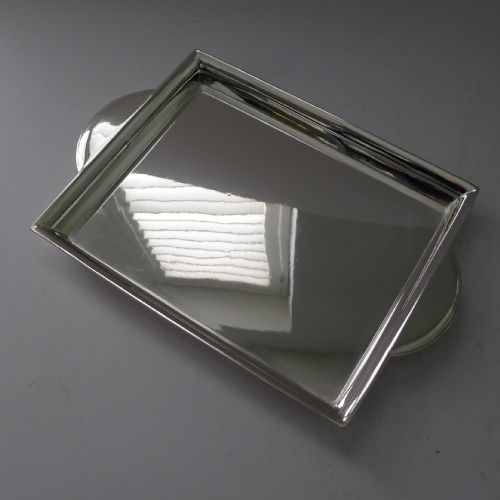
- Electroplated nickel silver, a base metal alloy coated with a layer of silver utilised widely from the Victorian era onward.
- Marquetry
- Decorative veneer work arranged in intricate geometric or pictorial patterns across wooden surfaces.
Drinks Serving Tray: Frequently Asked Questions
What is the difference between a tray and a salver?
A salver is traditionally a flat, footed plate used for serving drinks or calling cards, whereas a tray typically has handles and a flat base designed primarily for carrying.
Salvers usually remain stationary on a sideboard or table until loaded with glasses, while trays are built for regular transit between rooms.
How do I use a butler's tray safely?
Butler's trays resting on folding stands provide a sturdy mobile surface for mixing and serving drinks during gatherings.
Ensure the stand locks securely into place before placing heavy decanters or glassware onto the wooden tray top.
Can silver plated trays be used daily?
Silver plated trays tolerate regular daily use provided they receive gentle cleaning with non-abrasive cloths and mild soapy water.
Avoid harsh chemical dips that strip the antique plating and dry the surface thoroughly to prevent water spotting.
How do I date a wooden serving tray?
Dating relies upon timber selection, such as the rich mahogany favoured in Georgian and Victorian periods or the satinwood typical of Edwardian pieces.
Examine the construction methods, handle design, and inlay styles to align the piece with documented manufacturing eras.