

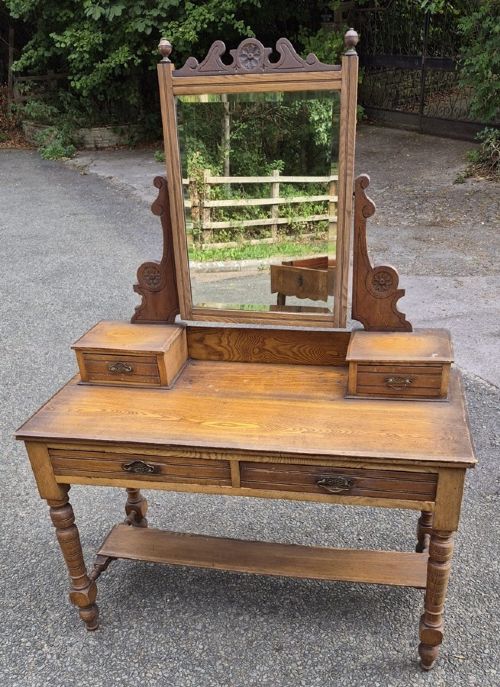

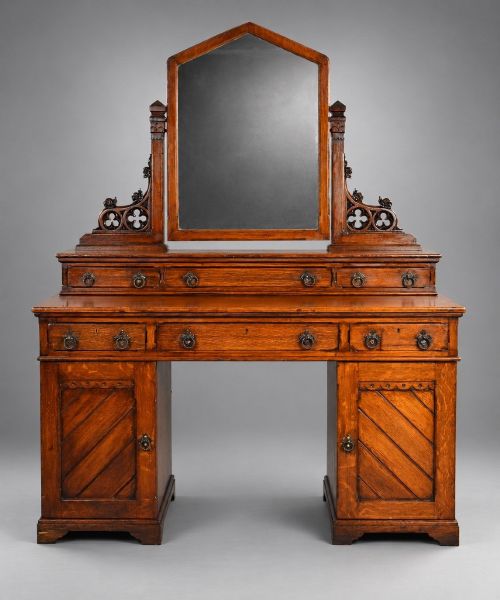
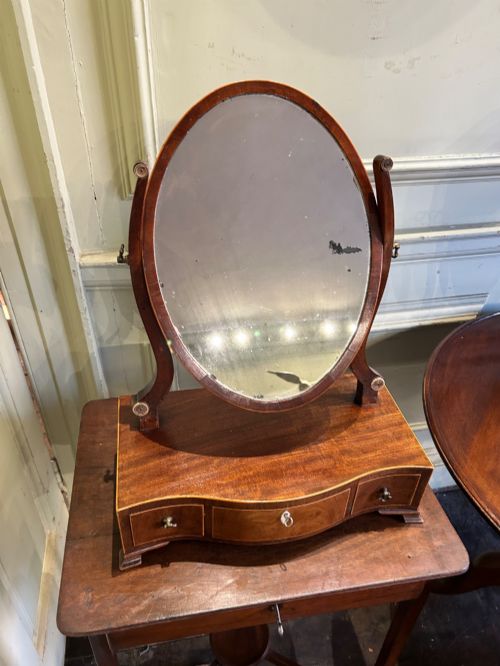
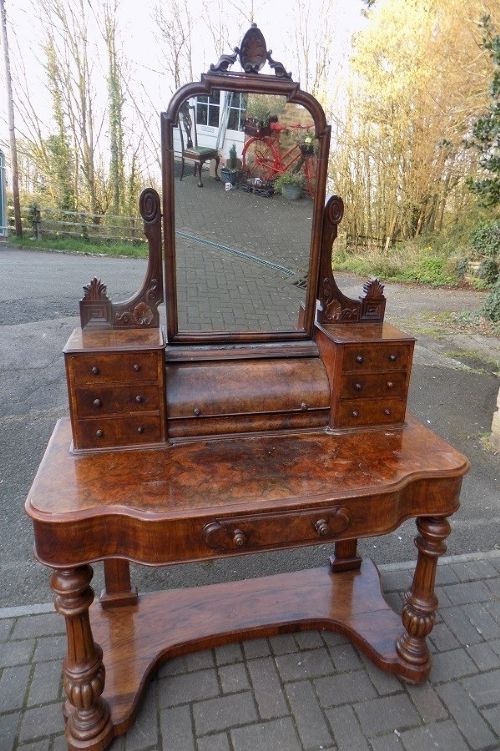
Dressing Desk with Mirror
A dressing desk with mirror unites the surface for writing with the glass for reflection, spanning periods from the eighteenth century to art deco.
Dressing Desk with Mirror
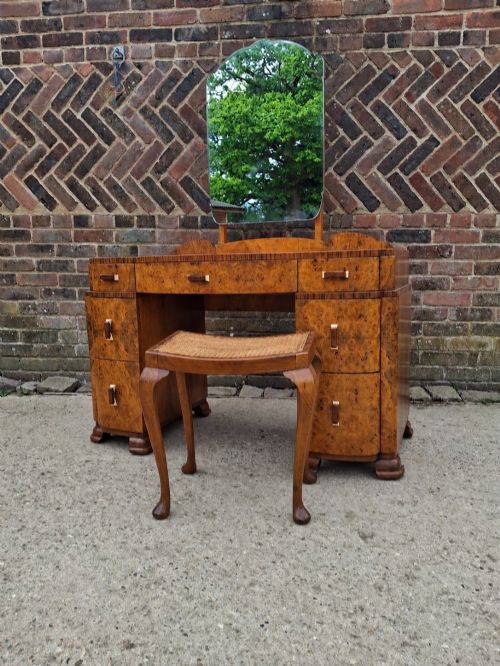
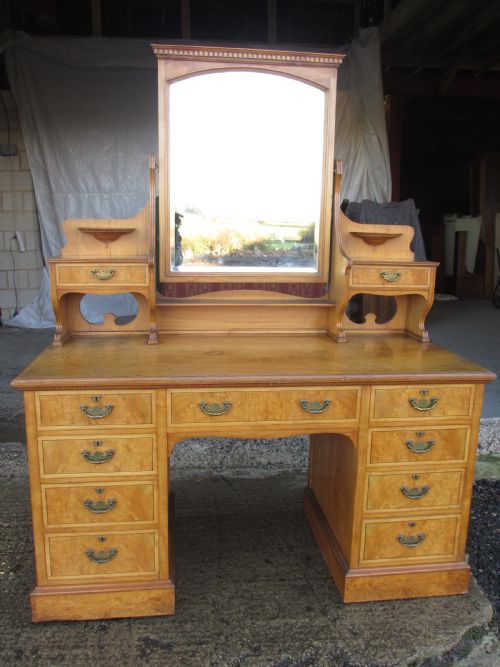
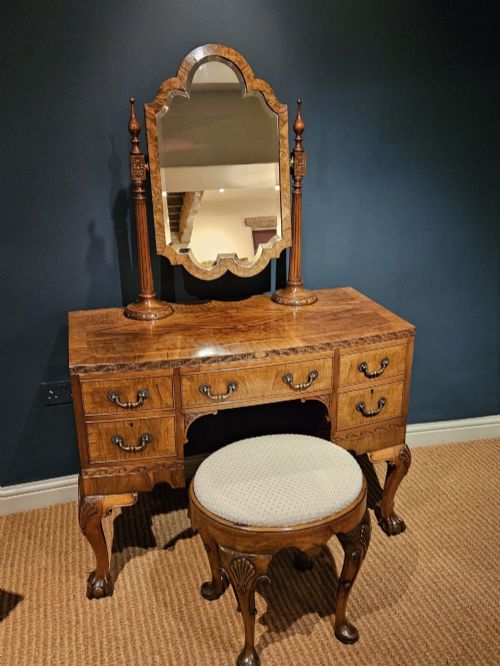
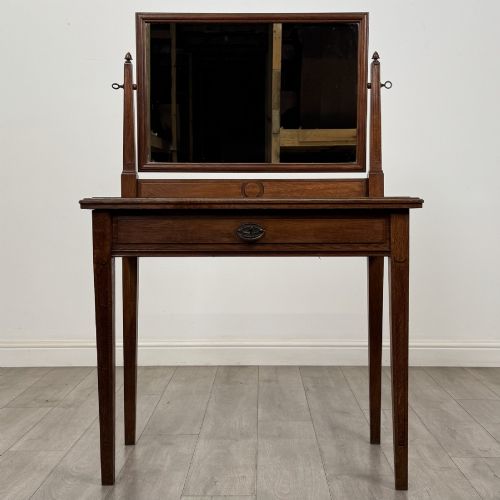
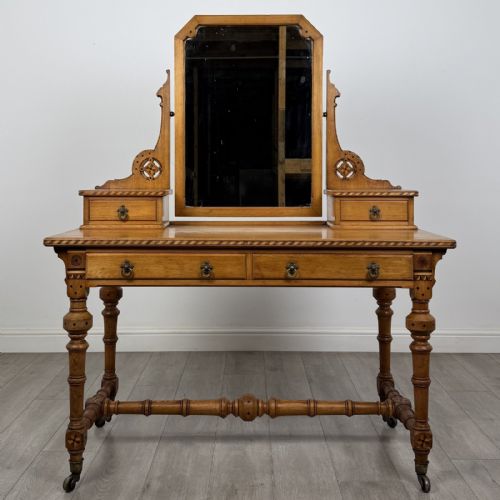
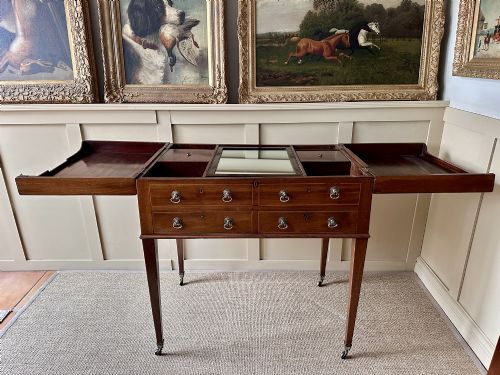
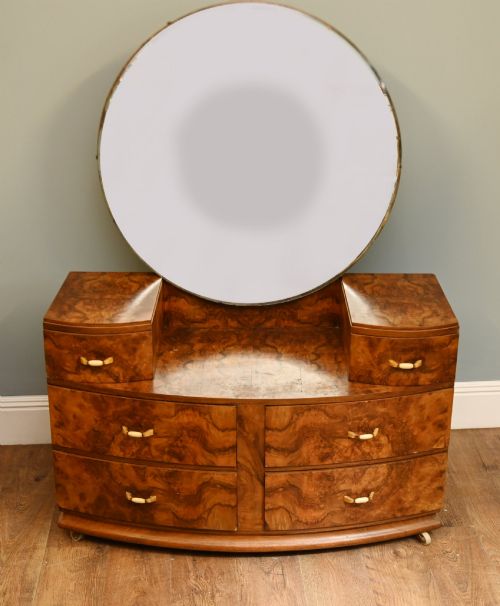
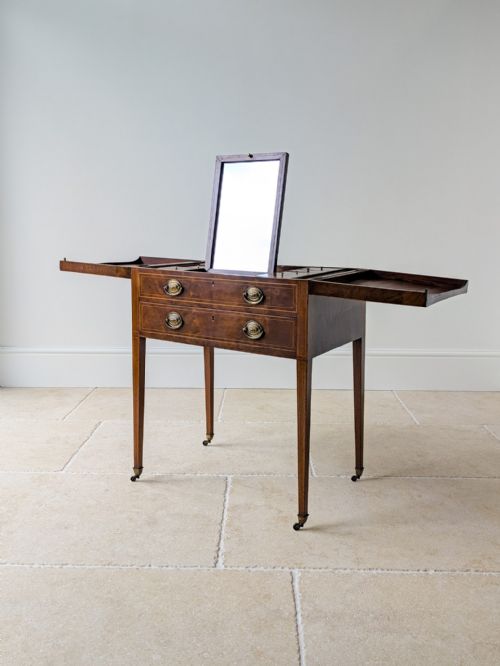
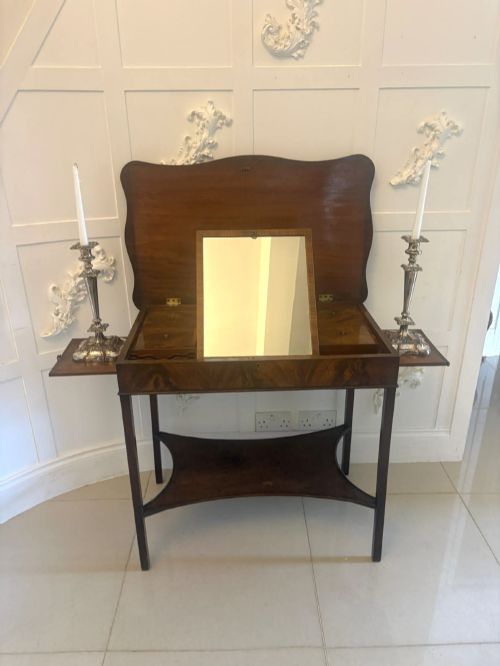
A dressing desk with mirror brings together surface space and reflective glass, serving both personal grooming and correspondence. The selections on this page span several centuries, moving from Georgian and Victorian designs through Edwardian craftsmanship to the clean lines of art deco pieces from nineteen thirty.
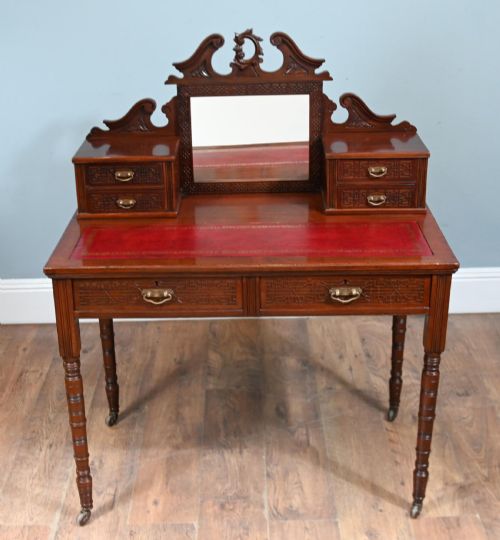
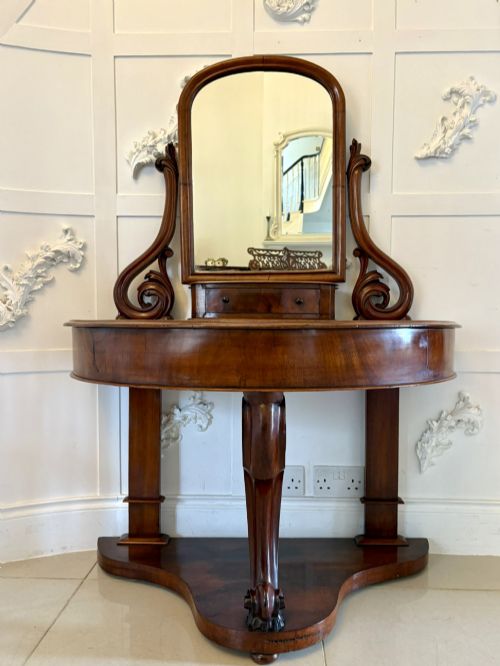
You will encounter pieces in multiple configurations, from grand pedestal dressing tables with triple mirrors to compact table-top bureaus and satinwood writing desks with mirrored superstructures. Materials range from traditional mahogany and walnut to lighter oak, satinwood, and maple.
The origins vary widely, including English workshops, French provincial houses, and arts and crafts movements. Many incorporate drawers, compartments, or accompanying stools to complete the domestic furnishing.
What varies in quality
The distinction between tiers rests upon the selection of timbers and the precision of the cabinetwork. Pieces featuring figured burr veneers, hand-carved details, or labelled workshop origins display superior handling of materials compared to simpler vernacular items.
Dressing Desk with Mirror Retail Price Guide 2026
Typical asking prices for dressing desk with mirror among the pieces listed under this phrase on Sellingantiques today, from the lower quarter to the upper quarter. They describe what is for sale here now, not the wider market.
Listings feature dressing furniture spanning the eighteenth, nineteenth, and twentieth centuries, constructed in mahogany, walnut, oak, satinwood, and maple.
Wright & Hunter of Belfast·Heals
The Dressing Desk with Mirror Glossary
- Superstructure
- An upper framework or shelving arrangement mounted upon a desk or table base. These often incorporate mirrors and small drawers for writing equipment.
- Duchess dressing table
- A large Victorian dressing table style featuring a large central mirror flanked by smaller pivoting glasses and multiple drawers. They frequently include a low shelf between the pedestals.
- Ormolu
- Cast bronze that has been gilded with a mercury and gold amalgam, used for decorative mounts on French furniture. It adds metallic contrast to mahogany and walnut surfaces.
- Kneehole
- A recessed central space beneath a desk or dressing table top, flanked by banks of drawers. This configuration allows the user to sit comfortably close to the glass.
Dressing Desk with Mirror: Frequently Asked Questions
How do I date a dressing desk with mirror?
Dating relies upon timber choices, construction methods, and stylistic cues present in the woodwork. Georgian and Victorian examples typically employ solid mahogany or walnut with hand-cut dovetails, whereas nineteen-thirty pieces show art deco geometries.
The design of the mirror support offers further guidance, moving from heavy carved frames to adjustable brass fittings and simpler oak or satinwood surrounds.
Where should I place a dressing table in a room?
These pieces require placement near a natural light source to ensure the mirror functions effectively for daily use. Pedestal and duchess variants need adequate floor space to allow access to the drawers and accompanying stool.
Positioning them away from direct sunlight protects vulnerable burr veneers and polished wood finishes from fading over time.
Can I use a dressing table as a desk?
Many examples on this page combine writing surfaces with mirrors, particularly table-top bureaus, bonheur du jour pieces, and ladies writing tables. These forms were designed specifically for correspondence alongside grooming.
Kneehole configurations provide comfortable legroom, though the presence of central drawers or superstructures should be checked against your seating requirements.
How do I care for antique wood and glass?
Wood surfaces benefit from occasional application of traditional beeswax to nourish the timber and maintain a soft sheen. Avoid modern silicone sprays that can penetrate the grain and damage old polishes.
Mirrors require careful cleaning with a soft cloth and mild glass cleaner applied to the cloth rather than sprayed directly, protecting the wooden frames from moisture damage.