

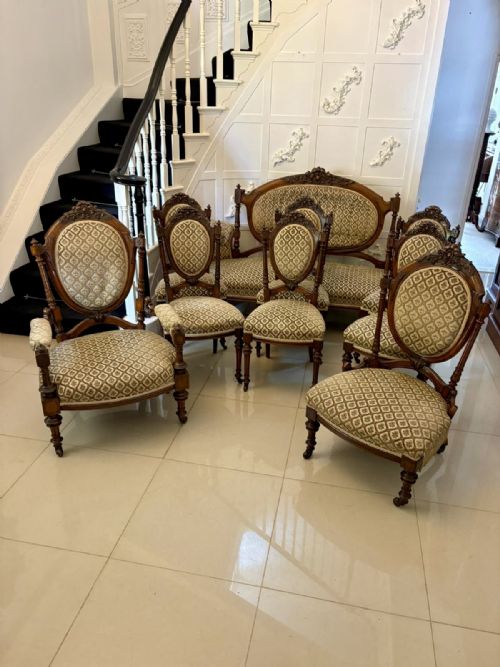


Drawing Room Seating
Drawing room seating brings together the finest mahogany, walnut, and rosewood settees and armchairs designed to receive guests in formal nineteenth-century and Edwardian interiors.
Drawing Room Seating
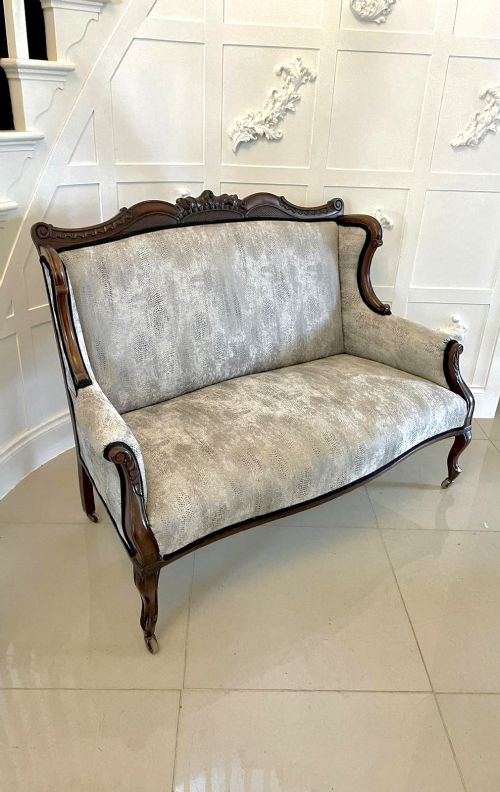
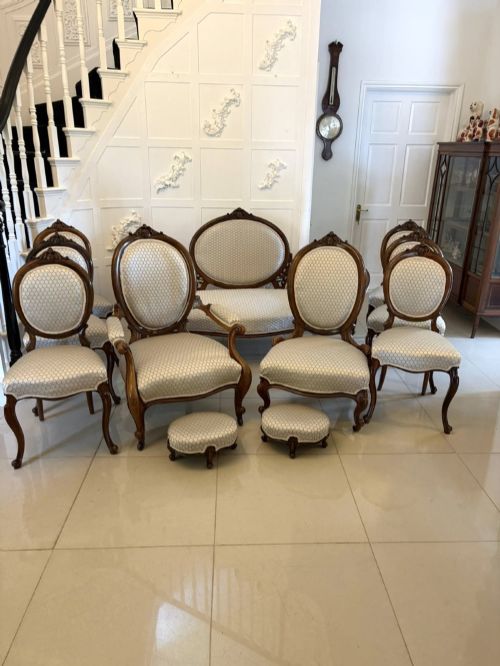
Drawing room seating encompasses the sofas, settees, salon suites, and armchairs that furnished formal reception spaces from the Regency period through to the Edwardian era. When searching for drawing room seating, buyers encounter substantial multi-piece salon suites alongside individual camel back sofas, show frame settees, and open armchairs.
The pieces on offer span the nineteenth century and the early twentieth century, showing the shift from early Victorian and William IV mahogany and walnut down to late Victorian rosewood and inlaid Edwardian mahogany. Forms range from compact side chairs and ladies chairs to large two-seat settees and grand eleven-piece suites complete with footstools.
Regional and stylistic influences include English cabinet work alongside French Louis XV Revival and provincial interpretations. Buyers select these items to anchor a period interior with authentic upholstered seating that retains its original formal presence.
Materials and construction
Makers built the structural frames of drawing room seating using dense hardwoods such as mahogany, walnut, and rosewood, often selecting figured veneers for visual depth. Show frames frequently feature carved woodwork or delicate inlay work.
Upholstery relies on traditional textiles recorded in the period including damask, velvet, and button-backed fabric. Brass elements appear as castors or structural accents on chairs and settees.
Drawing Room Seating Retail Price Guide 2026
Typical asking prices for drawing room seating among the pieces listed under this phrase on Sellingantiques today, from the lower quarter to the upper quarter. They describe what is for sale here now, not the wider market.
Listings feature seating across the nineteenth and early twentieth centuries, spanning Regency, Victorian, and Edwardian periods.
The markers of distinction
Quality in drawing room seating rests upon the crispness of the timber carving and the architectural balance of the show frame. Superior examples demonstrate confident execution in the proportions of walnut or mahogany frames and refined execution in inlaid details.
The ambition of the suite or individual piece dictates its standing, moving from simple parlour chairs to exhibition quality multi-piece drawing room sets with matched armchairs, side chairs, and sofas. The integrity of the original timber and the sophistication of the revival style distinguish the finest examples.
Hindley & Sons
The Drawing Room Seating Glossary
- Show frame
- A wooden structural frame left visible around the upholstered portions of a sofa or armchair. This construction method allows the carved mahogany or walnut timber to form part of the aesthetic design.
- Salon suite
- A matched set of seating furniture comprising a sofa, armchairs, and side chairs intended for a formal drawing room. These suites provide a unified decorative scheme for entertaining.
- Button upholstery
- A traditional technique where buttons are pulled deep into the padding in a diamond pattern to secure the filling and create distinct tufting. This finish appears frequently on nineteenth-century armchairs and settees.
- Open arm chair
- An armchair featuring un-upholstered wooden armrests supported by open framing. These chairs typically expose polished rosewood or mahogany structures.
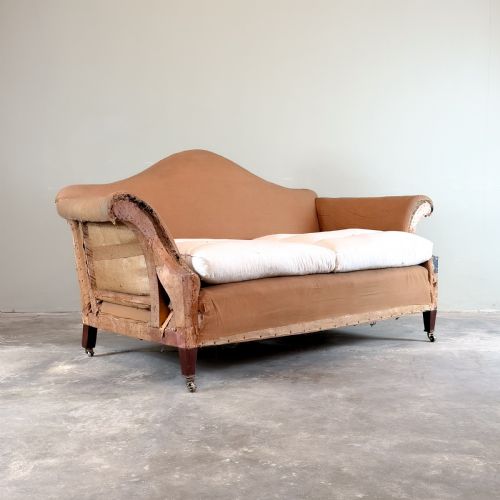
- Camel back
- A sofa style defined by a graceful, undulating curved top rail that resembles the hump of a camel. This profile is characteristic of Edwardian seating.
Drawing Room Seating: Frequently Asked Questions
What pieces belong in a drawing room suite?
Drawing room suites typically combine a central sofa or settee with a selection of armchairs and side chairs designed in a matching aesthetic.
Larger configurations may also include footstools to complete the formal seating arrangement for a nineteenth-century reception room.
How do I identify a Victorian sofa?
Victorian sofas often feature dark hardwoods such as mahogany and walnut, frequently combined with elaborate carved show frames or button upholstery.
They span from early Victorian styles through to heavier late Victorian proportions and Revival designs.
What is a show frame settee?
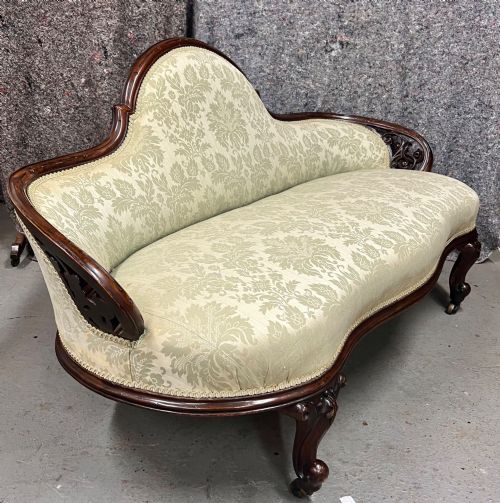
A show frame settee is a piece of furniture where the polished wooden structure remains visible around the upholstered areas.
Instead of being entirely covered in fabric, the carved mahogany, walnut, or rosewood frame defines the outer silhouette of the seat.
Are Edwardian settees different from Victorian ones?
Edwardian settees generally exhibit lighter proportions and brighter timbers, often utilising inlaid mahogany rather than heavy carved walnut.
Styles from this later period tend towards refined shapes like the camel back, reflecting a shift away from ornate mid-nineteenth-century Revival aesthetics.