





Dragon Handle Bronze Urn
These dragon handle bronze urn pieces bring heavy metalwork forms and mythical beasts together into striking decorative objects for the home.
Dragon Handle Bronze Urn
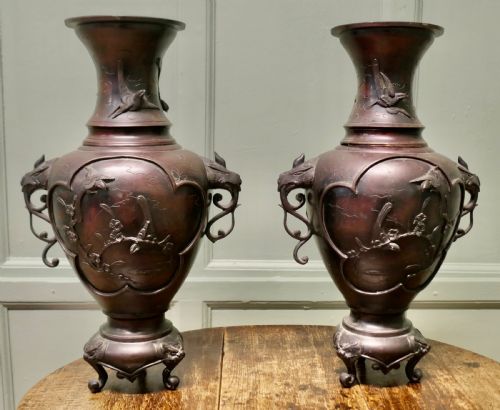
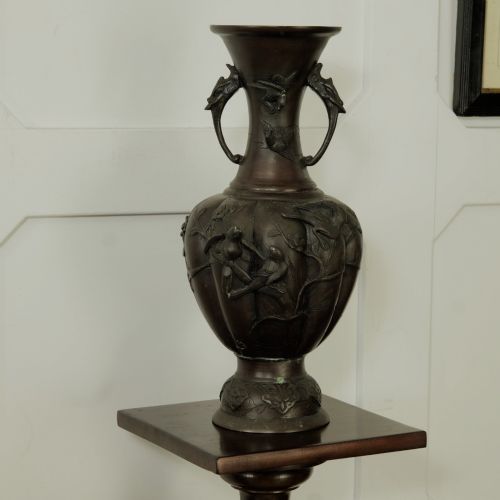
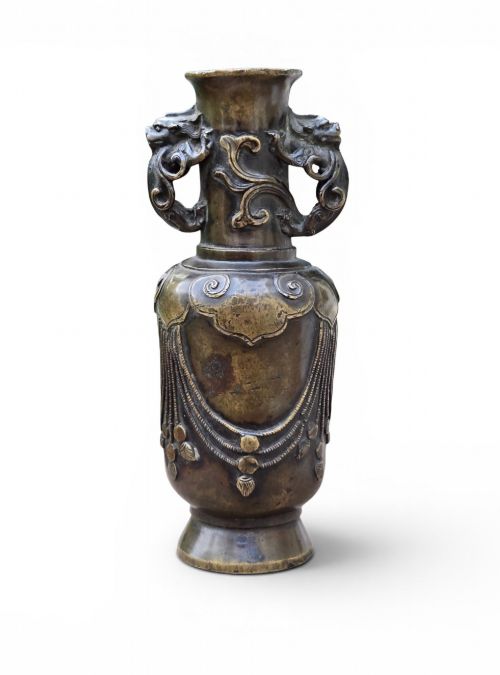
A dragon handle bronze urn combines cast metal vessel forms with sculptural mythical creatures serving as grips, spanning several distinct regional traditions. When you examine a dragon handle bronze urn on this page, you mostly encounter Japanese Meiji period examples alongside Chinese Qing style pieces and Victorian interpretations.
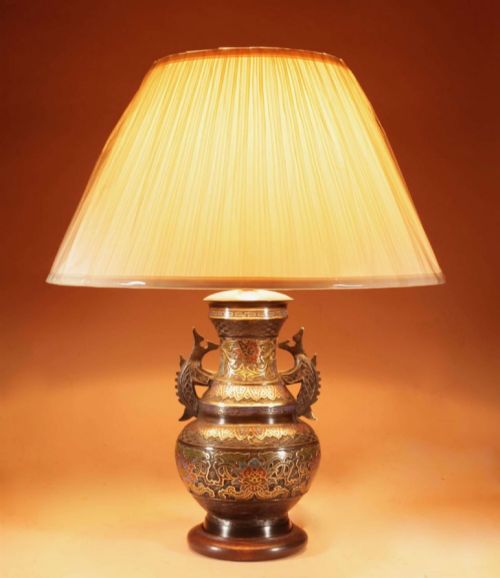
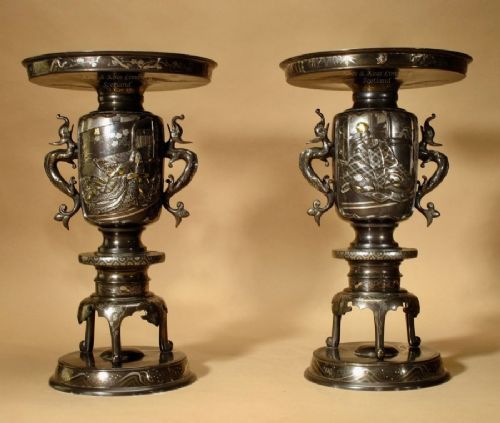
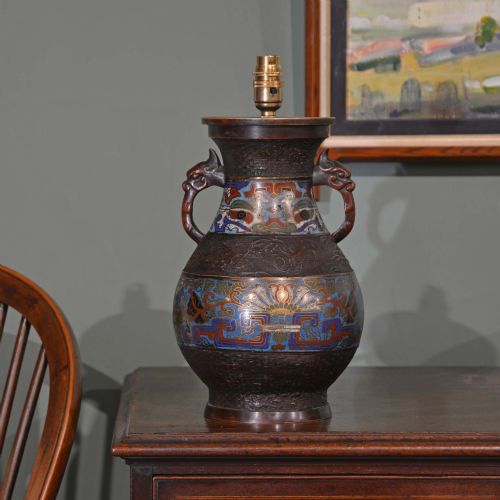
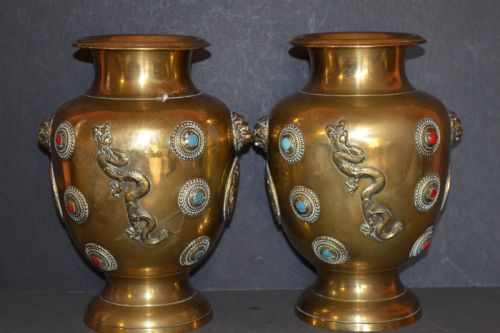
The objects take various functional and display forms including standard vases, altar vessels, ewers, hu vases, and occasional table lamps. Many appear in matched pairs ranging from moderate table sizes to large heavy floor displays.
Origins stretch across nineteenth century workshops in Japan, China, and Tibet, often filtered through Victorian collecting tastes in Britain. These pieces demonstrate diverse cultural aesthetics applied to heavy bronze casting.
Materials and construction methods
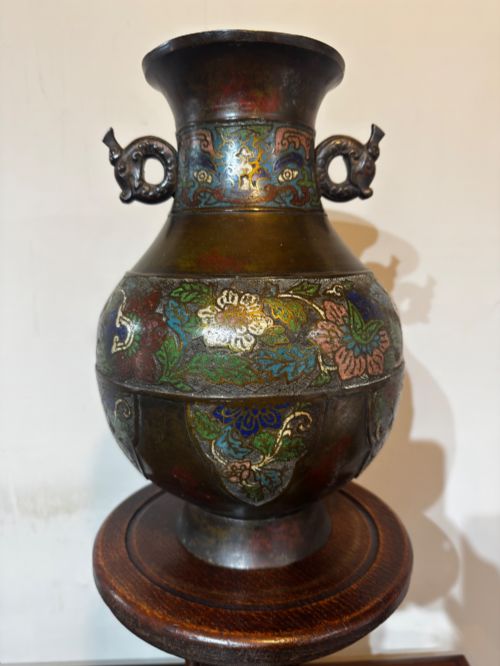
Makers utilised cast bronze as the primary structural body, often incorporating brass or gilt bronze elements. Artisans applied surface decoration through champlevé enamel work, gold inlay, and silver inlay to create detailed patterns across the body.
Casting methods produced thick vessel walls capable of supporting heavy applied dragon handles and intricate neck ornaments. Workshops finished these surfaces with patination, polishing, or enamel cell placement by hand.
Distinguishing quality across examples
The definition of the cast details separates standard production from superior output, particularly in the rendering of the dragon scales and claws. Sharpness in the chasing and the precision of inlaid metalwork dictate the visual weight of the piece.
Enamel work quality shows in the regularity of the cells and the stability of the coloured fills across the bronze surface. Weight and balance also indicate superior thickness in the metal body.
The Dragon Handle Bronze Urn Glossary
- Champleve
- An enamelling technique where troughs are dug into the bronze surface and filled with vitreous enamel before firing. This method creates colourful geometric or floral patterns contrasting with exposed metal lines.
- Hu
- A traditional ritual bronze vessel form with a pear-shaped body and a constricted neck. These ancient vessel shapes were reinterpreted during later periods with applied dragon handles.
- Meiji Period
- The era of Japanese history lasting from 1868 to 1912 characterised by a surge in metalwork export to Western markets. Pieces from this time often display complex patination and high technical skill.
- Gilt Bronze
- Bronze metal coated with a thin layer of gold using fire gilding or chemical application methods. This treatment adds a warm metallic sheen to the vessel surface.
- Ewer
- A large jug with a wide spout and a looped handle designed for pouring liquids. In decorative metalwork, these forms often served purely ornamental purposes.
Dragon Handle Bronze Urn: Frequently Asked Questions
What is a dragon handle bronze urn?
A dragon handle bronze urn is a cast metal vessel featuring sculptural dragon motifs integrated into the side grips. These pieces draw on Asian design traditions and nineteenth-century decorative arts.
They function primarily as decorative centrepieces, mantel displays, or converted table lamps within domestic interiors.
How do I identify a Meiji period bronze?
Meiji period bronzes typically date between 1868 and 1912, originating from Japanese workshops geared towards international export. They often exhibit meticulous surface finishing, champlevé enamel details, and archaistic vessel shapes.
Compare the patination and casting crispness against Victorian European interpretations to confirm the Japanese origin.
Were these urns used for flowers?
Many of these bronze vessels functioned as flower pots, display urns, or altar vases designed to hold floral arrangements. Some heavier altar pieces served ritual purposes in temple settings before entering the collector market.
Examine the interior for water residue or liner wear to see if an individual piece held actual stems.
How heavy are these bronze urns?
These pieces vary considerably in weight, with some larger examples exceeding three kilograms of solid cast metal. The thickness of the bronze body depends on the workshop origin and the intended function of the vessel.
Ensure your display surface can support the substantial weight of large paired bronze items.